Loading SafariFind...
Full board
Check-in
14:00
Check-out
11:00
High-Altitude Summit Camp (Uhuru Peak)
The final summit approach from Barafu Camp (4,600m) or Stella Point (5,739m), typically reached during pre-dawn hours (11 PM - 3 AM departure). Trekkers do not overnight at the summit due to extreme conditions and acute altitude effects.
Final Camp Accommodation (Barafu or Stella Point)
High-altitude tented camps at 4,600-4,700 meters where climbers rest before final summit push. Temperatures drop to -10°C to -15°C overnight, with thin air (approximately 50% sea-level oxygen) causing altitude effects.
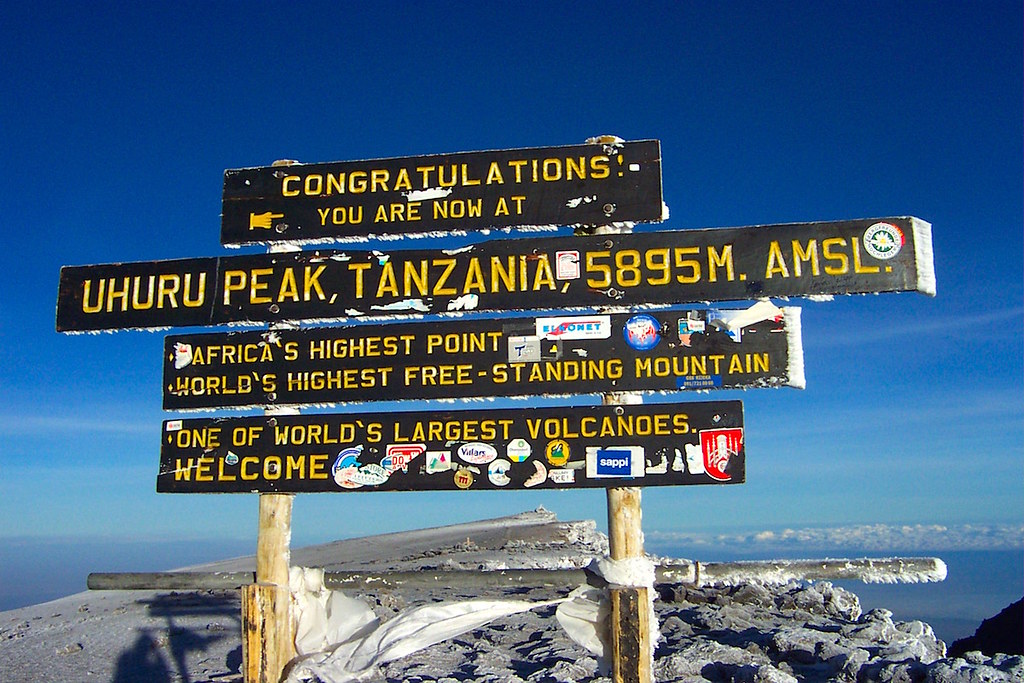
Uhuru Peak is the highest summit point of Mount Kilimanjaro at 5,895 meters (19,341 feet) above sea level, making it Africa's highest mountain peak. The name 'Uhuru' means 'freedom' in Swahili. It represents one of the world's most accessible high-altitude mountaineering achievements, attracting approximately 30,000-50,000 climbers annually seeking to reach Africa's roof without requiring technical climbing expertise.
Reaching Uhuru Peak requires 5-8 days depending on the chosen route. The Marangu Route takes 5-6 days, the Machame Route takes 6-7 days, the Lemosho Route takes 7-8 days, the Rongai Route takes 6-7 days, and the Umbwe Route takes 5-6 days. Longer routes provide superior acclimatization and higher success rates (85%+ for Lemosho versus 65% for Marangu).
Summit success rates range from 40-85% depending on the route, acclimatization strategy, and individual fitness levels. The Lemosho Route achieves the highest success rates (85%+) due to gradual elevation gain over 7-8 days. The Marangu Route has lower success rates (approximately 65%) because climbers ascend more rapidly without optimal acclimatization, increasing altitude sickness risk.
Uhuru Peak requires moderate to good cardiovascular fitness and mental determination rather than technical climbing skills. Recommended preparation includes 4-6 months of training with hiking on weighted backpacks, stair climbing, and cardiovascular conditioning. Individuals should be able to hike continuously for 5-7 hours at moderate pace and possess reasonable altitude tolerance, though pre-climb fitness testing with medical professionals is recommended.
Altitude-related illness represents the primary health risk, with acute mountain sickness (AMS) affecting 25-50% of climbers. Severe conditions including high-altitude cerebral edema (HACE) and high-altitude pulmonary edema (HAPE) can occur in extreme cases. Additional risks include extreme cold (-20°C/-4°F at summit), dehydration, hypothermia, and frostbite. Professional operators employ guides with mountain rescue certifications, CPR training, and portable oxygen systems. Comprehensive travel insurance covering helicopter evacuation (costing $2,000-5,000) is strongly recommended.
The optimal climbing seasons are January-March (short dry season) and June-October (long dry season). January-March offers warmer conditions but experiences higher crowding. June-October provides slightly colder temperatures with excellent visibility and fewer crowds. December-May represents the rainy season with increased cloud cover, reduced visibility, and challenging conditions, though climbing remains possible with proper preparation.
Complete climbing packages to Uhuru Peak range from $1,200-$5,000+ depending on route length, accommodation quality, group size, and operator reputation. Budget packages on shorter routes (Marangu) cost approximately $1,200-$1,800, while mid-range options on longer routes cost $2,000-$3,500, and premium guided experiences cost $4,000-$5,000+. Costs typically include guides, porters, meals, camping, and park fees, though travel insurance and equipment costs are additional.
Essential packing includes layered clothing systems managing temperature swings from 25°C (77°F) at base to -20°C (-4°F) at summit, insulated sleeping bags rated to -20°C, moisture-wicking base layers, waterproof outer shells, insulated boots, high-altitude trekking poles, and a backpack (40-50 liters). Critical supplies include hydration systems targeting 3-4 liters daily water intake, electrolyte formulas, sunscreen, high-SPF lip balm, and personal medications. Most operators provide comprehensive packing lists specifying technical gear brands and models.
There are no official age restrictions for climbing Uhuru Peak, though operators typically recommend climbers be at least 10-12 years old with demonstrated hiking experience. Children aged 10-16 have successfully summited, though altitude sickness risk increases for younger climbers. Pregnant women should not attempt the climb due to altitude effects on fetal development. Climbers over age 70 have successfully summited with proper training and medical clearance.
Compare rates, read verified traveler reviews, and book through SafariFind.com, which connects you with verified Kilimanjaro trekking operators offering transparent pricing, detailed itineraries, and accountability. SafariFind allows you to compare multiple operators simultaneously, verify guide certifications and safety records, and read authentic climber feedback before committing to your Uhuru Peak expedition.
© 2026 SafariFind. All rights reserved.