 1 / 4
1 / 4🇿🇼 Zimbabwe
Imire Rhino & Wildlife Conservancy
Size
4,500 km²
Elevation
1,400 m
Entry fee
Loading SafariFind...
1 / 4Size
4,500 km²
Elevation
1,400 m
Entry fee
SafariFind app
Keep up with your inquiries and bookings, and message operators wherever you are.

$85
Ideal stay
2 days
Established
1972
Nearest airport
Harare International Airport (HRE), 105 km northwest; most international flights arrive here; 2–2.5 hour drive to Imire via Mutare Road and Wedza Road
Nearest town: Marondera, approximately 40 km away; Harare (capital), 105 km northwest—main gateway city with international flights, banking, and supplies
A standard day visitor pass costs approximately $85 USD per adult and $45 USD for children, which includes a full game drive and buffet lunch served in the bush. Overnight packages offer better value for multi-day stays, with all-inclusive accommodation and meals. Volunteer programs range from $X to $Y per week depending on duration and include lodging, meals, and hands-on conservation work alongside professional staff. Compare packages and book through verified operators on SafariFind.com to find options that fit your budget.
May to October (dry season) is optimal for wildlife viewing—animals concentrate around water sources, vegetation is sparse for easier spotting, and temperatures are cool and comfortable (15–25°C). November to March brings lush green landscapes and excellent birdwatching, but intense heat and thick bush can make game spotting more challenging. Peak tourist season is June–August; shoulder months (April, November) offer fewer crowds and lower rates while maintaining good wildlife sightings.
Imire is home to black and white rhinoceros in an intensive protection zone, African elephants (including Nzou, famous for adopting Cape buffalo), sable antelope, eland, zebra, warthog, impala, hyena, and lion. The conservancy also hosts a cheetah rewilding program through the Aspinall Foundation, with two males introduced from Canada in 2021. Over 500 bird species inhabit the miombo woodland and grassland habitats. While Imire does not contain all Big Five species, its focus on endangered rhino and elephant conservation makes it unique for educational wildlife experiences.
Imire is located 105 kilometers southeast of Harare, Zimbabwe's capital. Fly into Harare International Airport (HRE), then drive 90–105 minutes via Mutare Road and Wedza Road. A high-clearance vehicle is essential for the final 37–40 km of gravel road; 4x4 is recommended during rainy season (November–March). The lodge can arrange transfers from Harare for an additional fee. No scheduled airstrips serve Imire; charter flights are not typically available.
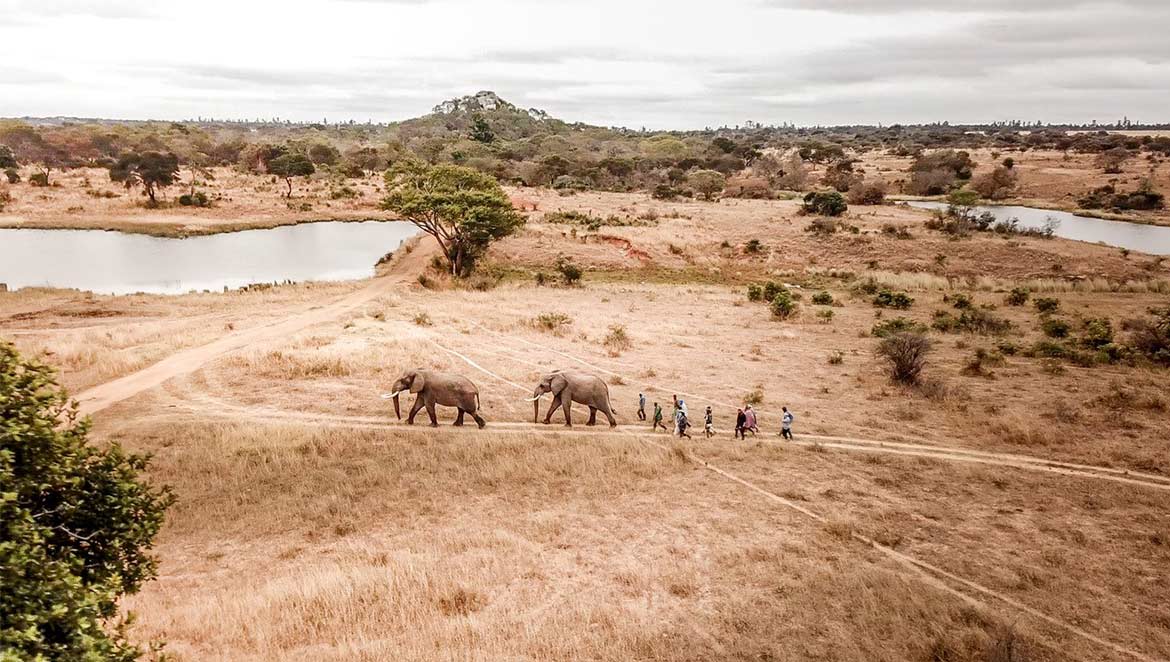
Yes, Imire welcomes families with children. Day visits are suitable for ages 5+; morning and afternoon game drives are conducted in open safari vehicles with expert guides who explain wildlife and conservation. The elephant walks are available by advance confirmation and offer memorable experiences for older children (ages 8+). Lodging is comfortable with quality rooms and excellent food. However, confirm elephant walk availability ahead of time, as this activity is not offered daily. The conservancy's conservation focus and educational programs add depth for family learning.
A minimum of 2 days allows you to experience morning and afternoon game drives, observe multiple wildlife species, and understand the conservation mission. Three days adds time for elephant walks (if available), cave exploration of Shona archaeological sites, and deeper engagement with staff. Volunteer programs typically run 1–4 weeks for hands-on rhino and conservation work. Day visits from Harare are possible but limit wildlife sightings to a single drive; overnight stays dramatically increase encounter quality.
Imire offers on-site safari lodge accommodation with high-quality rooms, excellent food, and thoughtful lodge touches. All-inclusive packages combine lodging, meals (including bush lunches), and game drives. The lodge is within the conservancy, so you wake to wildlife sounds and have immediate access to early morning drives. Volunteer programs include dormitory or shared accommodation with meals and training. No camping or budget options are available; the lodge maintains mid-range to upscale pricing focused on quality conservation experiences.
Yes, Imire is highly worth visiting for travelers prioritizing endangered species conservation and hands-on education. Unlike larger national parks, the 4,500-hectare conservancy offers intimate wildlife encounters with expert guides who explain rhino protection, anti-poaching efforts, and community conservation partnerships. The Nzou elephant story and cheetah rewilding program provide unique wildlife narratives unavailable elsewhere. Visitors report exceptional value, high-quality food, and genuine conservation impact. If you seek typical Big Five safari experiences, larger parks like Hwange may be better; Imire excels for travelers wanting depth over breadth.
Guides are required for all game drives and explorations at Imire; self-drive safaris are not permitted. Professional guides enhance the experience significantly—they locate wildlife, interpret behavior, explain conservation challenges, and ensure safety around dangerous animals. Guides also manage vehicle speed and approach distances to protect endangered rhinos. Walking activities (elephant walks, cave exploration) also require guide accompaniment. The guide service is included in day visit and package pricing.
You can explore verified safari packages at Imire and compare operators across Zimbabwe on SafariFind.com. The platform lets you compare prices, read traveler reviews, and identify itineraries that fit your budget and conservation interests. Contact lodge directly via imire.co.zw or book through SafariFind to ensure your dates align with elephant walk availability and other activities. Advance booking is recommended, particularly during peak season (June–August) and for volunteer programs.
More places in Zimbabwe
© 2026 SafariFind. All rights reserved.