 1 / 4
1 / 4🇺🇬 Uganda
Ishasha Sector
Size
1,978 km²
Elevation
1,100 m
Entry fee
Loading SafariFind...
1 / 4Size
1,978 km²
Elevation
1,100 m
Entry fee
SafariFind app
Keep up with your inquiries and bookings, and message operators wherever you are.

$40
Ideal stay
3 days
Established
1952
Nearest airport
Kihihi Airstrip (KHX), about 80 km by road from Ishasha; Entebbe International Airport (EBB) is the main international gateway, about 400 km by road.
Nearest town: Kihihi, about 80 km northeast — a practical air-transfer and road-transfer gateway for Ishasha and Bwindi.
Foreign non-resident adult entry to Queen Elizabeth National Park is generally US$40 per person per 24 hours, subject to Uganda Wildlife Authority rate changes. A typical Ishasha Sector safari costs about US$150–US$400 per person per day when shared transport, guiding, accommodation and meals are included; private and luxury trips cost more. Park entry, vehicle fees, drinks and optional activities may be charged separately.
The best time to visit Ishasha Sector is June to September or December to February, when drier roads make game drives easier and grass is often shorter. March to May and October to November are wetter and quieter, with greener landscapes but possible muddy tracks. Tree-climbing lions can be searched for throughout the year.
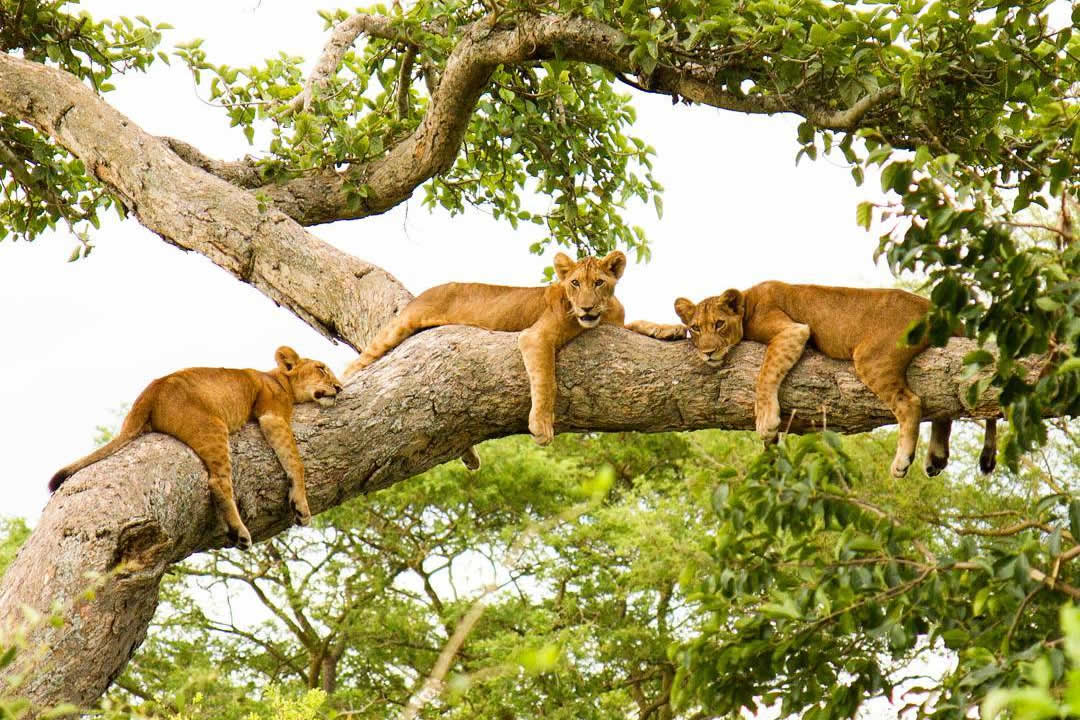
Ishasha Sector is known for tree-climbing lions, African elephants, African buffalo, Uganda kob, topi, warthogs, hippos, leopards and spotted hyenas. Birders can look for martial eagles, vultures, grassland species and wetland birds, including reported shoebills. Ishasha does not offer a reliable Big Five checklist because rhinoceros are absent from Queen Elizabeth National Park.
Most travelers reach Ishasha Sector by 4x4 road transfer from Bwindi's Buhoma area, which takes about 2–3 hours, or from Queen Elizabeth National Park's Mweya Peninsula, which takes about two hours. Scheduled or charter flights to Kihihi Airstrip shorten the journey, followed by a road transfer of about 80 km. The road from Entebbe or Kampala takes a full day and is usually planned as part of a multi-stop Uganda safari.
Ishasha Sector can suit families who are comfortable with long drives and early wildlife-viewing starts. Private vehicles allow flexible stops and pace, while family rooms or tents should be confirmed directly with each lodge. Children must remain inside the vehicle during game drives and follow guides' safety rules around elephants, buffalo and big cats.
Two nights is the practical minimum for Ishasha Sector because it allows an afternoon arrival drive plus two prime game-drive periods. Three days suits photographers and travelers who want more time to search for tree-climbing lions without rushing. A one-night stay works best as a transit stop between Bwindi and northern Queen Elizabeth National Park.
Stay in or near the southern Ishasha area to avoid losing prime game-viewing hours to transfers. Options include tented wilderness camps, mid-range safari lodges and simpler campsites, with rates varying by season and inclusions. Book early for June to September and December to February, when limited rooms near the sector can fill quickly.
Ishasha Sector is worth visiting for travelers who want a realistic chance to see lions resting in fig trees, alongside kob, elephants and buffalo in open savanna. It is also a logical overnight stop between Bwindi gorilla trekking and Queen Elizabeth National Park. Lion sightings remain wildlife-dependent, so the visit should be valued for the full game-drive experience rather than treated as a guarantee.
A guide is not always legally required for a self-drive visitor, but a trained safari guide greatly improves an Ishasha Sector visit. Guides know the current lion-search areas, read tracks and behaviour, manage safe wildlife distances and coordinate with lodge or park sighting information. Most fly-in and packaged safaris include a driver-guide and 4x4 vehicle.
You can compare safari packages, read verified traveler reviews, and book through trusted operators on SafariFind.com. This lets you compare prices and find the best itinerary for your budget and interests.
© 2026 SafariFind. All rights reserved.

 Ask about this