 1 / 5
1 / 5🇳🇦 Namibia
Namibia
Size
824,292 km²
Elevation
1,200 m
Entry fee
Loading SafariFind...
1 / 5Size
824,292 km²
Elevation
1,200 m
Entry fee
SafariFind app
Keep up with your inquiries and bookings, and message operators wherever you are.

$82
Ideal stay
10 days
Established
1907
Nearest airport
Windhoek International Airport (WDH), 42 km south of capital; Walvis Bay International Airport (WAB), 30 km from Namib-Naukluft; Eros Airport (ERS) in Windhoek for charter flights
Nearest town: Windhoek, 42 km from international airport — capital city with car rental, accommodation, and safari tour operators; Okaukuejo rest camp in Etosha, 110 km from nearest town; Sesriem, 60 km south of Sossusvlei entrance
Namibia safari costs range $150-400+ per person per day depending on accommodation and activities. Park entry fees are approximately $82 USD per day. Budget lodges cost $50-100/night, mid-range $100-250/night, and luxury camps $250-500+/night. A 10-day safari including flights, lodging, and activities typically costs $2,500-5,000 per person. Self-drive safaris are cheaper ($100-150/day including car rental, fuel, and camping) compared to guided lodge-based packages. Compare verified operator packages on SafariFind to find pricing matching your budget.
May to September (dry season) is optimal for Namibia safaris. During these months, water concentrates wildlife at waterholes, creating guaranteed sightings of elephants, lions, and Big Five species. June-August offers the coolest temperatures (15-25°C/59-77°F) and clearest visibility. October-April (wet season) brings lush vegetation and exceptional birdwatching but higher malaria risk in northern areas and occasional road closures. December-January experiences peak heat (35°C+/95°F+) and animal dispersal away from waterholes. July-September sees peak visitor crowds; visiting May-June or August-September avoids crowds while maintaining excellent wildlife viewing.
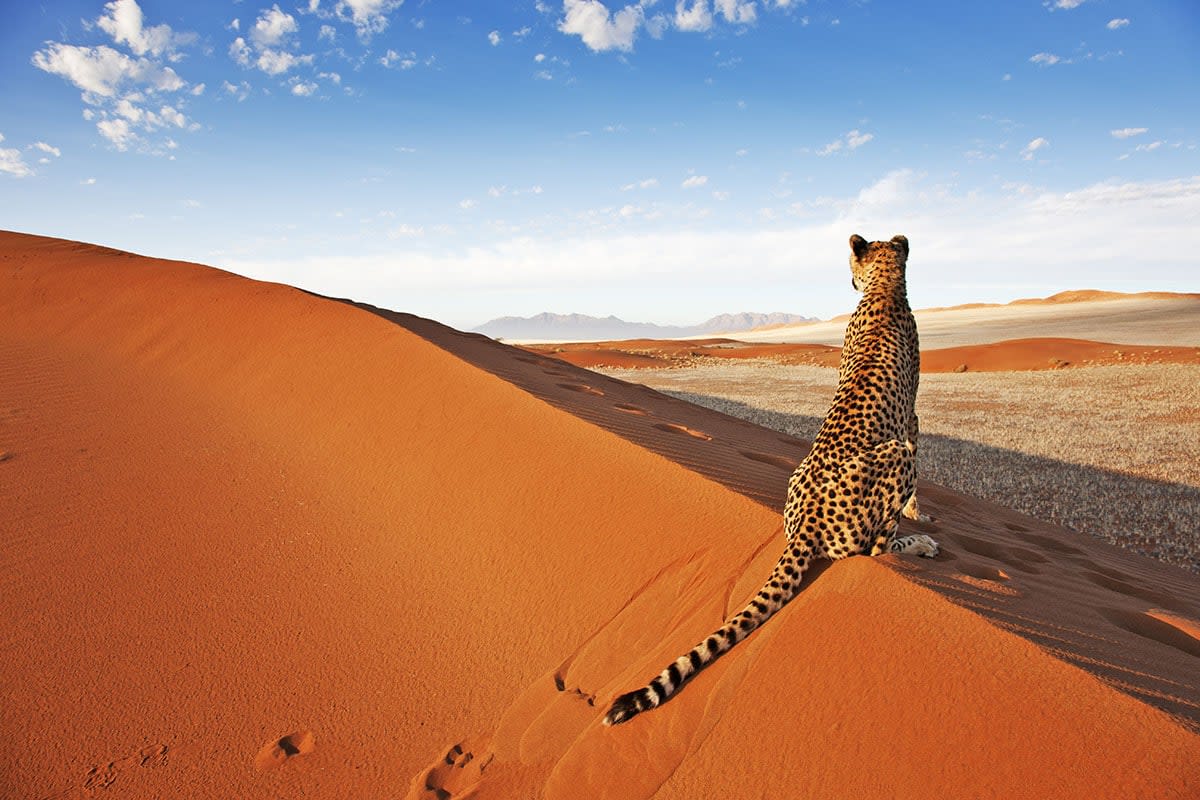
Namibia hosts four of the Big Five: lions, leopards, elephants, and black rhinos (missing only buffalo). The country holds the world's largest black rhino population (1,800+ individuals) and highest cheetah concentration (3,500+ animals). Common sightings include zebras, giraffes, springbok, kudu, wildebeest, African wild dogs, hyaenas, jackals, and 500+ bird species. Etosha National Park guarantees wildlife encounters at waterholes; Namib-Naukluft features desert-adapted species like oryx, bat-eared foxes, and brown hyaenas. Damaraland offers unfenced viewing where desert elephants roam freely. Migration patterns concentrate animals seasonally, with peak sightings June-September.
Windhoek International Airport (WDH) is the main entry point, 42 km south of the capital. Most international flights connect through Johannesburg (South Africa), Cape Town, or Frankfurt. From Windhoek airport, car rentals (sedan or 4WD) provide access to Etosha (6-7 hours drive north) and Namib-Naukluft (5-6 hours south). Walvis Bay Airport (WAB) serves coastal regions including Sossusvlei, 30 km away. Charter flights connect Windhoek to remote airstrips within parks. Visa requirements vary by nationality; most Western nationalities receive 90-day tourist visas on arrival. Driving from South Africa via the Orange River border crossing is also possible for self-drive travelers.
Namibia is family-friendly for children 8 years and older. Etosha National Park is accessible by regular sedan, allowing families to self-drive at their own pace without long hiking requirements. Many lodges offer family chalets and children's menus. Game drives require patience and early mornings, which challenges younger children. Hot air balloon safaris have minimum age restrictions (typically 10+ years). Desert hiking at Sossusvlei and Sesriem Canyon is manageable for school-age children but not toddlers. Malaria precautions and heat exposure require careful planning. Family-friendly lodges include Halali and Okaukuejo rest camps in Etosha with swimming pools and organized activities. Consult your pediatrician about malaria prophylaxis for young children.
A minimum 5-7 days allows core experiences: 3 days in Etosha National Park for waterholes and game drives, plus 2-3 days in Namib-Naukluft for dunes and Sossusvlei. Ten days is ideal, adding Damaraland's unfenced wildlife and Skeleton Coast scenery. Two weeks permits leisurely exploration of multiple regions, photography opportunities, and acclimatization to heat and altitude. Three days minimum covers one reserve (Etosha or Sossusvlei) but misses ecosystem diversity. Self-drive travelers benefit from 10+ days to explore at flexible pace; guided tours efficiently cover highlights in 7-10 days. Consider adding 2-3 days in Windhoek for rest and logistics before/after safari.
Etosha National Park offers three rest camps: Okaukuejo (largest, with floodlit waterhole), Halali (mid-park, scenic), and Namutoni (eastern entrance, historic fort). Budget camping costs $30-50/night; chalets range $100-250/night. Luxury concession camps (Dolomite, Onkoshi) offer exclusive experiences at $250-500+/night. Sossusvlei/Namib-Naukluft has Sesriem camping (budget) and lodges in nearby Sesriem village ($100-400/night). Damaraland offers remote desert camps accessible by 4WD. Windhoek provides city accommodation for arrival/departure. Book lodges 2-3 months ahead during peak season (June-August). SafariFind allows comparison of verified lodge options, reviews, and availability across all regions.
Namibia ranks among Africa's premier safari destinations due to unique advantages: malaria-free Etosha accessible by sedan, world's largest black rhino population, highest cheetah concentration, and the 55-million-year-old Namib Desert offering landscape photography unmatched elsewhere. Unlike Botswana or Tanzania, Namibia combines guaranteed wildlife viewing at waterholes with dramatic desert scenery. The country is stable, well-developed for tourism, and offers excellent value for budget-conscious travelers. Self-drive safaris are feasible; guided packages are affordable. Wildlife sightings are more predictable than many African reserves due to concentrated water sources. Unique experiences like hot air balloons over dunes and unfenced desert elephant viewing differentiate Namibia from competitors. First-time safari travelers find it accessible; experienced naturalists discover diverse ecosystems.
Self-drive safaris are permitted in Etosha National Park and many reserves, making guides optional. A regular sedan suffices on main park roads; guides enhance experience through wildlife identification, behavior interpretation, and safety. Guided game drives from lodges cost $80-150 per person daily. Self-driving offers flexibility, lower cost ($50-100/day vehicle rental plus fuel), and independence but requires navigation skill and patience for wildlife spotting. Night drives require professional guides due to darkness and safety. Hot air balloon safaris, canyon hikes, and Skeleton Coast access require licensed guides. Beginner safari-goers benefit from guides; experienced wildlife watchers prefer self-drive. Most travelers combine both: self-drive daytime game drives with optional guided evening drives.
Compare verified safari packages and lodge options on SafariFind.com, where you can read traveler reviews, check availability, and book directly with trusted operators. SafariFind connects you with established tour companies offering self-drive packages, guided safaris, and luxury lodge experiences across Etosha, Sossusvlei, and Damaraland. Filter by budget, duration, and activity type (game drives, photography, hiking). Most operators offer flexible itineraries and can customize trips for families, groups, or special interests. Book 2-3 months in advance for peak season (June-August) to secure preferred lodges. SafariFind's verified operators handle logistics, permits, and transfers, simplifying planning. Payment plans and cancellation policies vary by operator — compare terms before confirming.
© 2026 SafariFind. All rights reserved.