11 daysPrivate
11-Day Gorillas & The Great Migration & Big Five
by
Highlights
- Game Viewing
- Hot Air Balloon
Loading SafariFind...
by
SafariFind app
Keep up with your inquiries and bookings, and message operators wherever you are.

Day 1
Kilimanjaro International Airport
Meals: Dinner
Day 2
Serengeti National Park
Meals: Breakfast, Lunch, Dinner
Day 4
Masai Mara Game Reserve
Meals: Breakfast, Lunch, Dinner
Day 3
Nairobi Airport
Meals: Breakfast, Lunch, Dinner
Day 5
Kibale Forest National Park
Meals: Breakfast, Lunch, Dinner
Day 6
Bwindi Impenetrable Forest
Meals: Breakfast, Lunch, Dinner
Day 7
Entebbe International Airport
Meals: Breakfast, Lunch, Dinner
Year Round
Year-round
| Season | 2 people |
|---|---|
Year Round Year-round | $9,448 |
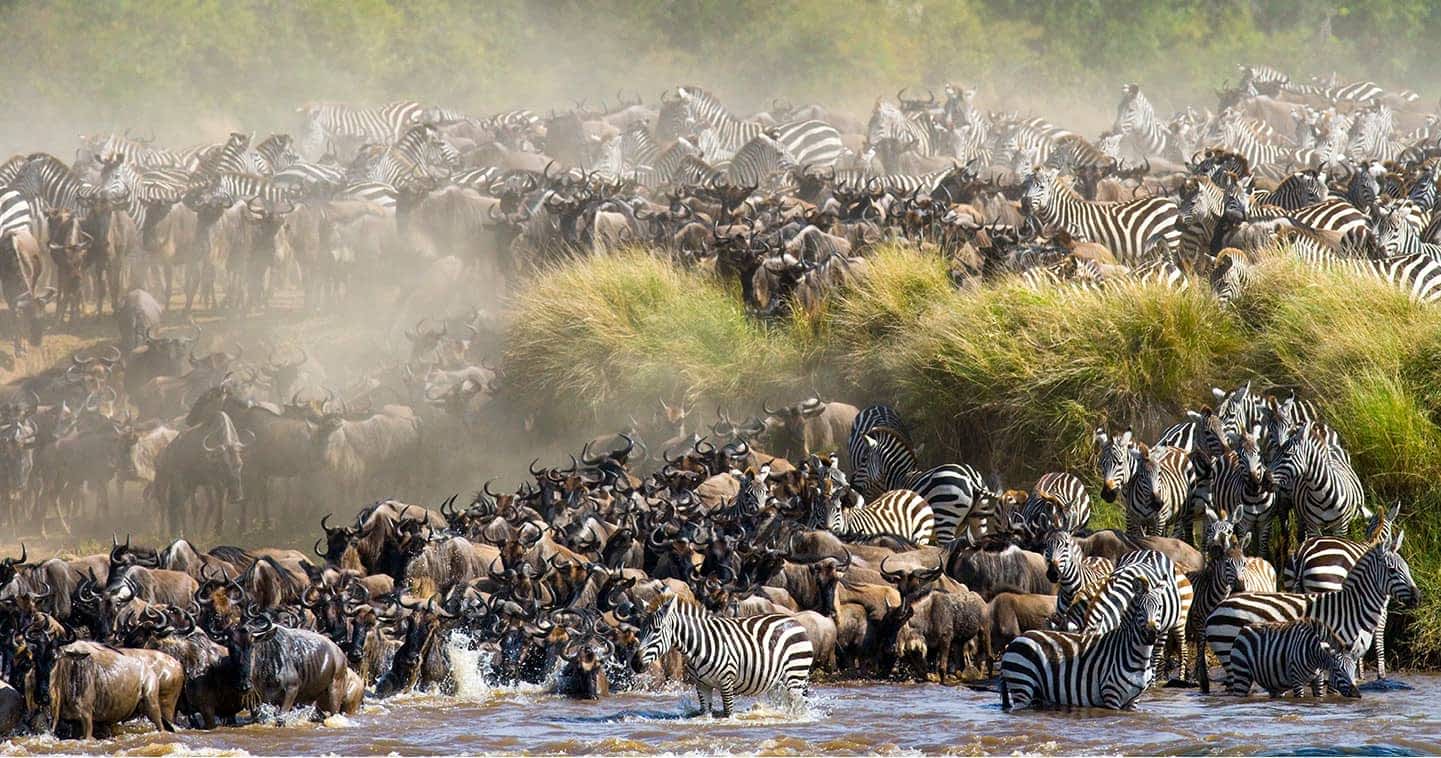
The Great Migration is one of nature's most spectacular events, and you'll have the opportunity to witness massive herds of wildebeest, zebras, and gazelles moving across the Serengeti and Masai Mara in search of fresh grazing lands. Beyond the migration, you can expect to see the Big Five—lions, elephants, buffalo, leopards, and rhinoceros—along with giraffes, hyenas, cheetahs, warthogs, and numerous bird species. The exact wildlife you encounter depends on the season and specific locations visited during your game drives.
The Great Migration typically occurs year-round as herds move in a circular pattern. The migration reaches the Masai Mara in Kenya between July and October, making this the prime season for witnessing river crossings and dramatic predator-prey interactions. The Serengeti in Tanzania hosts the migration during different months—typically December to May in the southern plains and June to November in the western corridor. Your timing depends on which phase of the migration you want to experience, so it's best to plan your safari around these peak periods for the most dramatic encounters.
Mountain gorilla trekking in Uganda's rainforests is an extraordinary wildlife experience that typically takes place in Bwindi Impenetrable National Park or Mgahinga Gorilla National Park. Treks usually begin early in the morning and involve hiking through dense, misty forests with an experienced guide to locate habituated gorilla families. The experience is physically demanding but deeply rewarding—you'll spend time observing these magnificent primates in their natural habitat, watching their social behaviors and interactions. The rainforest setting is lush and biodiverse, and you may encounter other wildlife and bird species along the way. Most treks last 2-7 hours depending on where the gorillas are located on any given day.
Mountain gorilla trekking permits are a significant investment in East Africa. Uganda's permits typically range from $700 to $1,500 USD per person, depending on the park and season. The permit grants you access to trek with a habituated gorilla family for approximately one hour, accompanied by experienced rangers and guides. Park entrance fees, professional guide services, and ranger fees are typically included in comprehensive safari packages. However, permits are separate from accommodation and meals, so it's important to clarify what's covered in your overall safari package versus what constitutes additional costs.
Yes, chimpanzee trekking is available in Uganda's rainforests, particularly in Kibale Forest National Park and Budongo Forest. Like gorilla trekking, it involves hiking through dense forest with experienced guides to locate habituated chimpanzee communities. Chimpanzee treks are generally less physically demanding than gorilla treks and typically take 2-4 hours. While gorillas are larger and more sedentary, chimpanzees are more active and vocal, offering a different but equally fascinating primate experience. Both experiences provide incredible opportunities to observe intelligent primates in their natural habitat, and many travelers choose to do both during an East African safari for a comprehensive primate adventure.
Packing for an 11-day East African safari requires preparation for varied climates and activities. Essential items include lightweight, neutral-colored clothing (khaki, tan, green) for game drives, sturdy hiking boots for gorilla and chimpanzee trekking, a warm fleece or jacket for early morning drives and high-altitude areas, and rain gear for the rainy seasons. Bring high-SPF sunscreen, a wide-brimmed hat, sunglasses, and insect repellent. Pack binoculars for wildlife viewing, a good camera, and extra batteries. Include any personal medications, a basic first-aid kit, and toiletries. For accommodation, bring casual evening wear. Quick-dry clothing is practical given potential water activities. Check weather forecasts for your specific travel dates, as conditions vary between Tanzania, Kenya, and Uganda, and between different seasons.
Health requirements for East African safaris vary by country and region. Yellow fever vaccination is often recommended or required, particularly for Uganda. Malaria prophylaxis is typically advised for most safari destinations, though risk levels vary by location and season. Consult your healthcare provider at least 4-6 weeks before travel to discuss vaccinations (such as typhoid, hepatitis A and B, and routine immunizations) and malaria prevention options. Ensure you have comprehensive travel insurance that covers medical evacuation, as remote safari locations may be far from advanced medical facilities. Drinking water is typically provided during game drives, but bring water purification tablets or drink bottled water. Practice good hygiene and insect protection to minimize disease risks in rainforest areas.
An 11-day East African safari involves varying levels of physical activity. Game drives are relatively low-impact, involving sitting in a vehicle for extended periods, though early starts and variable terrain can be tiring. Gorilla and chimpanzee trekking are the most physically demanding components, requiring hiking through steep, muddy rainforest terrain at altitude—these treks can last 2-7 hours and are suitable for people with moderate to good fitness levels. Cultural visits and Lake Bunyonyi activities are generally less strenuous. The combination of early starts, altitude changes, and varied activities means reasonable fitness is beneficial. However, safaris can be adapted for different fitness levels—discuss any physical limitations with your tour operator, as modifications to activities can often be arranged.
Comprehensive safari packages typically include park entrance fees, all game drives with professional guides, airport transfers, accommodation, meals as specified, drinking water during drives, and emergency evacuation coverage. These inclusions cover the core safari experience and logistics. However, several costs are usually separate: international flights, visa fees, travel insurance, tips and gratuities for guides and staff, personal expenses, and alcoholic beverages. Gorilla and chimpanzee trekking permits are significant additional costs not always included in base package prices. Activities beyond those listed, such as hot air balloon rides, special cultural experiences, or optional excursions, may also incur extra fees. Always review your package details carefully and ask your tour operator for a complete breakdown of what's included versus what requires additional payment.
An 11-day safari is an excellent duration for experiencing both the Big Five and the Great Migration across multiple East African destinations. This timeframe allows you to spend several days in the Serengeti and Masai Mara for migration viewing and Big Five encounters, while also dedicating time to gorilla and chimpanzee trekking in Uganda's rainforests. Shorter safaris (3-5 days) may allow you to see significant wildlife but provide less flexibility if animals aren't spotted on particular days. Longer safaris (14+ days) offer more comprehensive experiences across additional destinations. An 11-day itinerary balances wildlife viewing opportunities, primate experiences, cultural interactions, and relaxation time, making it ideal for first-time safari-goers seeking a complete East African adventure without excessive travel fatigue.
 GoExplore SafarisKampala, Uganda4.8(85 reviews)
© 2026 SafariFind. All rights reserved.
