 1 / 6
1 / 6 4 daysPrivate
4-Day The Delta Drift – An Authentic Mokoro Safari
by
Highlights
- Traditional mokoro excursions
Loading SafariFind...
1 / 6by
SafariFind app
Keep up with your inquiries and bookings, and message operators wherever you are.

Arrival in the Okavango Delta
Maun
Meals: Lunch, Dinner
Mokoro Excursions & Walking Safari
Okavango Delta
Meals: Breakfast, Lunch, Dinner
Full Day Delta Experience
Okavango Delta
Meals: Breakfast, Lunch, Dinner
Departure from the Delta
Okavango Delta
Meals: Breakfast
Year Round
Year-round
| Season | Solo traveller | 2 people | 3 – 4 people | 5 – 6 people | 7+ people | Child rate | Single suppl. |
|---|---|---|---|---|---|---|---|
Year Round Year-round | $1,487 | $991 | $892 | $842 | $793 | $694 | $297 |
Child rate applies to travelers under 12 years. Single supplement applies to solo travelers taking their own room.
The Okavango Delta is home to a diverse array of wildlife that thrives in this unique wetland ecosystem. You can expect to encounter elephants, buffalo, lions, leopards, hippos, and various antelope species including impala, kudu, and lechwe. The Delta is particularly renowned for its exceptional birdlife, with over 400 bird species recorded in the region, making it a paradise for birdwatchers. Reptiles like crocodiles and monitor lizards are also common. The slow-paced nature of mokoro travel allows for intimate wildlife viewing and photography opportunities, as the quiet dugout canoes don't disturb animals, enabling closer encounters than traditional vehicle safaris.
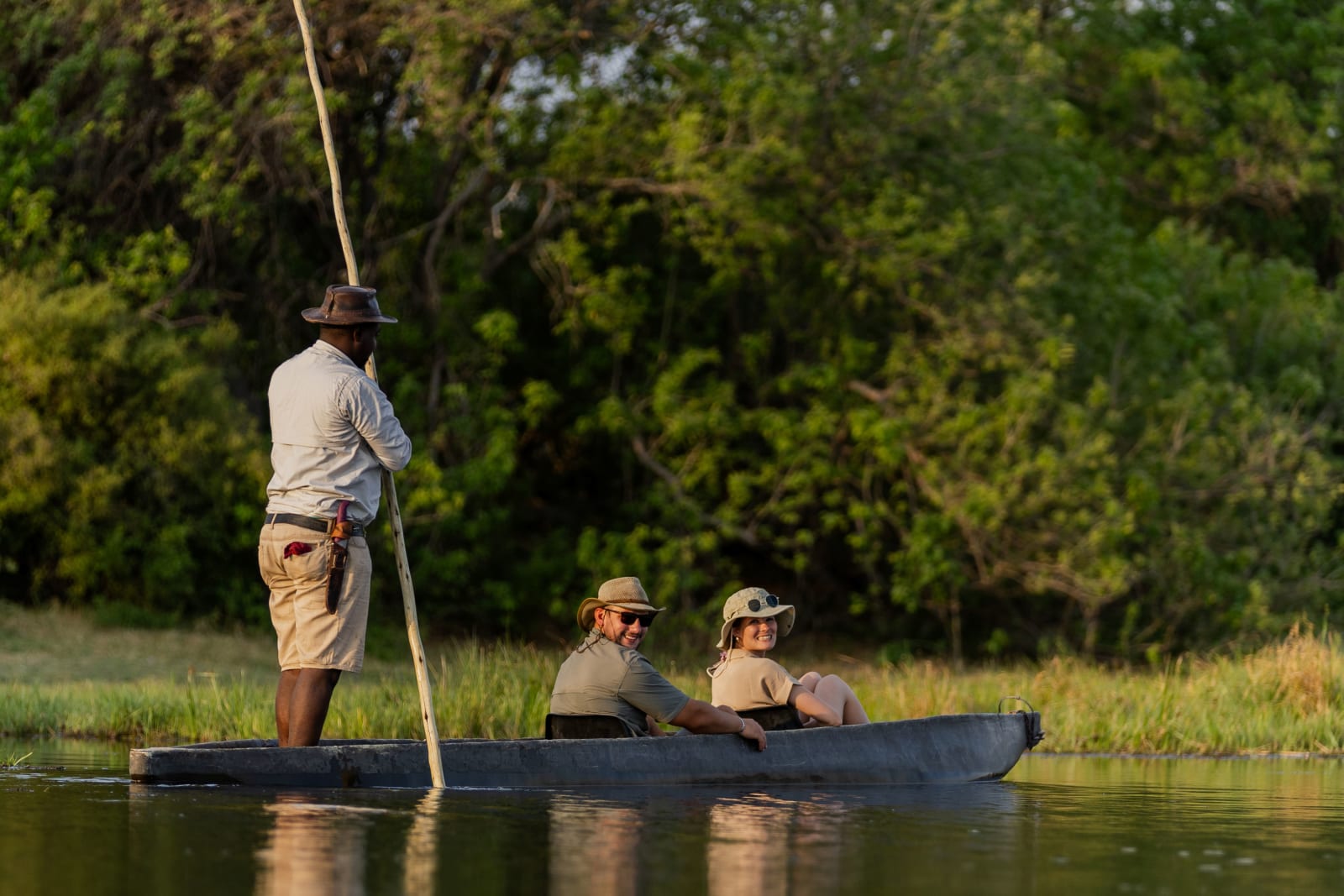
A mokoro is a traditional dugout canoe that has been used by the people of the Okavango Delta for centuries. It's a narrow, shallow-draft boat typically made from a single hollowed log, perfectly designed for navigating the shallow waterways, lagoons, and narrow channels of the Delta. During a mokoro safari, a skilled poler stands at the stern and propels the canoe using a long pole, pushing against the riverbed. This traditional method of transport is incredibly peaceful and non-intrusive, allowing you to glide silently through the water and get remarkably close to wildlife without causing disturbance. The mokoro experience is central to understanding the Delta's ecosystem and offers a meditative, immersive way to explore this pristine wilderness.
The Okavango Delta has two main seasons, each offering distinct advantages. The dry season, from May to October, is generally considered the best time for wildlife viewing. During these months, water levels are lower, concentrating animals around remaining water sources, making them easier to spot. The weather is cooler and more comfortable for activities. The wet season, from November to April, transforms the Delta into a lush green landscape with abundant birdlife and fewer tourists. However, some areas may become inaccessible due to flooding. The shoulder seasons (April-May and September-October) offer a good balance of wildlife viewing and landscape beauty. Your choice depends on whether you prioritize wildlife encounters or prefer a greener, more solitary experience.
A 4-day safari in the Okavango Delta is a solid introduction to this remarkable wilderness and allows you to experience the key highlights of the region. This duration gives you enough time to settle into the rhythm of the Delta, enjoy multiple mokoro excursions through different waterways and lagoons, participate in guided walking safaris, and witness the stunning sunsets the region is famous for. You'll have sufficient time to spot major wildlife and appreciate the birdlife without feeling rushed. However, if you have the flexibility, many experienced travelers recommend 5-7 days to explore different areas of the Delta more thoroughly and increase your chances of encountering rare species. That said, a 4-day trip provides an excellent immersive experience and is an ideal length for those with limited time.
Packing for a mokoro safari requires thoughtful consideration of the environment and activities. Bring lightweight, neutral-colored clothing suitable for warm days and cool mornings and evenings. Include a wide-brimmed hat, sunglasses, and high-SPF sunscreen, as sun exposure is intense near the water. Pack a waterproof bag or dry bag to protect electronics and valuables during water activities. Bring binoculars for birdwatching and wildlife spotting, and a camera with extra batteries and memory cards. Comfortable walking shoes and sandals are essential. Include insect repellent, particularly for dawn and dusk when mosquitoes are active. A light rain jacket is useful even in the dry season. Toiletries, medications, and any personal items should be brought in full, as supplies are limited in remote Delta camps. Check with your operator about laundry facilities, as most camps offer daily laundry service, reducing the need to pack excessive clothing.
Visa requirements for visiting the Okavango Delta depend on your nationality and the country you're traveling to—in this case, Botswana. Many nationalities receive visa-free entry or can obtain a visa on arrival, but requirements vary significantly. It's essential to check the official Botswana government website or contact your nearest Botswian embassy well in advance of your travel dates to determine your specific visa needs. Some nationalities may require a visa obtained before arrival. Additionally, most countries recommend certain vaccinations for travel to Botswana, including yellow fever, malaria prophylaxis, and routine immunizations. Consult with a travel health clinic 4-6 weeks before your trip. Travel insurance is highly recommended to cover medical emergencies, trip cancellations, and evacuation if needed in remote areas. Your safari operator can often provide guidance on these requirements, but you remain responsible for ensuring all documentation is in order.
A typical Okavango Delta safari package includes essential components such as accommodation in comfortable camp facilities, all meals (breakfast, lunch, and dinner), park entrance fees, professional English-speaking guides, mokoro excursions, guided walking safaris, bottled water during activities, and airport transfers. These inclusions cover the core safari experience and logistics. However, items typically not included are international airfare, visa fees, travel insurance, vaccinations, and personal expenses such as souvenirs or additional beverages. Tips and gratuities for guides and staff are also usually not included, though they are customary and appreciated. Optional activities beyond the standard itinerary may incur additional costs. It's important to clarify with your operator exactly what's covered before booking to avoid surprises and budget accordingly for excluded items. Most reputable operators provide a detailed breakdown of inclusions and exclusions in their package information.
The cost of an Okavango Delta safari varies widely depending on several factors, including the duration, season, accommodation level, and operator. A 4-day safari can range from budget-friendly options to luxury experiences. Peak season (dry season) typically commands higher prices due to increased demand and better wildlife viewing conditions. Accommodation ranges from basic camps to ultra-luxury lodges, significantly impacting overall cost. Budget safaris might start around $1,500-2,500 per person for 4 days, while mid-range options typically fall between $2,500-5,000, and luxury safaris can exceed $5,000+ per person. Prices often depend on group size, with smaller groups paying more per person. It's worth noting that many packages include meals, guides, and activities, which represents good value compared to self-guided travel. To get accurate pricing, request quotes from multiple operators and compare what's included. Consider booking during shoulder seasons for better value while still enjoying good wildlife viewing conditions.
Mokoro safaris and traditional game drive safaris offer fundamentally different experiences suited to different preferences. Mokoro safaris are slow-paced, water-based explorations using traditional dugout canoes, ideal for wildlife viewing in wetland environments like the Okavango Delta. They emphasize tranquility, intimate encounters, and are particularly excellent for birdwatching and observing water-based wildlife. Game drive safaris, by contrast, use open vehicles on land and are faster-paced, covering larger areas and suited for spotting savanna wildlife like big cats and large herds. Game drives typically cover more ground in less time but can be noisier and more disruptive to wildlife. Mokoro safaris are more immersive and meditative, offering a unique connection to the ecosystem, while game drives are more action-oriented and efficient for comprehensive wildlife spotting. Many travelers find that combining both experiences—as some multi-destination trips do—provides the most well-rounded African safari adventure.
A mokoro safari is generally considered one of the least physically demanding safari experiences, making it suitable for travelers of varying fitness levels. The mokoro itself requires no physical exertion—you simply sit in the canoe while a skilled poler navigates the waterways. However, the experience does include guided walking safaris on islands and through Delta terrain, which involve moderate walking on uneven ground for varying distances and durations. These walks are typically conducted at a leisurely pace to allow for wildlife observation and photography. The main physical demands are related to the African heat and sun exposure rather than strenuous activity. Early morning and late afternoon activities mean you'll be active during cooler parts of the day. If you have mobility issues, arthritis, or other physical limitations, inform your operator in advance so they can tailor activities accordingly. The slow pace, comfortable camp accommodation, and three daily meals make this safari accessible to older travelers and those seeking a more relaxed pace. Most people find it rejuvenating rather than exhausting.
 Wild Spirit TravelMaun, Botswana5.0(7 reviews)
© 2026 SafariFind. All rights reserved.
