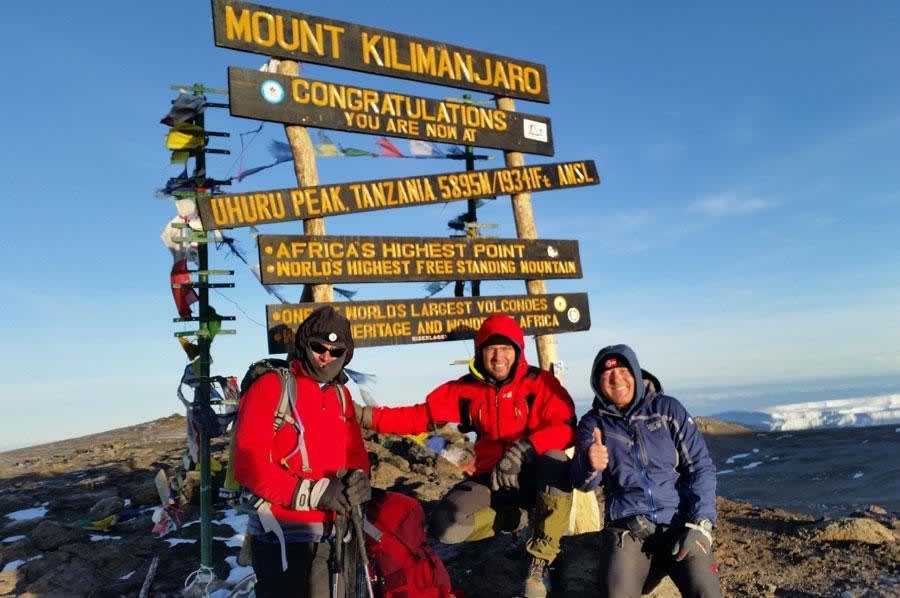
 1 / 6
1 / 6 5 daysGroup Joining
5-Day 5 Days Kilimanjaro trekking via Marangu route
by
Highlights
- Scenic view of Kilimanjaro mountain
Loading SafariFind...
1 / 6by
SafariFind app
Keep up with your inquiries and bookings, and message operators wherever you are.

Day 1
Kilimanjaro National Park
Meals: Lunch, Dinner
Day 2
Kilimanjaro National Park
Meals: Breakfast, Lunch, Dinner
Day 3
Kilimanjaro National Park
Meals: Breakfast, Lunch, Dinner
Day 4
Kilimanjaro National Park
Meals: Breakfast, Lunch, Dinner
Day 5
Kilimanjaro National Park
Meals: Breakfast, Lunch
Year Round
Aug 2026 – Dec 2028
| Season | Solo traveller | 2 people | 3 – 4 people | 5 – 6 people | 7+ people | Child rate |
|---|---|---|---|---|---|---|
Year Round Aug 2026 – Dec 2028 | $1,600 | $1,580 | $1,580 | $1,560 | $1,560 | $1,500 |
Child rate applies to travelers under 12 years.
The Marangu Route, commonly known as the 'Coca-Cola Route,' is the most popular and most established trekking path up Mount Kilimanjaro. It's the only route that offers dormitory-style mountain hut accommodation rather than camping, making it more comfortable for many trekkers. The route is known for its gradual slope and well-maintained trail, making it a popular choice for first-time climbers. The name 'Coca-Cola Route' comes from the availability of cold drinks at the huts along the way. This route typically takes 5-6 days to complete and has the highest success rate among all Kilimanjaro routes due to its moderate gradient.
A standard Kilimanjaro trek via the Marangu Route takes 5 days to complete. This timeline allows trekkers to ascend gradually from the gate at 1,860 meters to Uhuru Peak at 5,895 meters while acclimatizing to the altitude. The 5-day itinerary typically includes a summit night push from Gilman's Point to Uhuru Peak and a descent to the Marangu Gate. While 5 days is the standard duration, some operators offer 6-day options that include an extra acclimatization day, which can improve summit success rates by allowing your body more time to adjust to the altitude.
A typical Kilimanjaro trekking package includes several essential components: park entrance fees, professional mountain guides, porter services to carry equipment, accommodation in mountain huts along the route, all meals during the trek (breakfast, lunch, and dinner), drinking water provided in the vehicle, and emergency evacuation cover through flying doctors. Airport transfers are also usually included to transport you from the airport to the trekking starting point. However, it's important to note that international flights, visa fees, travel insurance, tips for guides and porters, and personal expenses are typically not included and should be budgeted separately.
A budget-friendly Kilimanjaro trek via the Marangu Route typically costs between $1,350 to $1,600 per person for a 5-day trek. This price point is achievable through shared group departures, which distribute costs among multiple trekkers. This budget-friendly pricing covers most essentials including park fees, accommodation in mountain huts, meals, professional guides, porters, and airport transfers. However, you should budget additional funds for items not included in the package price, such as international flights, visa fees, travel insurance, tips for guides and porters (typically 10-15% of the trek cost), and personal expenses like souvenirs or extra snacks.
The best times to climb Mount Kilimanjaro are during the dry seasons: January to March (short dry season) and June to October (long dry season). These periods offer the clearest skies, best visibility of the summit, and the most stable weather conditions. The June to October window is generally considered the peak trekking season with the most favorable conditions and highest success rates. However, these months are also the busiest and most expensive. If you prefer fewer crowds and lower prices, the January to March period is an excellent alternative, though it can be slightly colder. The rainy seasons (April to May and November to December) are generally not recommended for trekking due to muddy trails and reduced visibility.
While travel insurance is not always mandatory, it is highly recommended for a Kilimanjaro trek. Standard travel insurance should cover mountain rescue and evacuation, as altitude-related illnesses can occur even on the most popular routes. Your insurance policy should specifically include high-altitude trekking coverage and medical evacuation by air, as helicopter rescue from the mountain can cost thousands of dollars. Many travel insurance providers offer adventure or trekking-specific policies that cover mountaineering activities up to certain altitudes. It's essential to review your policy details carefully and ensure that Mount Kilimanjaro climbing is explicitly covered before you depart. Additionally, some packages include flying doctors evacuation cover, but this should be verified with your operator.
Packing for a Kilimanjaro trek requires careful planning due to the dramatic temperature changes across different altitude zones. Essential items include: layered clothing (thermal base layers, fleece, and a waterproof jacket), a warm hat, gloves, and a scarf for the summit, sturdy hiking boots with good ankle support, thick socks, and a headlamp with extra batteries. Bring a lightweight sleeping bag rated for cold temperatures (summit night can drop below freezing), toiletries, sunscreen, lip balm with SPF, and a high-SPF sunscreen. A refillable water bottle is useful, though drinking water is provided in vehicles. Pack medications for altitude sickness (consult your doctor), blister treatment, and any personal medications. Lightweight clothing for lower altitudes, a camera, and a small backpack for daily use are also helpful. Porters carry most of your gear, so you only need a day pack for the trek itself.
Altitude sickness, also known as acute mountain sickness (AMS), can affect trekkers at high elevations on Kilimanjaro. Common symptoms include headache, nausea, dizziness, fatigue, and difficulty sleeping. More severe symptoms include vomiting, confusion, loss of coordination, and rapid breathing, which may indicate high altitude cerebral edema (HACE) or high altitude pulmonary edema (HAPE) — both serious conditions requiring immediate descent. The gradual slope of the Marangu Route helps with acclimatization, but altitude sickness can still occur. To minimize risk, ascend slowly, stay hydrated, avoid alcohol, and consider taking acetazolamide (Diamox) as a preventative measure after consulting your doctor. If you experience severe symptoms, inform your guide immediately, as descent is often the most effective treatment. Professional guides are trained to recognize and manage altitude-related issues.
Mount Kilimanjaro is more about endurance and mental determination than extreme fitness. The Marangu Route's gradual slope makes it accessible to people of varying fitness levels, though some baseline fitness is necessary. Ideally, you should be able to walk for 5-7 hours daily at a comfortable pace without excessive strain. Regular cardiovascular training such as hiking, running, or cycling for 3-4 months before your trek will significantly improve your chances of success. Strength training for your legs and core is also beneficial. The key is building aerobic endurance rather than intense strength. Many first-time trekkers successfully summit Kilimanjaro without being elite athletes. However, people with serious health conditions should consult their doctor before attempting the trek, and proper acclimatization during the climb is crucial for success regardless of fitness level.
The Marangu Route has one of the highest summit success rates among all Kilimanjaro routes, typically ranging from 75-85% for 5-day treks and even higher (85-90%) for 6-day options. The gradual ascent profile and hut accommodation, which provide better rest than camping, contribute to this higher success rate. The main reasons for not summiting are altitude sickness, physical exhaustion, and weather conditions rather than technical difficulty. Success rates can be improved by choosing a 6-day itinerary instead of 5 days, allowing an extra day for acclimatization, and following your guide's pace recommendations. Starting your trek in good health, being well-trained, staying hydrated, and eating adequate calories also significantly increase your chances of reaching Uhuru Peak. Working with experienced, professional guides and listening to their advice about pacing and acclimatization is crucial for a successful summit attempt.
 Inno Africa SafarisARUSHA, Tanzania
© 2026 SafariFind. All rights reserved.