 1 / 4
1 / 4 5 daysGroup Joining
5-Day Marangu Route
byTrusted
Loading SafariFind...
1 / 4byTrusted
SafariFind app
Keep up with your inquiries and bookings, and message operators wherever you are.

DAY 1: MARANGU GATE – MANDARA HUTS: 7k /mi | 4-5 hrs | Rainforest
Kilimanjaro National Park
Meals: Dinner
DAY 2: MANDARA HUTS – HOROMBO HUTS: 11km/3mi | 6-8hrs | Mooreland
Kilimanjaro National Park
Meals: Breakfast, Lunch, Dinner
DAY 3: HOROMBO HUTS- KIBO HUTS: 10km/6mi | 6-8hrs | Semi-Desert
Kilimanjaro National Park
Meals: Breakfast, Lunch, Dinner
DAY 4: KIBO HUTS – SUMMIT: 4km /2.5 mi up | 5-7hrs | – HOROMBO HUTS: 14km /9mi down | 5-6hrs | Glaciers, Snow Capped Summit
Kilimanjaro National Park
Meals: Breakfast, Lunch, Dinner
DAY 5: HOROMBO HUTS – MARANGU GATE – MOSHI: 18km/11mi |6-7hrs | Rainforest
Moshi City
Meals: Breakfast
Year Round
Year-round
| Season | Solo traveller | 2 people | 3 – 4 people | 5 – 6 people | 7+ people | Child rate |
|---|---|---|---|---|---|---|
Year Round Year-round | $2,114 | $2,114 | $2,114 | $1,903 | $2,114 | $1,691 |
Child rate applies to travelers under 12 years.
The Marangu Route is one of six established climbing routes on Mount Kilimanjaro in Tanzania, commonly known as the 'Coca-Cola Route.' It approaches the mountain from the south and is the most popular route because it can be completed in fewer days (typically 5-6 days) and features permanent sleeping huts at campsites rather than requiring tent camping. The route shares the same ascent and descent path, which means climbers pass through the same areas twice. While this route is more accessible for beginners, it has a steeper incline and less time for acclimatization compared to longer routes, which can result in a lower summit success rate.
The Marangu Route can be completed in 5 days, making it the fastest option among Kilimanjaro's established routes. This shorter timeframe is one of the main reasons it's popular with climbers. However, the compressed schedule means less time for your body to acclimatize to the high altitude, which can affect your chances of reaching the summit successfully. The summit push from Kibo Hut to Uhuru Peak is particularly steep and demanding, typically done overnight.
The Marangu Route has a lower summit success rate compared to longer routes on Kilimanjaro. This is primarily due to two factors: the steep incline and the limited time available for acclimatization. With only 5 days to climb, your body has less opportunity to adjust to the increasing altitude, which can lead to altitude sickness and summit failure. Routes that take 7-8 days, such as Lemosho or Machame, typically have higher success rates because they allow more gradual acclimatization.
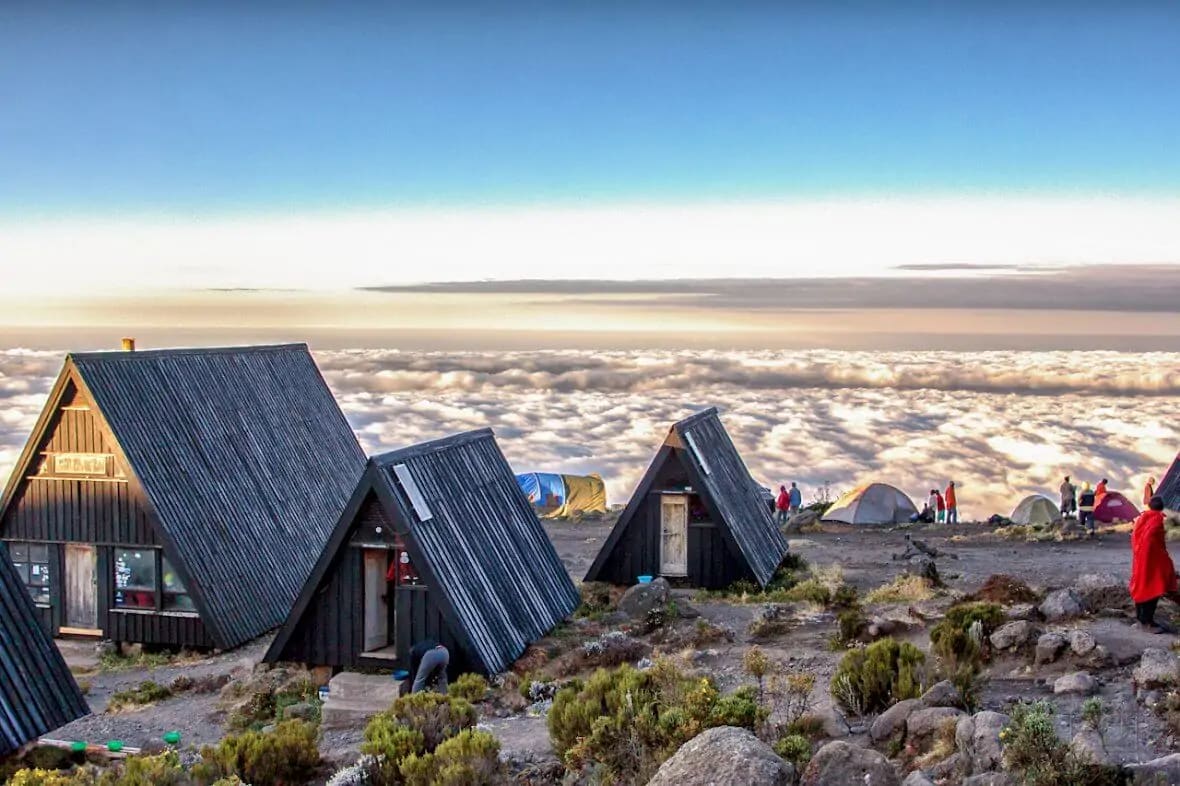
The Marangu Route is unique among Kilimanjaro's climbing routes because it features permanent sleeping huts at campsites, rather than requiring tent camping. This is one of the key reasons climbers choose the Marangu Route—you'll have shelter with basic amenities instead of sleeping in tents at high altitude. The huts provide more comfort and protection from the elements compared to camping, though conditions are still basic. This infrastructure makes the route more accessible for climbers who prefer not to camp.
For a 5-day Kilimanjaro climb, pack layers of warm clothing since temperatures drop significantly with altitude—you'll experience everything from tropical heat at the base to freezing conditions at the summit. Essential items include: a warm sleeping bag rated for sub-zero temperatures, waterproof jacket and pants, hiking boots (broken in before the climb), thermal underwear, warm hat, gloves, and sunscreen. Bring moisture-wicking socks and multiple pairs, as keeping feet dry is crucial. Also pack a headlamp, water bottles or hydration system, high-energy snacks, and any personal medications. Since three meals daily are provided, you don't need to carry extensive food supplies, but bringing energy bars and electrolyte tablets can help with acclimatization.
The Marangu Route culminates at Uhuru Peak, the summit of Mount Kilimanjaro, which stands at 5,895 meters (19,341 feet) above sea level. This is the highest point in Africa. The route passes through Gilman's Point (5,681 meters) on the final summit push before reaching Uhuru Peak. The climb involves ascending through multiple ecological zones, from tropical rainforest at lower elevations to alpine desert and finally the arctic summit zone. The steep ascent combined with the high altitude makes acclimatization challenging on this 5-day route.
Yes, altitude sickness is a significant risk on the Marangu Route, particularly because the 5-day timeline allows limited acclimatization. As you climb rapidly from lower elevations to nearly 6,000 meters, your body has less time to adjust to decreasing oxygen levels. Common symptoms include headaches, nausea, fatigue, and difficulty sleeping. To minimize risk, stay hydrated, eat regular meals, move slowly (pole pole), and listen to your guide's advice. If symptoms worsen, inform your guide immediately. Longer routes like Lemosho or Machame provide more acclimatization days and may be better choices if you're concerned about altitude sickness.
The best times to climb Mount Kilimanjaro are during the dry seasons: January to early March and June to October. These periods offer the clearest skies, best visibility for views, and the most stable weather conditions. January to March is considered peak season with slightly warmer temperatures, though it's busier. June to October offers excellent conditions with cooler temperatures at altitude. The rainy seasons (April-May and November-December) are less ideal due to muddy trails, reduced visibility, and higher risk of weather-related challenges. Your guide can help you choose the optimal timing based on your fitness level and preferences.
During your climb, three meals daily are provided: breakfast, lunch, and dinner. Your professional guide and support team will prepare nutritious meals at each camp to fuel your body for the physical demands of climbing. Meals typically include carbohydrates, proteins, and vegetables adapted for high-altitude climbing. It's important to eat regularly even if your appetite decreases due to altitude. Regarding water, you should bring refillable water bottles or a hydration system and stay constantly hydrated—this is crucial for acclimatization and preventing altitude sickness. While water may be available at some camps, carrying your own ensures you can drink whenever needed throughout the day.
A typical 5-day Kilimanjaro climbing package includes: all park entrance fees, three meals daily (breakfast, lunch, and dinner), a professional English-speaking guide, airport transfers, and government taxes and VAT. However, packages typically exclude international airfare, travel insurance (highly recommended), visa fees, alcoholic beverages, tips and gratuities for your guide and porters, personal expenses, and optional activities. Accommodation before and after your climb is also usually not included, so you'll need to arrange hotel stays separately. It's important to budget for these exclusions and consider purchasing comprehensive travel insurance that covers high-altitude climbing.
© 2026 SafariFind. All rights reserved.