 1 / 9
1 / 9 5 daysGroup Joining
5-Day Wild Currents - Mokoro and Motorized Boat Safari
by
Highlights
- guided nature walks
Loading SafariFind...
1 / 9by
SafariFind app
Keep up with your inquiries and bookings, and message operators wherever you are.

Arrival in Okavango Delta & First Delta Introduction
Okavango Delta
Meals: Lunch, Dinner
Mokoro Exploration of Hidden Channels
Okavango Delta
Meals: Breakfast, Lunch, Dinner
Transfer to Chief's Island Viewing By Water
Okavango Delta
Meals: Breakfast, Lunch, Dinner
Motorized boat exploration of the waterways
Chief's Island
Meals: Breakfast, Lunch, Dinner
Final Drift & Departure
Chief's Island
Meals: Breakfast
Day 6
Chief's Island
Meals: Breakfast, Lunch, Dinner
Day 7
Maun
Meals: Breakfast
Year Round
Year-round
| Season | Solo traveller | 2 people | 3 – 4 people | 5 – 6 people | 7+ people | Child rate | Single suppl. |
|---|---|---|---|---|---|---|---|
Year Round Year-round | $1,573 | $1,573 | $1,573 | $1,573 | $1,573 | $1,573 | $472 |
Child rate applies to travelers under 12 years. Single supplement applies to solo travelers taking their own room.
Botswana's waterways, particularly in areas like the Okavango Delta, are home to an incredible variety of wildlife. You can expect to see elephants, hippos, buffalo, and various antelope species coming to drink at the water's edge. The region is also a birdwatcher's paradise, with over 400 bird species including African fish eagles, herons, and kingfishers. Crocodiles are common along the channels, and you may also spot lions, leopards, and wild dogs depending on the season and location. The combination of water-based exploration allows you to observe animals in their natural habitat during both their most active feeding times.
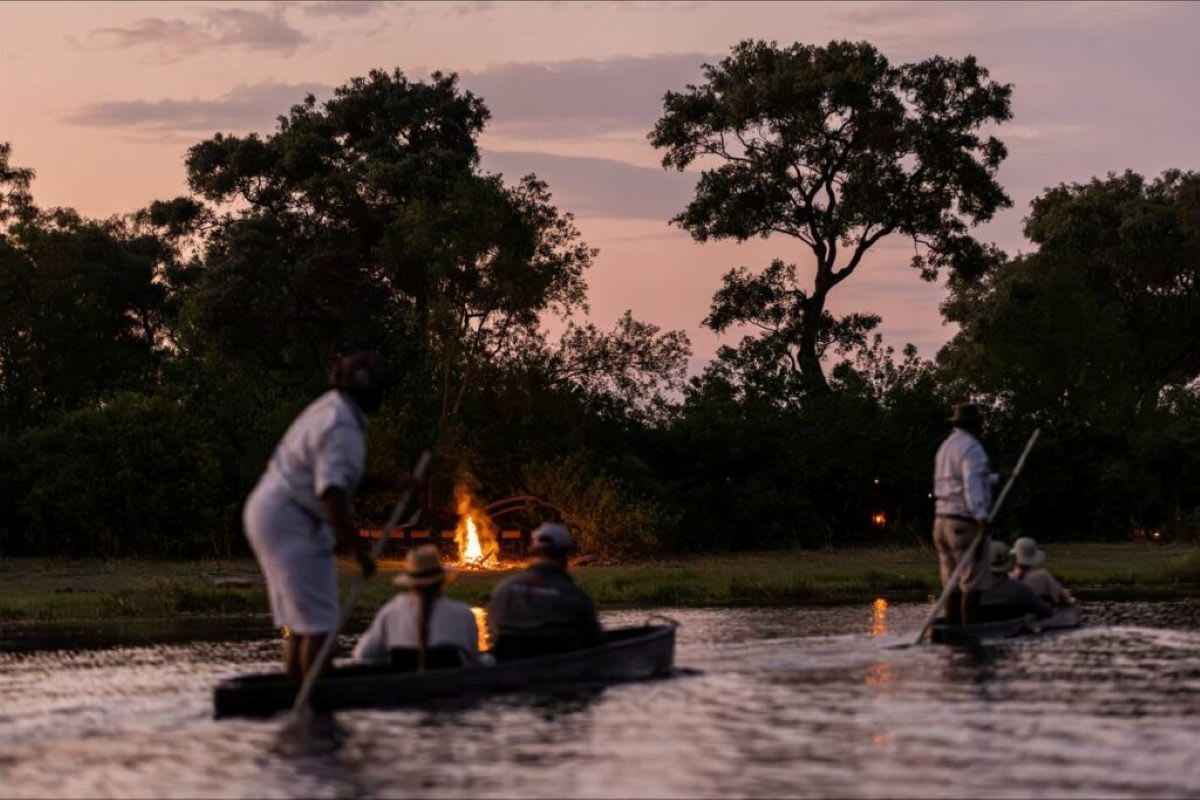
A mokoro is a traditional, flat-bottomed canoe propelled silently by a guide using a long pole, allowing for an intimate, peaceful exploration of narrow channels and shallow lagoons. This method is ideal for observing wildlife without engine noise and getting close to birds and smaller animals. A motorized boat, by contrast, covers larger distances more quickly across open water and floodplains, making it better for spotting larger game and reaching more remote areas. Many safari experiences combine both methods to give you the advantages of each—the tranquility and close-up viewing of the mokoro with the excitement and broader coverage of motorized exploration.
The best time for a Botswana water safari depends on what you want to experience. The dry season (May to September) offers the most reliable wildlife viewing, as animals concentrate around water sources, making them easier to spot. Water levels are also lower, creating more defined channels for mokoro navigation. The wet season (November to March) brings lush landscapes, migratory birds, and fewer tourists, though some areas may have higher water levels. The shoulder seasons (April and October) offer a good balance of wildlife activity and accessibility. Most operators recommend the dry season for optimal game viewing, but each season has its unique appeal.
Visa requirements for Botswana depend on your nationality. Many nationalities, including citizens of the United States, United Kingdom, Canada, Australia, and most European countries, receive a visitor's permit upon arrival without needing to apply for a visa in advance. However, this can change, and requirements vary by country. It's essential to check with the Botswana Department of Immigration or your nearest Botswana embassy or consulate at least 6-8 weeks before your trip to confirm current requirements for your specific nationality. Some travel packages may assist with visa information, but you should verify independently.
While no vaccinations are officially required for entry into Botswana, several are strongly recommended depending on your medical history and the specific areas you'll visit. Yellow fever vaccination is often recommended, particularly if you're traveling from endemic areas or visiting the Okavango Delta region. Malaria is present in certain areas of Botswana, so antimalarial medication is typically advised for water-based safaris. Other commonly recommended vaccinations include those for typhoid, hepatitis A and B, and routine immunizations. Consult with a travel medicine specialist or your doctor at least 4-6 weeks before departure to receive personalized advice based on your health history and itinerary.
Pack lightweight, neutral-colored clothing for daytime game drives and activities—avoid bright colors that might startle wildlife. Bring a warm layer and a waterproof jacket, as early mornings and evenings can be cool, and you may get splashed on boat excursions. Essential items include a wide-brimmed hat, high-SPF sunscreen, sunglasses, and insect repellent to protect against mosquitoes. Waterproof bags are crucial for protecting cameras and valuables during water activities. Comfortable walking shoes and sandals suitable for water are important. Don't forget binoculars for bird watching, a camera with extra batteries, and any personal medications. Pack toiletries, but many lodges provide basics. Swimwear is useful if your accommodation has a pool. Keep luggage to a reasonable size, as small aircraft transfers may have weight restrictions.
A 5-day safari is an excellent duration for experiencing Botswana's waterways and wildlife. This timeframe allows you to acclimatize to the environment, participate in multiple game drives and water excursions, and have a genuine immersive experience without feeling rushed. You'll have time to explore different areas, witness varied wildlife encounters, and enjoy both the peaceful mokoro experiences and exciting motorized boat adventures. Shorter safaris of 2-3 days are possible but feel quite compressed, while longer safaris of 7-10 days allow for even deeper exploration and increased wildlife viewing opportunities. For most travelers, 5 days strikes an ideal balance between experiencing the destination fully and managing time and budget constraints.
Yes, malaria is present in certain regions of Botswana, particularly in areas with water bodies and wetlands like the Okavango Delta. The risk is generally higher during the wet season (November to March) when mosquito populations increase. Most travelers visiting water-based safari destinations are advised to take antimalarial medication as a preventive measure. Additionally, using insect repellent containing DEET, wearing long sleeves and pants during dawn and dusk (when mosquitoes are most active), and sleeping under mosquito nets in accommodations all significantly reduce risk. Consult a travel medicine professional before your trip to determine if antimalarial medication is recommended for your specific itinerary and to discuss the best prevention strategy for your health profile.
A comprehensive Botswana safari package typically includes accommodation at safari lodges or camps, all meals (breakfast, lunch, and dinner), professional guide services, park entrance fees, and transportation during game drives and water activities. Most packages feature a private or shared 4x4 safari vehicle for land-based exploration and boats for water-based activities. Bottled water is usually provided during excursions. Airport transfers to and from your accommodation are generally included. What's typically NOT included are international flights, travel insurance, visa fees, vaccinations, tips and gratuities for guides and staff, and personal expenses like souvenirs or additional drinks. Some optional activities such as spa treatments, special dining experiences, or exclusive excursions may incur extra costs. Always review your specific package details to understand exactly what's covered.
Yes, spotting big cats like lions and leopards is possible on a Botswana water safari, though sightings are never guaranteed and depend on season, location, and luck. Lions often come to water sources to drink, particularly during the dry season, making water-based safaris excellent opportunities to observe them. Leopards are more elusive and nocturnal but can occasionally be spotted, especially during early morning or late evening excursions. Wild dogs are also present in the region and are increasingly common. The combination of mokoro and motorized boat exploration increases your chances of encountering these predators, as you'll be covering diverse terrain and water sources where they hunt and gather. Your professional guide's experience and knowledge of animal behavior significantly enhance the likelihood of memorable big cat encounters.
 Wild Spirit TravelMaun, Botswana5.0(7 reviews)
© 2026 SafariFind. All rights reserved.
