 1 / 2
1 / 2Board
Full board
Check-in
14:00
Check-out
11:00
About Lava Tower Camp
Amenities
Rooms
No Accommodation at Lava Tower
Lava Tower is a daytime acclimatization waypoint only. Climbers rest 2–3 hours at the tower during the midday trek from Shira Cave (3,750m) to Barranco Camp (3,900m). No tents, huts, or sleeping facilities exist at this location. Overnight accommodation is at established camps below and above the tower.
Frequently asked questions
What exactly is Lava Tower on Mount Kilimanjaro?
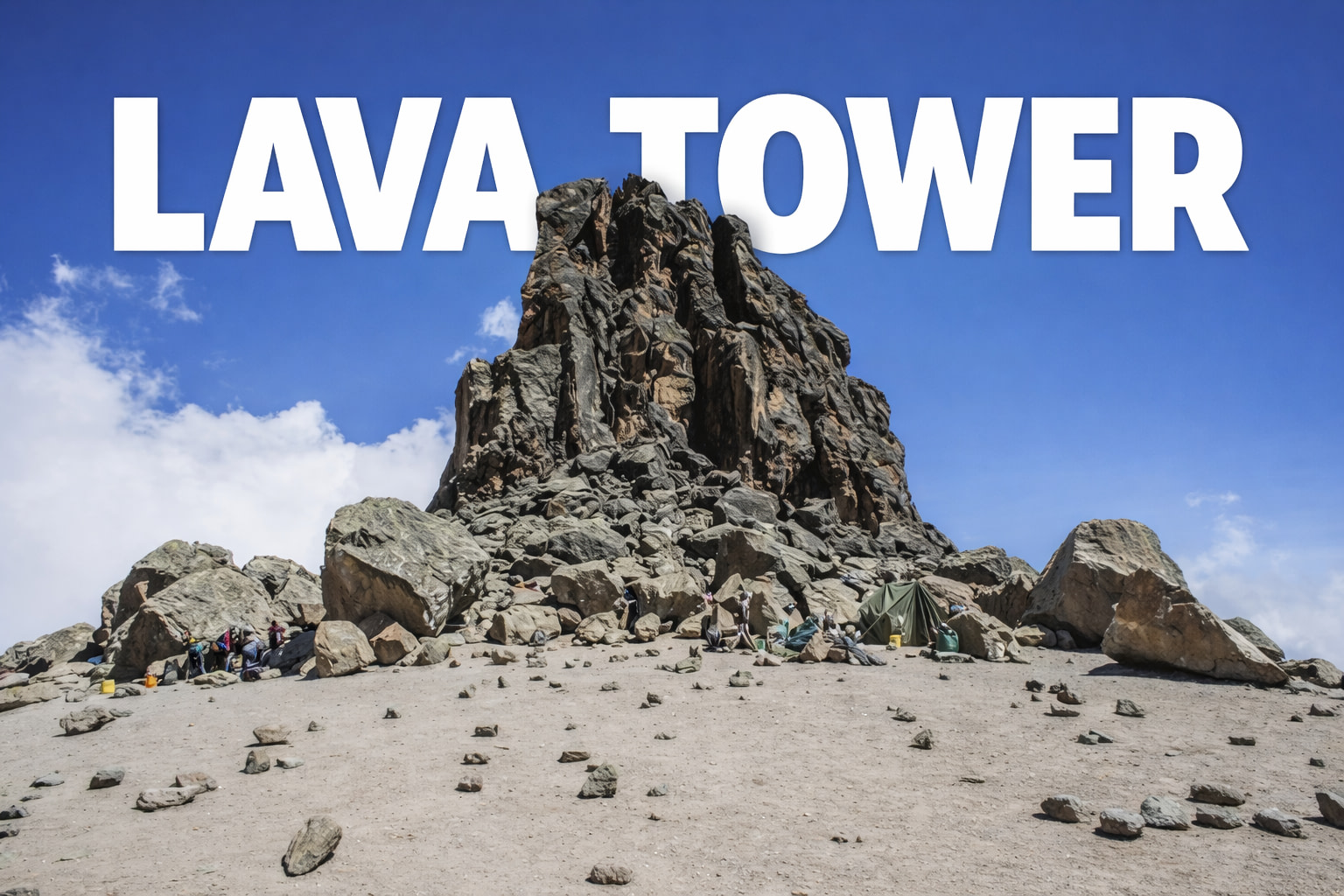
Lava Tower is a volcanic plug formation located at 4,600 meters (15,100 feet) on Mount Kilimanjaro's Machame climbing route. It originated from ancient lava that solidified into a distinctive columnar rock structure. The tower serves as a daytime acclimatization waypoint, not a lodge or camp—climbers rest there for 2–3 hours during the trek from Shira Cave to Barranco Camp [1].
Can I sleep at Lava Tower?
No. Lava Tower has no accommodation, lodges, huts, or camping facilities. It is a lunch and rest stop only, typically visited from approximately midday to mid-afternoon. Climbers sleep at established camps below Lava Tower (Shira Cave, 3,750m) and above it (Barranco Camp, 3,900m) [1].
Why do climbers stop at Lava Tower?
Climbers stop at Lava Tower to practice the "climb high, sleep low" acclimatization strategy. This involves ascending to higher altitude during the day to expose the body to thin air and lower oxygen levels, then descending to a lower camp for overnight rest where acclimatization continues. This approach significantly improves summit success rates and reduces acute mountain sickness risk [1].
How long does the trek from Shira Cave to Lava Tower take?
The trek from Shira Cave (3,750m) to Lava Tower (4,600m) covers approximately 7 kilometers and takes 5–6 hours, depending on individual fitness and acclimatization state. The elevation gain is 850 meters over steep volcanic scree terrain [1].
What are the views like at Lava Tower?
Lava Tower offers 360-degree panoramic views of Mount Kilimanjaro's upper slopes, including the snow-capped Kibo summit cone, the Mawenzi ridge, and on clear days, vistas across the Serengeti and Ngorongoro Conservation Area to the north. The volcanic rock formation provides dramatic photographic foreground [1].