 1 / 4
1 / 4🇧🇼 Botswana
Mababe
Fläche
50.000 km²
Höhe
950 m
Ideale Dauer
5 Tage
SafariFind wird geladen ...
1 / 4Fläche
50.000 km²
Höhe
950 m
Ideale Dauer
5 Tage
SafariFind-App
Behalten Sie Ihre Anfragen und Buchungen im Blick und schreiben Sie Veranstaltern, wo immer Sie sind.

Nächster Flughafen
Maun International Airport (MUU), 120–150 km; charter flights available from Savuti Airstrip (30–45 minutes drive) or direct flights from Maun (30–40 minutes)
Nächstgelegener Ort: Maun, 120–150 km south—main gateway to Okavango Delta and northern Botswana safari circuit; Kasane, 180 km northeast near Chobe National Park
Die täglichen Safarikosten liegen normalerweise zwischen $300–$500 pro Person. Darin enthalten sind Pirschfahrten, Unterkünfte in mobilen Zeltcamps oder festen Lodges sowie Mahlzeiten. Charterflüge ab Maun ($400–$600 pro Person für Hin- und Rückflug) erhöhen die Gesamtkosten. Mehrtägige Pakete (5–13 Tage) bieten ein besseres Preis-Leistungs-Verhältnis als eintägige Besuche. Vergleichen Sie Pakete und buchen Sie über geprüfte Anbieter auf SafariFind.com, um Optionen innerhalb Ihres Budgets zu finden.
In der Trockenzeit (Mai–Oktober) konzentrieren sich die Wildtiere an den ganzjährig vorhandenen Wasserstellen. Das sorgt für zuverlässige Tierbeobachtungen, wobei Juli–September die höchste Raubtieraktivität und große Elefantenherden bieten. Die grüne Saison (November–April) begeistert mit üppiger Vegetation, dramatischen Himmelsbildern und einer außergewöhnlichen Vogelwelt bei weniger Besuchern, allerdings mit mehr Niederschlag. November und April bieten ein ausgezeichnetes Preis-Leistungs-Verhältnis, gute Wildtiersichtungen und moderate Niederschläge. Wählen Sie die Trockenzeit für planbare Raubtierbegegnungen oder die grüne Saison für Vogelbeobachtung und Abgeschiedenheit.
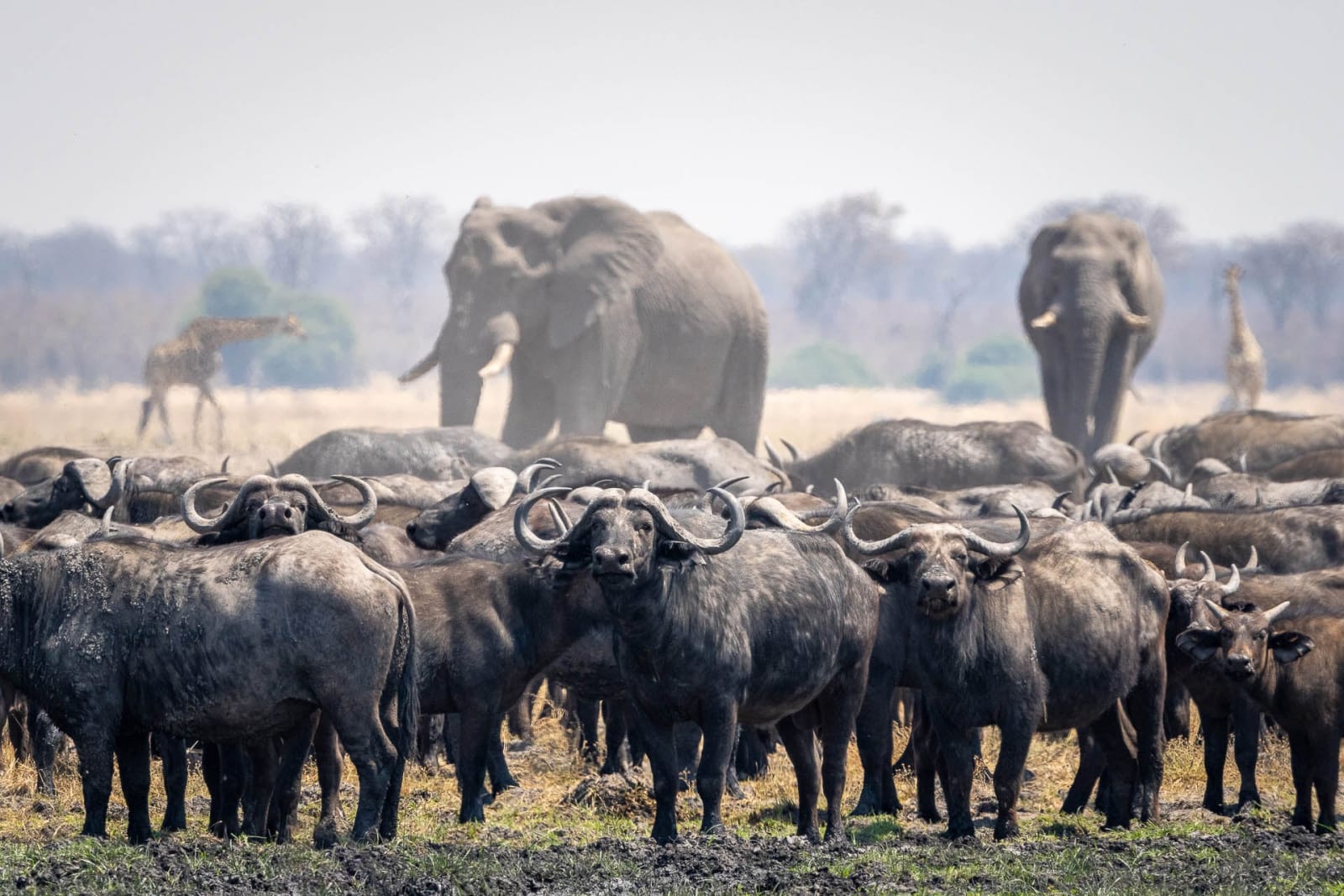
In Mababe leben alle bedeutenden Raubtiere – Löwen, Leoparden, Tüpfelhyänen, Geparden und die gefährdeten Afrikanischen Wildhunde. Zu den großen Pflanzenfressern zählen riesige Büffelherden, Elefanten in Ansammlungen von 50+, Zebras, Giraffen und Tsessebe-Antilopen. Über 300 Vogelarten wurden nachgewiesen, darunter Wasservögel, Watvögel und Greifvögel. Das Schutzgebiet ist besonders für Wildhundsichtungen und Raubtieraktivität bekannt, da die Konzession das Aufspüren abseits der Wege erlaubt.
Die meisten Besucher erreichen Mababe per Charterflug vom Maun International Airport (30–40 Minuten, $400–$600 pro Person für Hin- und Rückflug) oder von Kasane/Savuti (45–60 Minuten). Die Anreise auf der Straße von Maun, dem Moremi Game Reserve oder dem Chobe National Park ist mit Allradfahrzeugen möglich, dauert je nach Saison jedoch 3–6 Stunden. Der Magwikwe Sandridge ist während der Regenzeit (Dezember–Februar) unpassierbar. Charterflüge werden wegen ihres Komforts und der Zeitersparnis empfohlen.
Ja, Mababe eignet sich für Familien mit Kindern ab 8 Jahren. Pirschfahrten, Wandersafaris und Buschcamping sprechen Kinder an, die sich für Wildtiere interessieren. Mobile Zeltcamps und feste Lodges bieten familienfreundliche Unterkünfte mit abwechslungsreichen Aktivitäten. Für jüngere Kinder können lange Pirschfahrten anstrengend sein. Besprechen Sie bei der Buchung altersgerechte Routen mit den Anbietern. Nachtfahrten und versenkte Verstecke erfordern bei jüngeren Kindern eine Betreuung.
Mindestens 3–4 Tage ermöglichen mehrere Pirschfahrten und die Beobachtung der wichtigsten Wildtiere. Fünf bis sieben Tage sind ideal für eine umfassende Erkundung, die Suche nach Raubtieren und Vogelbeobachtung. Routen von zehn bis dreizehn Tagen, die Mababe mit dem Moremi Game Reserve oder dem Chobe National Park verbinden, bieten einen umfassenden Einblick in den Norden Botswanas. Längere Aufenthalte erhöhen die Chancen auf seltene Sichtungen wie Wildhunde und geben den Guides mehr Flexibilität bei der Pirsch abseits der Wege.
Die Unterkünfte reichen von mobilen Zeltcamps (preisgünstig und umfassend ausgestattet) bis zu festen Lodges mit mehr Komfort. Mobile Camps bieten authentische Wildniserlebnisse und wechseln täglich den Standort. Feste Lodges verfügen über eine permanente Infrastruktur und höhere Komfortstandards. Beide Unterkunftsarten umfassen Mahlzeiten, Betreuung durch Guides und Aktivitäten. Beliebte Optionen richten sich an Reisende im mittleren und gehobenen Preissegment. Die meisten Aufenthalte dauern im Rahmen mehrteiliger Botswana-Routen 3–7 Nächte.
Ja. Mababe bietet authentische Wildnis, hervorragende Raubtiersichtungen und über 300 Vogelarten und ist im Vergleich zum Okavango Delta oder Linyanti noch relativ unentdeckt. Die Konzessionsstruktur erlaubt es Guides, Wildtiere abseits der Wege und nach Einbruch der Dunkelheit zu verfolgen – etwas, das in Nationalparks nicht möglich ist. Dadurch ergeben sich einzigartige Möglichkeiten, das Verhalten der Tiere zu beobachten. Mababe dient als wichtiger Wanderkorridor zwischen großen Schutzgebieten, wodurch die saisonalen Bewegungen der Wildtiere besonders dynamisch sind. Wer Abgeschiedenheit, authentische Safari-Erlebnisse und zuverlässige Tierbeobachtungen ohne Touristenmassen sucht, findet in Mababe ein lohnendes Reiseziel.
Für alle Aktivitäten in Mababe ist ein Guide erforderlich. Guides verfügen über unverzichtbare Kenntnisse zum Verhalten der Wildtiere, zur Sicherheit, zur Raubtierverfolgung und zu ökologischen Zusammenhängen. Die Konzessionsstruktur gibt ihnen die Freiheit, Tiere abseits der Wege zu verfolgen, länger bei Sichtungen zu verweilen und Nachtfahrten durchzuführen – Fähigkeiten, die Ihr Erlebnis deutlich bereichern. Selbstfahren ist nicht erlaubt. Erfahrene Guides erhöhen Ihre Chancen auf seltene Sichtungen wie Wildhunde und ermöglichen sicherere Buschwanderungen.
Vergleichen Sie Safaripakete, lesen Sie geprüfte Bewertungen von Reisenden und buchen Sie über vertrauenswürdige Anbieter auf SafariFind.com. So können Sie Preise mehrerer geprüfter Anbieter vergleichen, authentisches Gästefeedback lesen und Routen finden, die zu Ihrem Budget und Ihren Interessen passen. Die meisten Pakete umfassen Unterkunft, Mahlzeiten, Pirschfahrten und die Betreuung durch Guides. Buchen Sie in der Hauptsaison (Juli–August) 2–3 Monate im Voraus oder in der Nebensaison 4–6 Wochen vorher, um sich Verfügbarkeiten und Plätze auf Charterflügen zu sichern.
Weitere Orte in Botswana
© 2026 SafariFind. Alle Rechte vorbehalten.