Black Rhino Conservation in Rwanda: 2026 Status & Action
Rwanda’s eastern black rhino population was restored to Akagera National Park through reintroduction, including 18 rhinos in 2017 and five more from European zoos in 2019. The species remains critically endangered, and protection, monitoring, habitat management and community partnerships remain essential.
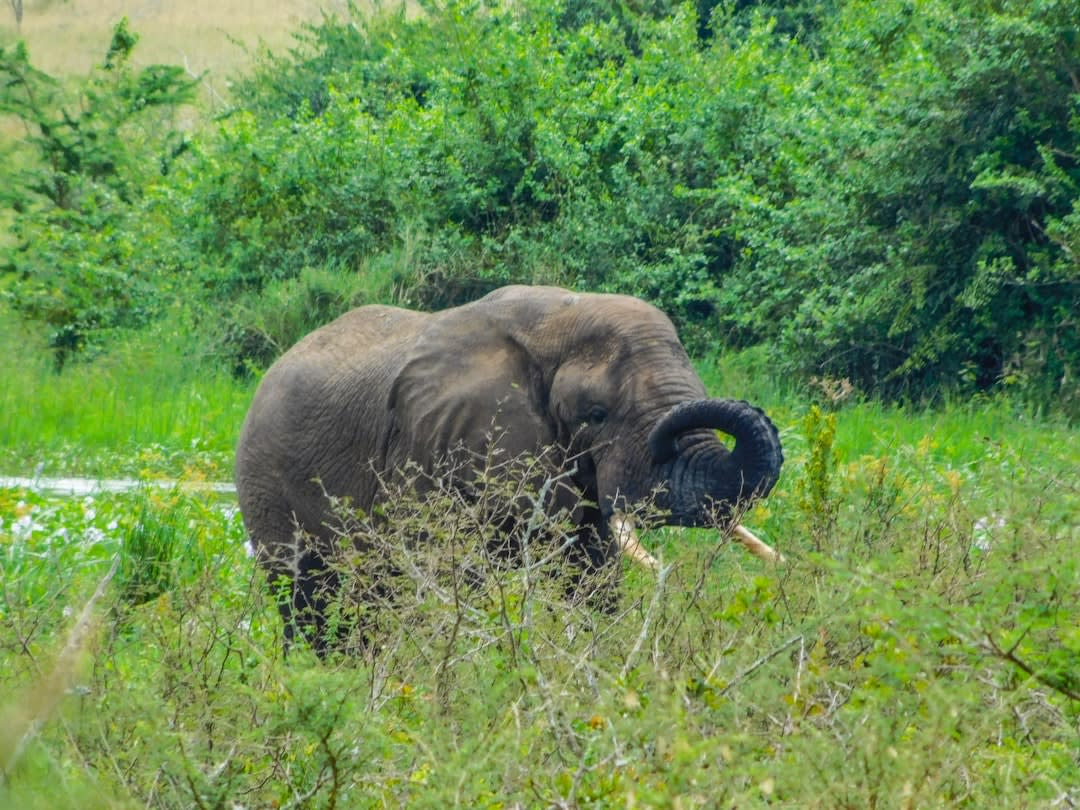
Quick answer: Black rhino conservation in Rwanda centres on Akagera National Park, the country’s only protected area identified as suitable for black-rhino reintroduction. Eastern black rhinos (Diceros bicornis michaeli) returned in 2017 after poaching had eliminated the species from Rwanda for a decade, and a healthy calf was born later that year—the first recorded in the country since 2007.
Rwanda’s population is small within the global picture. The International Rhino Foundation lists 71 rhinos in Rwanda—34 black and 37 white—in its country table, while the wider African black-rhino population was estimated at 6,788 at the end of 2024. Black rhinos remain classified as Critically Endangered, so Rwanda’s progress is important but not a guarantee of long-term security.
Last reviewed August 2026. Conservation data changes — see the cited sources for the latest figures.
Why black rhino conservation matters in Rwanda
Rwanda is a significant range-expansion story for the eastern black rhino. This subspecies once occurred widely across East Africa, but it is now found in Kenya, Tanzania and Rwanda according to African Parks. The western black rhino, D. b. longipes, was declared extinct in 2011; three African black-rhino subspecies remain recognised: eastern, south-western and south-central.
The species’ history in Rwanda has been difficult. Seven black rhinos were reintroduced to Akagera from Tanzania in 1957. An older IUCN species account recorded the loss of 15 to 20 animals to poaching and concluded that the species may have become nationally extinct by 1995, although four or possibly five animals were later reported in the park during the 1990s. The same account identified refugee influxes, a reduction in Akagera’s size and new boundaries that left rhinos outside protected areas as additional pressures.
That history explains why the current conservation objective is not simply to increase a number. Rwanda is rebuilding a secure, viable population in a protected landscape while reducing the risk that one park, one drought or one security failure could undo the recovery. Reintroduction also restores an important browser to Akagera’s savanna and woodland ecosystem, where black rhinos feed on woody vegetation, leaves and branches.
Black rhino status in Rwanda and Africa
Population estimates should always be read with their date and source. Rwanda’s figure is a country-level estimate listed by the International Rhino Foundation, not a live 2026 census. The best-supported comparison is:
| Location or population | Latest figure in the research | What it means |
|---|---|---|
| Rwanda | 71 rhinos: 34 black and 37 white | A small national rhino population, including the reintroduced eastern black rhino |
| Africa’s black rhinos | 6,788 at the end of 2024 | 2,597 south-western, 1,471 eastern and 2,720 south-central black rhinos |
| Africa’s black rhinos in the late 20th century | Less than 5,000 by the end of the century | A decline of approximately 96% from an estimated 65,000 |
Sources use different dates and estimation methods, so these figures should not be combined into a single trend line. The consistent conclusion is that black rhinos have recovered from their historic low in parts of Africa, but they remain far below historical abundance and are exposed to concentrated risks.
The threats to black rhinos in Rwanda
Poaching and the illegal horn trade
Poaching for the illegal international rhino-horn trade remains the most serious threat to black rhinos. WWF reports that black-rhino numbers fell by 96% between 1970 and 1990 under intense poaching, while the species’ overall 20th-century decline was also driven by hunting and settlement. Rhino horn has no medically proven benefit, but illegal demand has continued to make rhinos valuable targets.
Rwanda’s past demonstrates how quickly a small population can be lost. The older IUCN account attributed the disappearance of most of Akagera’s rhinos to poaching and noted that animals outside protected boundaries were particularly vulnerable. For a reintroduced population, preventing incursions, detecting threats and maintaining professional field protection are therefore fundamental rather than optional additions.
Habitat loss and fragmentation
Black rhinos need suitable browse, water and secure space. IFAW describes their habitats as including semi-desert savanna, woodland, forest and wetland, with plentiful woody vegetation, water sources and mineral licks especially important. Habitat conversion, settlement expansion and fragmented ranges can reduce food availability and restrict movement.
In Rwanda, historical reductions in Akagera’s area and boundary changes were already identified as conservation problems in the IUCN account. Today, maintaining a well-protected, ecologically suitable park is central to ensuring that reintroduced rhinos have room to establish territories and reproduce.
Human-wildlife pressure and climate stress
Where protected areas meet farms, roads and settlements, conservation must balance wildlife protection with people’s safety and livelihoods. The supplied research documents historical pressure from changing boundaries and human displacement in and around Akagera, but it does not provide a 2026 Rwanda-specific statistic for rhino-related conflict. It is more accurate to describe this as a management challenge than to claim a quantified conflict trend.
Climate change adds a wider, long-term risk through pressure on water, forage and habitat. IFAW identifies habitat loss and climate change among the greatest threats facing African rhinos, while the African Rhino Conservation Framework described by IFAW for 2025–2035 places greater emphasis on connected landscapes and community-centred management. Rwanda’s rhino conservation therefore depends on both site security and landscape resilience.
What is being done: reintroduction, monitoring and protection
Akagera’s 2017 reintroduction
In 2017, 18 eastern black rhinos were reintroduced to Akagera National Park through a partnership involving African Parks and the Howard G. Buffett Foundation. The move restored the species to Rwanda after a 10-year absence. Four months later, one of the females produced a calf—the first black-rhino calf recorded in Rwanda in more than a decade.
The operation required careful transport and acclimatisation. The rhinos arrived at Kigali airport in individual crates, travelled by truck in a police-supported convoy for about four hours to Akagera, and were placed in bomas for one to two days before release into the wider park. Schoolchildren living near the park welcomed the animals as they passed through local communities.
The 2019 European-zoo transfer
In 2019, a further five captive-bred black rhinos were translocated from European zoos to Akagera. African Parks describes the animals as being monitored through bomas and sanctuaries to support a gradual adjustment to life in the wild. The transfer expanded the reintroduction effort and added individuals from a managed population to Rwanda’s recovering group.
Translocation is inherently demanding. Rhinos must be in suitable physical condition, transported safely and monitored as they acclimatise. The 2019 operation illustrates that restoration involves more than releasing animals: veterinary planning, transport logistics, keepers, field teams and post-release observation all matter.
Protected-area management and specialist coordination
African Parks manages Akagera as one of its conservation areas and identifies the park as one of the places under its management where black rhinos are currently found. Its reintroduction work sits within a broader African strategy of creating secure populations and expanding the species’ range after poaching removed it from several countries.
At continental level, the IUCN African Rhino Specialist Group, the IUCN Species Survival Commission and TRAFFIC contribute to population assessments and conservation analysis. The CITES rhino report records that Rwanda reported intensified monitoring programmes and had a separate black- and-white-rhino plan, or intention to develop such plans, among the management arrangements reported by African range states.
Rangers and field teams remain the practical foundation of this work. Their responsibilities include monitoring animals, protecting habitat, supporting law enforcement and reporting changes in the population. Publicly available research supplied for this article does not provide a Rwanda-specific 2026 ranger headcount, patrol total or poaching figure, so those numbers should not be inferred.
Results and setbacks: a cautious conservation success
Rwanda’s clearest result is the return of a species that had been considered nationally extinct or almost extinct. The 2017 calf demonstrated that reintroduced animals could reproduce in Akagera, and the 2019 transfer increased the number of black rhinos in the park. These are meaningful biological and conservation-management milestones.
The continental trend is also encouraging, but fragile. The International Rhino Foundation reports 6,788 black rhinos in Africa at the end of 2024, including 1,471 eastern black rhinos. Save the Rhino reports that conservation actions have added an estimated 1,316 eastern black rhinos compared with a scenario in which those efforts stopped, highlighting the value of sustained intervention rather than a permanent victory.
Forecasts reinforce that warning. The IUCN assessment cited by the International Rhino Foundation projects that Africa’s black-rhino population could reach 8,943 by 2032 if current conservation management continues. Save the Rhino’s analysis similarly estimates more than 8,900 black rhinos in Africa in 2032 if present efforts are maintained, but it warns that populations would be substantially lower without ongoing conservation.
Rwanda’s recovery remains vulnerable because its population is small and concentrated in one protected area. The species is still Critically Endangered, poaching continues across Africa, and habitat loss and climate pressures can undermine gains. A calf and successful translocations are evidence of potential—not evidence that the threat has ended.
Community partnerships and responsible wildlife tourism
Long-term rhino conservation depends on the relationship between Akagera and neighbouring communities. The 2017 arrival was publicly welcomed by schoolchildren living near the park, an example of how reintroduction can become a shared national event rather than a project imposed without local visibility.
Community-centred conservation is increasingly recognised in African rhino planning. IFAW’s account of the 2025–2035 African Rhino Conservation Framework describes a move towards inclusive management in which Indigenous peoples and local communities help design coexistence, livelihood and connected-landscape solutions.
Tourism can contribute responsibly by creating a reason to maintain protected areas and by supporting local guides, accommodation providers and conservation-minded operators, but visitors should not assume that every safari payment directly funds rhino protection. Ask the operator how park fees, conservation levies and community benefits are handled, and choose experiences that follow Akagera’s wildlife rules.
Travellers can combine an Akagera wildlife safari with time in Akagera National Park safari packages research before booking. Visitors comparing wider itineraries may also find practical context in this Rwanda safari cost and five-day budget guide. Travellers can book conservation-supporting safaris on SafariFind, while independently checking the operator’s conservation and community policies.
How travellers can help black rhinos responsibly
- Follow park rules. Keep the required distance, remain in authorised vehicles or areas, avoid loud behaviour and never attempt to attract an animal.
- Do not request sensitive information. Do not ask guides or staff to disclose rhino locations, routes, patrol patterns or security procedures.
- Choose transparent operators. Look for clear explanations of park fees, community partnerships, conservation contributions and responsible wildlife conduct.
- Support local businesses. Use accredited guides and locally owned services where possible, helping more tourism value remain near the protected area.
- Reject horn products and wildlife exploitation. Rhino horn is illegal wildlife trade, not medicine or a legitimate souvenir. Poaching for the international horn market remains the species’ deadliest threat.
- Share accurate information. Avoid publishing precise sightings or real-time locations on social media, and treat dramatic population claims cautiously unless they identify a dated, credible source.
The outlook for black rhino conservation in Rwanda
Rwanda has achieved something conservationists once feared was no longer possible: eastern black rhinos are again living and breeding in Akagera National Park. The reintroduction of 18 rhinos in 2017, the birth of a calf and the arrival of five captive-bred animals in 2019 show the value of protected-area management, international partnerships and carefully planned translocation.
The next phase is less visible but just as important. Rwanda must maintain security, monitor every animal and calf, preserve suitable habitat, manage relationships with neighbouring communities and remain part of coordinated eastern black-rhino conservation. The species’ global recovery has been hard-won, but black rhinos remain Critically Endangered and exposed to illegal trade, habitat pressure and climate change. In 2026, the responsible message is therefore one of measured hope: Rwanda has restored a population, and sustained protection will determine whether it becomes a resilient conservation success.
Frequently Asked Questions
Are black rhinos found in Rwanda in 2026?
Yes. Eastern black rhinos are found in Akagera National Park, where they were reintroduced in 2017 after a 10-year absence from Rwanda.
How many black rhinos are in Rwanda?
The International Rhino Foundation lists 34 black rhinos in Rwanda, within a total national rhino estimate of 71. This is the latest Rwanda figure supplied in the research, not a live 2026 census.
Which black-rhino subspecies lives in Rwanda?
Rwanda’s reintroduced animals are eastern black rhinos, scientifically known as Diceros bicornis michaeli.
When did black rhinos return to Rwanda?
Eighteen eastern black rhinos returned to Akagera National Park in 2017. Five additional captive-bred rhinos were transferred from European zoos in 2019.
Were black rhinos extinct in Rwanda?
The species was considered nationally extinct or nearly extinct after poaching, although an older IUCN account recorded possible surviving animals in Akagera during the 1990s. The 2017 reintroduction restored a secure population after a 10-year absence.
Are black rhinos endangered?
Yes. Black rhinos are classified as Critically Endangered. Africa had an estimated 6,788 black rhinos at the end of 2024, although the population has recovered from its historic low in some areas.
What is the biggest threat to black rhinos in Rwanda?
Poaching for the illegal international rhino-horn trade is the most serious threat. Habitat loss, fragmentation, human pressure and climate-related stress also affect long-term recovery.
Can visitors see black rhinos on a Rwanda wildlife safari?
Akagera National Park is Rwanda’s protected area associated with the country’s reintroduced black rhinos, but sightings are never guaranteed and visitors should follow park rules and avoid seeking sensitive location information.
How can tourists support black rhino conservation in Rwanda?
Choose transparent, conservation-minded operators; pay authorised park fees; support local businesses; follow wildlife rules; and never share precise rhino locations or buy products linked to illegal wildlife trade.
How many black rhinos could Africa have by 2032?
The IUCN assessment cited by the International Rhino Foundation projects 8,943 black rhinos in Africa by 2032 if current conservation management continues. This is a forecast, not a guaranteed outcome.
V2Ui.sources
- Black Rhino Return to Rwanda | African Parks(official)
- State of the Rhino | International Rhino Foundation
- Black Rhino | WWF
- African Rhino
- The future of rhinos—a mix of hope and deep concern
- Rhinos, Trade and CITES
- Measuring success and potential recovery | Save the Rhino
- A Rare Success—Near-extinct East African black rhino return to the wild
- Save the Rhinos | African Parks(official)
Related to
Ready to start your safari adventure?
Explore curated safari packages and find your perfect African adventure with verified operators.


