Botswana Vaccinations & Health Rules 2026 for Emiratis
Emirati citizens travelling from the United Arab Emirates generally need a yellow fever certificate only if their itinerary includes a country or qualifying transit airport with yellow fever transmission risk. Routine vaccinations, typhoid advice, malaria planning and travel insurance should be discussed with a healthcare professional before departure.
Quick answer: Emirati travellers entering Botswana do not need a yellow fever certificate when travelling directly from the United Arab Emirates, provided their itinerary has not included a country with yellow fever transmission risk. Botswana requires proof of yellow fever vaccination for travellers aged 1 year and older arriving from a risk country, including certain airport transits lasting more than 12 hours.
For health preparation, keep routine vaccinations current and ask a travel-health clinician whether typhoid, hepatitis A or other vaccines are appropriate for your itinerary. The CDC recommends typhoid vaccination for most travellers to Botswana, particularly people staying with friends or relatives or visiting smaller cities or rural areas. Malaria prevention may also be relevant for northern and remote safari areas, so arrange an individual medical assessment before travelling.
Last checked July 2026 — always confirm with official sources before travelling.
Vaccinations required and recommended for Emirati travellers
| Health measure | Is it required for Botswana entry? | What Emirati travellers should do |
|---|---|---|
| Yellow fever certificate | Only when arriving from a yellow-fever-risk country or qualifying transit | Review every country and airport on the route before departure; carry the International Certificate of Vaccination or Prophylaxis if required. |
| Routine vaccinations | No Botswana entry requirement is identified in the supplied official research | Ask a clinician to review your routine vaccination status before travel. |
| Typhoid | Not stated as an entry requirement | The CDC recommends considering it for most travellers, especially for rural travel or visits to smaller cities. |
| Rabies pre-exposure vaccine | Not stated as an entry requirement | Discuss it if you may work with animals, take part in activities with animal exposure or could struggle to obtain prompt post-exposure treatment. |
| Malaria medication | Not a vaccine or Botswana entry requirement | Ask a clinician whether prophylaxis is suitable for your route, season and medical history. |
Entry rules and medical recommendations are different questions. A vaccine can be medically recommended without being required at the border, while a yellow fever certificate is an entry document triggered by the travel history and not by Emirati nationality alone.
Do you need yellow fever for Botswana?
Yellow fever vaccination is not generally required for a traveller arriving from a country without yellow fever transmission risk. Botswana's stated rule requires a vaccination certificate when entering from a country where yellow fever is endemic. The CDC's country guidance likewise states that vaccination is not required for direct travel from the United States, but is required for travellers arriving from countries with risk for yellow fever virus transmission.
For a traveller departing from the United Arab Emirates, the key issue is the complete itinerary rather than the passport alone. A direct UAE-to-Botswana journey, or a journey using transit points that do not fall within the risk rule, should be assessed differently from a route that stops in a yellow-fever-risk country. Confirm the current interpretation with Botswana's authorities, your airline and a travel-health clinic before booking or travelling.
Transit and airport layover rules
The CDC says Botswana's yellow fever requirement includes travel from countries with risk for yellow fever virus transmission and airport transits or layovers of more than 12 hours in such countries. The CDC also advises considering the full itinerary, including transfers where a traveller might need to pass through immigration or leave the airport during a long layover.
Do not assess a connection only by its scheduled flight time. Check whether the itinerary involves an overnight stop, a change of airport, an immigration-controlled transfer or a transit country with yellow fever risk. If any part of the route could trigger the rule, ask a clinician about vaccination and obtain the required certificate well before departure.
What certificate should you carry?
Travellers who must comply with a yellow fever entry rule need proof in the International Certificate of Vaccination or Prophylaxis format. The CDC states that countries may require an ICVP showing evidence of vaccination or a medical waiver. Keep the certificate with your passport and other travel documents rather than in checked luggage.
The supplied research does not confirm a Botswana processing fee, certificate replacement fee or appointment charge. Confirm any current cost directly with an authorised vaccination centre or official health authority. If vaccination is medically contraindicated, ask a qualified clinician about a medical waiver, but confirm in advance whether the border authorities and airline will accept it.
Recommended vaccinations for a Botswana trip
Routine vaccinations
Use a pre-travel medical appointment to review your routine immunisations and personal health needs. The U.S. Department of State advises travellers to check with a doctor about required vaccines and shots for high-risk exposure before travelling to Botswana, and directs travellers to current travel-health guidance. The available research does not provide a complete official list of routine vaccines or a Botswana-specific booster schedule, so do not rely on a fixed list without a clinician's review.
Typhoid
The CDC lists typhoid vaccination as recommended for most travellers to Botswana, with particular emphasis on people staying with friends or relatives or visiting smaller cities or rural areas. This can be relevant to safari itineraries that include remote camps, village visits or extended time outside major towns.
Typhoid vaccination does not replace careful food, water and hand hygiene. Ask a healthcare professional which product and schedule suit you; the supplied research does not support a single universal timing rule for every traveller.
Hepatitis A, hepatitis B and rabies
The research supplied for this article does not provide a current official CDC statement that hepatitis A or hepatitis B is required for entry to Botswana. Some travel-health providers recommend these vaccines for selected travellers, but suitability depends on accommodation, trip length, activities, health history and potential exposure. Discuss them with a clinician rather than treating them as mandatory border requirements.
Rabies pre-exposure vaccination is also an individual decision. The CDC says the relevant considerations include occupational or recreational activities that increase the risk of animal exposure and whether the traveller might have difficulty obtaining prompt access to safe post-exposure prophylaxis. Safari guests should never approach, feed or handle wild animals, and anyone bitten or scratched should seek urgent medical advice.
Malaria in Botswana: risk areas, prophylaxis and prevention
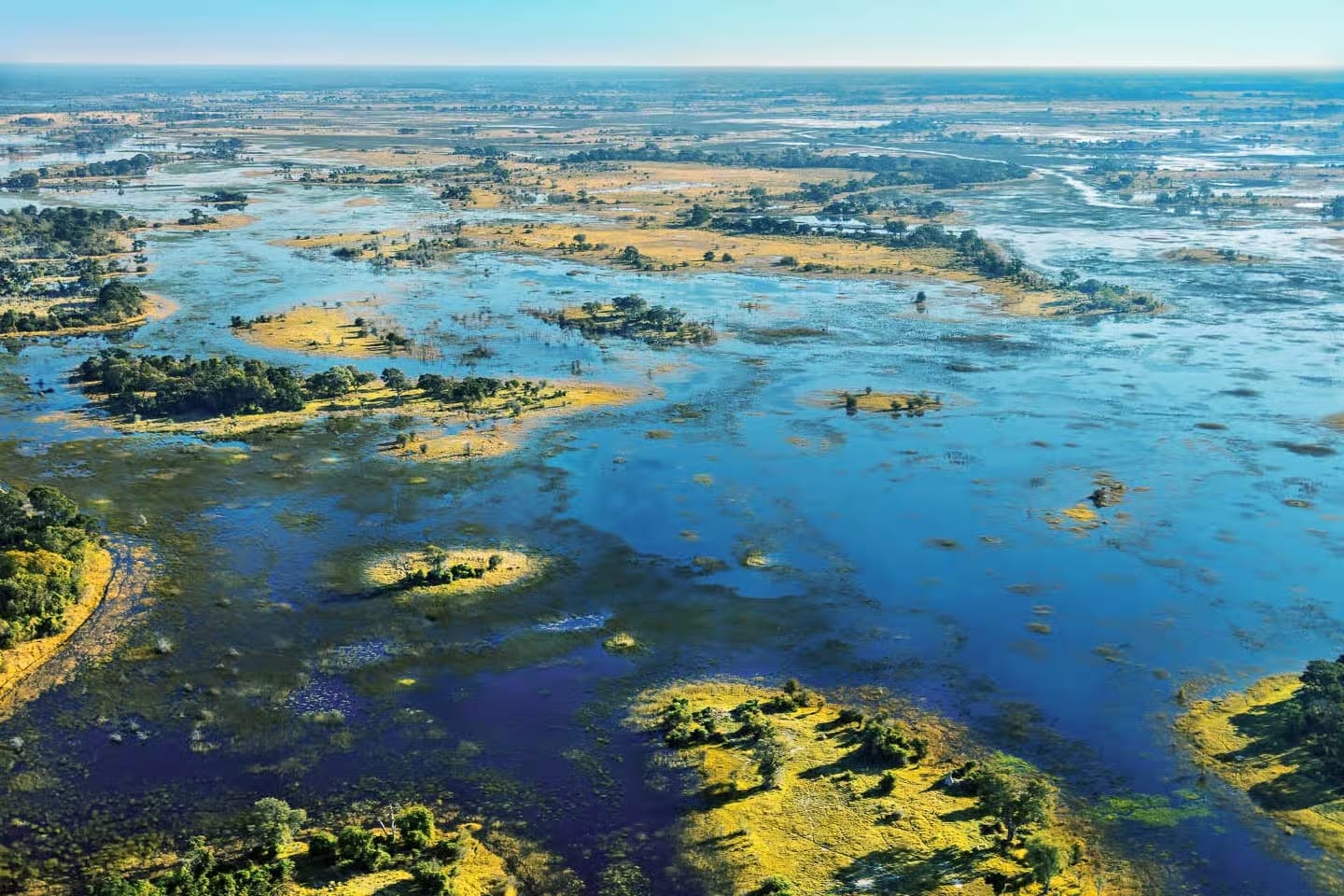
Malaria risk is not uniform across every Botswana itinerary. The supplied travel-health research identifies malaria concerns in parts of Botswana, particularly northern areas and some rural safari destinations; a Botswana medical visitor checklist specifically highlights Chobe Game Reserve in Kasane and the Okavango region when discussing malaria prophylaxis.
Whether you need prescription prophylaxis depends on the destination, route, season, length of stay, accommodation, activities and your medical history. A clinician should select the medicine and explain when to start and stop it. The supplied research does not support one universal drug, dose or schedule for all Emirati travellers, so confirm the current prescription plan with a healthcare professional.
- Use an effective insect repellent on exposed skin and follow the product directions.
- Wear long sleeves and long trousers when mosquitoes are active.
- Use screened or air-conditioned accommodation where available and sleep under an insecticide-treated net when advised.
- Seek medical care promptly for fever during or after travel and tell the clinician that you have visited a malaria-risk area.
Malaria prevention is especially important when a trip combines urban stays with northern safari areas. When you compare safari packages on SafariFind, check the precise parks, camp locations and cross-border transfers so your travel-health consultation reflects the actual route.
Health documents and travel insurance
Carry your passport, any required yellow fever certificate, prescriptions and relevant medical records in your hand luggage. Botswana's entry requirement is based on travel history and transit, so retain the full flight itinerary in case officials or airline staff need to verify where you have travelled before arrival.
The U.S. Department of State recommends buying travel insurance before travelling and checking whether the policy includes medical treatment, evacuation assistance and trip cancellation cover. This is particularly important for safari itineraries involving remote camps, where arranging transport to suitable medical care may be more complicated than in a major city.
Insurance terms differ. Confirm whether your policy covers pre-existing conditions, adventure or walking activities, emergency evacuation, repatriation and changes caused by illness. The supplied research does not establish a Botswana-wide compulsory health-insurance fee or minimum cover amount, so confirm the current requirements with your insurer and official Botswana sources.
Medication rules and what to pack
The U.S. Department of State advises travellers to bring enough prescription medication to complete the trip. Keep medicines in their original labelled packaging and carry a copy of the prescription or a letter from your doctor, particularly for controlled medicines or injectable treatments.
- Prescription medicines for the full itinerary, plus a reasonable contingency supply where your clinician advises it.
- A copy of prescriptions and relevant medical information.
- Your yellow fever certificate, if your route triggers the requirement.
- Clinically appropriate malaria medication if prescribed.
- Insect repellent, long lightweight clothing and other bite-prevention supplies.
- Travel-insurance policy details and emergency-assistance contact information.
Before carrying medicines into Botswana, confirm any restrictions with the nearest Botswana diplomatic mission, the official Botswana authority responsible for imports or your airline. The supplied research does not establish a definitive list of permitted quantities, controlled substances or import forms, so avoid relying on general internet lists.
Health facilities and emergencies in Botswana
Medical resources are more limited in remote and rural locations than in major towns. The supplied travel-health material advises that serious illness may require evacuation to South Africa or another suitable facility, while the U.S. Department of State recommends checking travel insurance for evacuation assistance and medical cover.
Before leaving the UAE, save your insurer's emergency number, your safari operator's contact details and the contact information for your accommodation. Tell your operator about allergies, essential medicines and serious medical conditions. For a remote safari, ask how the camp handles urgent transport and which town or hospital is normally used.
Do not delay medical assessment after an animal bite or scratch, a serious injury, severe dehydration or a fever after travel. Rabies post-exposure treatment must be assessed promptly, and fever after a malaria-risk trip should be reported as a travel history to the treating clinician.
Health requirements can change without notice, and airlines may apply document checks before boarding. Emirati citizens should recheck the Botswana government or embassy guidance, the CDC or another national travel-health authority, their airline and a qualified travel-health clinician shortly before departure. This article is informational content, not legal or medical advice.
 Ask Tembo about this guide
Frequently Asked Questions
Do Emirati citizens need a yellow fever certificate for Botswana?
Not usually when travelling directly from the United Arab Emirates without a qualifying transit through a yellow-fever-risk country. Botswana requires a certificate for travellers arriving from a risk country, and the CDC includes qualifying airport transits in the rule.
Do you need yellow fever for Botswana if you transit for more than 12 hours?
Yes, a certificate may be required when the transit is in a country with risk for yellow fever virus transmission. The CDC specifically includes airport transits or layovers lasting more than 12 hours.
What vaccines do I need for Botswana?
The only entry-triggered vaccine identified in the supplied research is yellow fever, depending on your itinerary; typhoid is recommended by the CDC for most travellers, especially those visiting rural areas or smaller cities. Ask a clinician to review routine and other travel vaccinations.
Is typhoid vaccine recommended for Botswana?
Yes, the CDC recommends typhoid vaccination for most travellers to Botswana, particularly people staying with friends or relatives or visiting smaller cities or rural areas.
Is malaria a risk on a Botswana safari?
Malaria risk exists in parts of Botswana, including northern safari areas identified in the supplied research. Ask a healthcare professional whether prophylaxis and bite-avoidance measures are appropriate for your exact route.
Do I need malaria tablets for the Okavango Delta?
You should ask a clinician about malaria prophylaxis for an Okavango itinerary. The supplied Botswana health checklist specifically identifies the Okavango among areas where visitors should discuss bringing malaria prophylaxis, but it does not establish one medicine or schedule for every traveller.
Should I get a rabies vaccine before visiting Botswana?
It depends on your activities and access to medical care. The CDC advises discussing pre-exposure vaccination if you may have occupational or recreational animal exposure or could struggle to obtain prompt post-exposure prophylaxis.
Do I need travel insurance for Botswana?
The supplied official guidance strongly recommends travel insurance and checking medical, evacuation and trip-cancellation cover. Confirm whether your policy covers remote safari locations, pre-existing conditions and emergency evacuation.
What medication should I take to Botswana?
Bring enough prescription medication to complete your trip, together with prescription information and any clinician-prescribed malaria medicine. The U.S. Department of State specifically advises travellers to bring sufficient prescription medicines; confirm import rules for controlled medicines before departure.
Where can I get medical help during a Botswana safari?
Major towns generally offer better access to medical care than remote safari areas, and serious cases may require evacuation. Confirm your camp's emergency plan and keep your insurer's evacuation number available.
Sources
- Botswana Travel Advisory | Travel.State.gov(official)
- Botswana - Traveler view | Travelers' Health | CDC(official)
- Yellow Fever Vaccine and Malaria Prevention Information, by Country(official)
- Travel Health Guide - Botswana
- Pre-Departure Checklist for External Visitors | Botswana-UPenn Partnership
- Botswana Vaccinations & Travel Health Advice
Related to
Ready to start your safari adventure?
Explore curated safari packages and find your perfect African adventure with verified operators.