How Safari Tourism Funds Conservation in Rwanda (2026)
Rwanda’s gorilla tourism model links visitor revenue with protected-area management and community development. Around 10% of national-park tourism revenue is reinvested in socio-economic projects near parks, while permits help support monitoring, law enforcement and veterinary care [1][4].
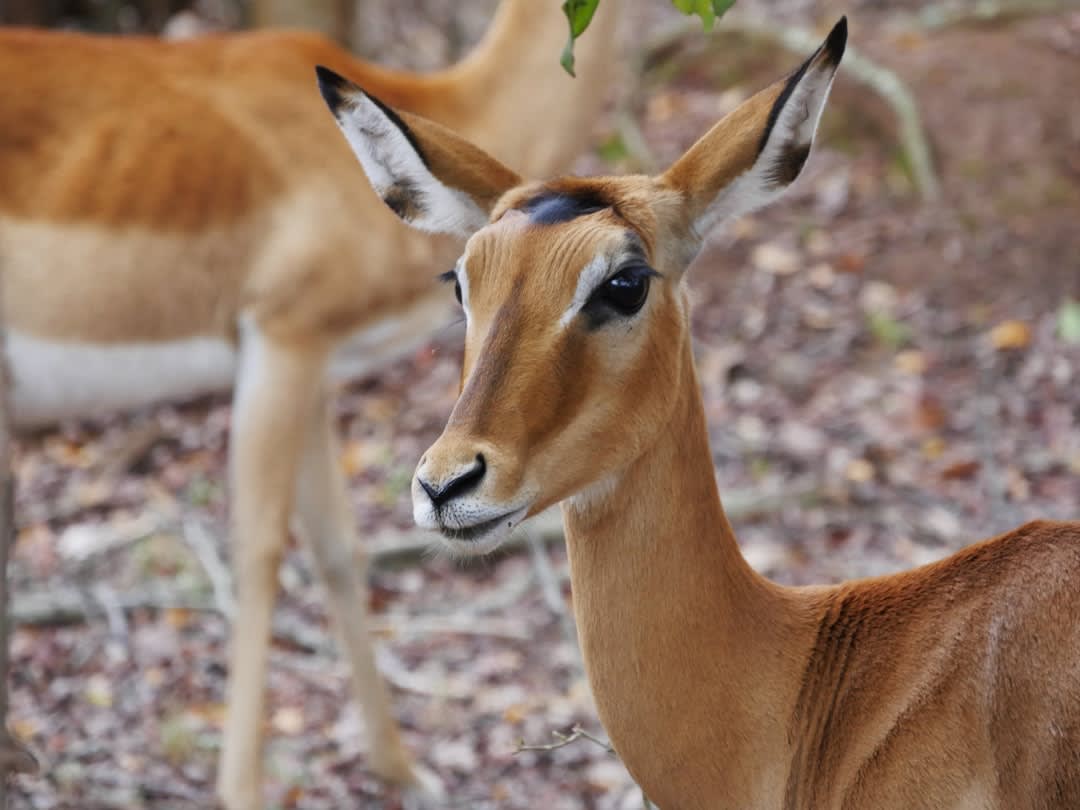
Quick answer: Safari tourism funds conservation in Rwanda through park-entry and gorilla-trekking revenue, direct support for monitoring and law enforcement, and the Tourism Revenue Sharing Programme (TRSP). Since 2005, Rwanda has returned a share of park tourism revenue to communities near protected areas, with a stated goal of reaching 10% of total tourism revenue . The model helped make mountain-gorilla protection economically valuable, although habitat pressure, illegal resource use, unequal benefit distribution and dependence on tourism remain important challenges .
Last reviewed August 2026. Conservation data changes — see the cited sources for the latest figures.
Why ecotourism matters in Rwanda
Rwanda has built an internationally recognised nature-tourism economy around protected landscapes, especially Volcanoes National Park, Nyungwe National Park and Akagera National Park. Yale’s School of the Environment describes ecotourism as a major factor in changing the economic case for conserving mountain gorillas, which were once close to extinction .
The basic conservation logic is straightforward: a living gorilla can generate recurring tourism revenue, employment and international support, while a poached animal or degraded forest cannot. Dian Fossey’s Karisoke Research Station provided an early scientific foundation for gorilla research. Researchers Bill Weber and Amy Vedder argued that conservation needed an economic incentive, and proposed charging visitors to see gorillas at close range as part of an ecotourism strategy .
That approach did not remove the underlying risks. Mountain gorillas depend on a small, intensively used forest landscape in the Virunga mountain region, where Rwanda, Uganda and the Democratic Republic of the Congo meet. Protected-area management must therefore combine tourism, science, ranger patrols, veterinary response, community relationships and land-use planning.
Rwanda’s tourism model also extends beyond gorillas. Nyungwe National Park protects a large forest ecosystem and important watersheds, while tourism revenue-sharing projects operate in sectors around the park . Wetlands and other habitats are also part of the country’s wider conservation agenda. At the Nyungwe Management Company, park manager Protais Niyigaba has described work involving watershed conservation and restoration of urban wetlands as part of Rwanda’s developing green economy .
How safari tourism money reaches conservation
1. Gorilla permits and visitor management
Gorilla trekking permits are a high-value tourism product. One published ecotourism overview lists the Volcanoes National Park permit price as US$1,500, although travellers should verify the current price and booking conditions with Rwanda’s official tourism authorities or a reputable operator before travelling .
Permit revenue supports the systems that make carefully managed trekking possible. These include tracking teams that monitor gorilla groups, visitor-access controls intended to reduce disturbance, anti-poaching work such as snare removal, and veterinary care for injured or ill animals . The permit is therefore not simply an admission fee: it contributes to the personnel and infrastructure required to keep tourism compatible with wildlife protection.
2. Tourism Revenue Sharing Programme
Rwanda’s TRSP has operated as a government policy mechanism since 2005. It redirects part of national-park tourism revenue into socio-economic projects in neighbouring communities . The model is intended to create local support for protected areas, improve relationships between the Rwanda Development Board (RDB) and communities, and reduce incentives for unauthorised use of park resources .
The target commonly cited in the research is 10% of national-park tourism revenue for community projects . These investments can include infrastructure, community enterprises and household-level development projects, rather than wildlife protection alone . That distinction matters: conservation funding is more durable when communities can see practical benefits connected to the protected area.
3. Jobs, local procurement and conservation skills
Tourism creates demand for guides, drivers, accommodation staff, trackers, rangers, researchers, craftspeople and community enterprises. The research does not provide a complete national employment total, so it would be misleading to describe tourism as having created a specific number of conservation jobs across Rwanda. It does show, however, that park-management programmes use local workers and develop conservation-related skills.
At Nyungwe, students receive field experience in conservation strategies, including the operational pressures of finance and staffing . Around Nyungwe National Park, eco-ranger cooperatives have also been legally registered, linking community organisation with patrols, livelihoods and environmental stewardship .
The main threats tourism is helping to address
Poaching and illegal resource use
Snare removal and ranger patrols are direct examples of tourism-linked conservation activity. In Nyungwe’s first-quarter 2024 report, daily foot patrols and joint patrols with eco-rangers removed 499 snares; the same report recorded 13 arrests, with seven cases referred to the Rwanda Investigation Bureau and six people educated and released . These figures describe one reporting period and one park, not Rwanda’s national poaching rate.
African Parks’ management documentation for Nyungwe says the park had 92 rangers and, by 2025, 100 unarmed eco-rangers who were former poachers trained as forest protectors. The eco-rangers work in groups representing districts around the park, receive uniforms, safety equipment and monthly allowances, and patrol alongside park rangers . African Parks reports that patrols were finding fewer snares, but that is an organisational progress report rather than an independently verified national measure of poaching.
Research on Volcanoes National Park found that integrated conservation-development investment was associated with a statistically significant reduction in unauthorised resource use. However, the study found that conservation NGO funding showed a significant negative effect while tourism revenue-sharing funding alone did not; it also identified gaps between revenue-sharing investments and illegal-activity hotspots . This is an important qualification: revenue sharing can build support, but money must be well targeted and cannot automatically be assumed to reduce every illegal activity.
Habitat loss and land pressure
Habitat loss remains a central threat because protected areas sit alongside densely used agricultural and settlement landscapes. Yale’s account identifies both poaching and habitat loss as reasons gorillas remained vulnerable without stronger conservation incentives . Expansion of protected areas can also create social costs when people are resettled from reclaimed land.
The Volcanoes Community Resilience Project is designed to address this tension. The World Economic Forum reports that the project concerns 3,400 resettled families and includes housing, social infrastructure and diversified livelihoods such as ecotourism, conservation agriculture and sustainable forestry . It also describes 3,750 hectares of new parkland and a 13,200-hectare Conservation Development Plan across four neighbouring districts . These are planned or reported project parameters, not proof that all intended outcomes have already been achieved.
Human-wildlife conflict and unequal benefits
When protected-area boundaries, farms and settlements meet, conservation can impose costs on households that do not receive tourism benefits equally. The TRSP review found that half of surveyed government, private-sector and NGO respondents believed disadvantaged people, women and young people either did not benefit or benefited only occasionally . The sample was small, with 11 respondents, so it should not be treated as a national household survey. It does, however, highlight an accountability issue: a programme can be popular overall while still leaving some groups behind.
Travellers who want more context on this issue can read SafariFind’s guide to human–wildlife conflict in Rwanda, particularly when comparing tourism benefits with the costs of living beside a park.
Climate and financial resilience
Climate change is relevant to long-term protected-area planning, but the research supplied for this article does not provide a Rwanda-specific climate-impact figure or tourism-finance loss attributable to climate change. The evidence does show that conservation programmes face financial and staffing pressures , and that the Covid-19 crisis caused severe funding disruption for nature-based tourism and conservation across Africa . A responsible tourism model therefore needs reserves and diversified finance rather than assuming visitor numbers will always rise.
Programmes and organisations turning revenue into protection
| Programme or organisation | How it contributes | Evidence and limitation |
|---|---|---|
| Rwanda Development Board and TRSP | Returns a share of park tourism revenue to socio-economic projects near protected areas. | The stated target is 10%; research finds improved support and infrastructure, but also uneven benefits and targeting gaps . |
| Gorilla trekking tracking teams | Monitor gorilla groups and help manage visitor access. | Permit revenue is reported to support tracking, snare removal and veterinary care . |
| Karisoke Research Station | Provides a long-running scientific base for mountain-gorilla research. | Its history helped shape the argument for an economic incentive to conserve gorillas . |
| African Parks and Nyungwe management teams | Operate ranger and eco-ranger patrols, law enforcement and community-linked conservation work. | Nyungwe reports 499 snares removed in the first quarter of 2024; African Parks reports fewer snares found and 100 eco-rangers by 2025 . |
| International Gorilla Conservation Programme and conservation NGOs | Support conservation and community-development interventions alongside government programmes. | Volcanoes research found NGO funding had a stronger measured relationship with reduced unauthorised resource use than tourism revenue sharing alone . |
Other SafariFind resources cover the wider institutional landscape in Conservation Organisations Protecting Rwanda’s Wildlife. Tourism revenue is one part of the funding mix; research grants, philanthropy, government budgets and development finance also matter.
What results have been achieved—and what remains unresolved?
The clearest conservation result is the recovery of mountain gorillas from the brink of extinction. Yale reports approximately 700 mountain gorillas in the Virunga mountains, while another 2026 ecotourism source gives an estimate of around 600 . Because these published estimates differ, the safest conclusion is that the population has recovered substantially but should not be represented with false precision.
The TRSP’s 15-year review found that the programme met many of its objectives, including building conservation awareness, strengthening relationships between RDB and communities, improving local lives and developing infrastructure near national parks . In the review’s stakeholder survey, eight of 11 respondents said the programme always, frequently or sometimes helped decrease illegal activities, while nine of 11 said it always, frequently or sometimes increased community support for conservation . These perceptions are encouraging, but they do not establish that TRSP alone caused the conservation outcomes.
Nyungwe’s monitoring reports show practical field outputs: joint patrols, eco-ranger patrols, snare removal, ranger training, bamboo nurseries and restoration planting . Yet ongoing staffing needs, financial vulnerability, illegal resource use and unequal distribution of benefits remain real constraints . Rwanda’s model is best understood as a functioning but evolving conservation-finance system—not as proof that tourism has solved the country’s biodiversity challenges.
How travellers can support conservation responsibly
- Pay for regulated experiences. Use official permits and established operators. Regulated visitor access helps connect tourism spending with park management and monitoring .
- Follow gorilla- and forest-visit rules. Keep the required distance and follow tracker and guide instructions. Visitor management is designed to minimise disturbance to gorilla groups .
- Choose locally connected businesses. Consider accommodation, guiding and cultural experiences that employ local people or demonstrate transparent community benefits. A visit to Iby'iwacu Cultural Village can complement a gorilla itinerary, but travellers should ask how fees and employment are managed rather than assuming every cultural attraction has the same model.
- Ask operators where money goes. Responsible companies should be able to explain permit costs, local employment, conservation partnerships and community contributions without making unsupported claims.
- Spread your spending. Visiting more than one protected landscape can reduce pressure on a single attraction and support conservation-linked businesses beyond the gorilla sector, including Nyungwe-area experiences such as Kamiranzovu Waterfall where access and conditions permit.
- Respect communities and wildlife. Do not photograph people without consent, enter restricted areas, buy wildlife products or encourage guides to bend park rules.
Travellers can book conservation-supporting safaris on SafariFind, while still checking the operator’s current permit, licensing and community-benefit information independently.
Bottom line
Rwanda demonstrates how high-value wildlife tourism can help finance conservation when revenue is connected to monitoring, law enforcement, veterinary care and community development. Gorilla tourism helped create a strong economic incentive to protect a species that had approached extinction, and the TRSP has directed a stated 10% share of national-park revenue toward communities . The evidence is positive but not uncomplicated: tourism revenue alone has not eliminated illegal resource use, benefits are not evenly distributed, and conservation remains exposed to financial and staffing pressures . The most responsible safari is therefore one that follows park rules, pays for legitimate services and treats local communities as partners rather than scenery.
Frequently Asked Questions
How does safari tourism fund conservation in Rwanda?
Safari tourism funds Rwanda’s conservation through gorilla and park permits, visitor-management systems, ranger and monitoring work, anti-poaching activities, veterinary care and the Tourism Revenue Sharing Programme. Since 2005, a share of park tourism revenue has been returned to communities near protected areas, with a stated goal of 10% .
What are the costs and experiences of gorilla trekking in Rwanda?
A published 2026 ecotourism source lists a Volcanoes National Park gorilla-trekking permit at US$1,500. The experience is a guided forest visit supported by tracking teams that monitor gorilla groups and manage visitor access; prices and rules should be checked before booking because they can change .
How much of Rwanda’s tourism revenue goes to communities?
Rwanda’s tourism revenue-sharing policy has a stated goal of returning 10% of national-park tourism revenue to socio-economic projects in neighbouring communities .
How many mountain gorillas are in Rwanda?
The most relevant population is shared across the Virunga mountains rather than confined to Rwanda. Yale reports approximately 700 mountain gorillas in the Virunga mountains, while another source gives around 600, so published estimates should be treated as approximate .
Does gorilla trekking money pay for anti-poaching work?
Yes. The available research reports that gorilla permit revenue supports tracking teams, visitor management, snare removal and veterinary care for injured or ill animals .
What is Rwanda’s Tourism Revenue Sharing Programme?
The Tourism Revenue Sharing Programme is a government policy mechanism that redirects part of national-park tourism revenue into community development near protected areas. Reviews report stronger conservation awareness, improved relationships and infrastructure, but also uneven benefits and targeting gaps .
What conservation work is happening in Nyungwe National Park?
Nyungwe conservation work includes ranger and eco-ranger patrols, snare removal, arrests, ranger training, bamboo nurseries, restoration planting and cooperative development. A first-quarter 2024 report recorded 499 snares removed and 13 arrests .
What are the biggest threats to Rwanda’s wildlife?
The research identifies poaching or illegal resource use, habitat loss, financial pressure and staffing needs as important threats or challenges. It also shows that conservation and development can create tensions for communities living beside protected areas .
Does tourism revenue alone guarantee conservation success in Rwanda?
No. Research found that integrated conservation-development investment was associated with reduced unauthorised resource use, but tourism revenue sharing alone did not show the same measured effect as conservation NGO funding in one Volcanoes National Park study. Programme design, targeting and complementary funding matter .
How can travellers support conservation on a Rwanda safari?
Travellers can use regulated permits and licensed operators, follow gorilla-viewing rules, choose locally connected businesses, ask how money is used, avoid wildlife products and respect community consent and park restrictions .
V2Ui.sources
- Canopy 2024 Article - Rwanda: A Decade of Field Studies in Conservation | Yale School of the Environment
- Ecotourism Examples: Practices Around the World
- Benefit-sharing from protected area tourism: A 15-year review of the Rwanda tourism revenue sharing programme
- How conservation is protecting mountain gorillas in Rwanda
- African nature-based tourism enterprises | WWF
- Process Framework Rwanda Wildlife Conservation Bond(official)
- Effects of integrated conservation-development projects on unauthorized resource use in Volcanoes National Park, Rwanda
- Tourism contribution in Nyungwe National Park, Rwanda
- Quarterly I Report—Nyungwe National Park Summary
Related to
Ready to start your safari adventure?
Explore curated safari packages and find your perfect African adventure with verified operators.


