Rewilding & Wildlife Translocations in Kenya 2026
Kenya is advancing rewilding and translocation programmes to restore endangered species like mountain bongos, guerezas, and giraffes to their former ranges. Success depends on integrating community stewardship, addressing human-wildlife conflict, and securing long-term funding.
Current Status: Kenya's Rewilding & Translocation Landscape (2026)
Kenya is implementing integrated rewilding and wildlife translocation programmes across protected areas, private conservancies, and community rangelands. These initiatives move beyond simple reintroduction to restore ecological processes, rebuild depleted populations, and foster human-wildlife coexistence in degraded landscapes. Success is measured not only by animal survival and reproduction, but by reduced human-wildlife conflict, community economic benefit, and ecosystem resilience.
Why Rewilding & Translocations Matter in Kenya
Over the past 40 years, Kenya has experienced alarming declines in wildlife numbers and biodiversity. Habitat fragmentation, poaching, and human encroachment have left many species—including the critically endangered mountain bongo (fewer than 100 in the wild)—isolated in small, genetically unviable populations. Translocations address this by moving animals to safer habitats or merging fragmented populations; rewilding goes further, restoring entire ecosystem functions and the autonomous ecological processes that sustain wildlife long-term.
Kenya's wildlife is unevenly distributed: over 75% of the country's fauna live in arid and semi-arid lands (ASALs), and approximately 65% of wildlife exists outside formal protected areas. This reality means rewilding and translocation success depends on integrating community conservancies, private conservancies, and local stakeholders into planning and implementation from the outset.
Key Threats Driving Rewilding Urgency
Habitat Loss & Fragmentation
Rapid human population growth has intensified encroachment into wildlife habitat, particularly in rangelands where pastoral communities and wildlife historically coexisted. Deforestation, agricultural expansion, and infrastructure development have fractured once-continuous ecosystems into isolated reserves, making populations vulnerable to disease, genetic bottlenecks, and local extinction.
Poaching & Illegal Trade
Poaching for bushmeat and illegal wildlife trade continues to deplete wild populations, particularly of large herbivores and predators that rewilding programmes prioritize. For example, Rothschild giraffes on Ruko Island faced severe breeding challenges—eight calves were born but only two survived prior to 2021, with losses attributed to python predation, nutritional deficiencies, and other natural causes exacerbated by small population size.
Human-Wildlife Conflict
As wildlife is restored to rewilded landscapes, coexistence with rural communities becomes critical. Crop raiding, livestock predation, and perceived threats create tension; without proactive mitigation, communities may oppose rewilding or resort to retaliatory killing. Rewilding success increasingly requires addressing this human dimension as a core conservation goal, not an afterthought.
Major Rewilding & Translocation Programmes in Kenya
Mountain Bongo Breeding & Rewilding at Mount Kenya Wildlife Conservancy
The mountain bongo—a critically endangered antelope with fewer than 100 individuals remaining in the wild—is the focus of Kenya's most ambitious rewilding initiative. Mount Kenya Wildlife Conservancy operates a breeding and rewilding programme with the goal of producing fully behaviorally adapted individuals for eventual release. The Government of Kenya's National Recovery and Action Plan (2019–2023) targets a population of 750 mountain bongos within 50 years.
Successfully rewilded bongos born in the programme are transferred to Kenya Wildlife Service (KWS) for translocation to reinforce wild populations and reintroduce them to their former ranges. This multi-stakeholder approach—combining ex situ breeding, behavioral conditioning, and field reintroduction—demonstrates how modern rewilding integrates captive and wild management.
Guereza (Black-and-White Colobus) Translocations
The Mount Kenya guereza reinforcement programme operates across two major sites. At Karura Forest Reserve (an urban forest near Nairobi), 26 guereza family groups were successfully released, with 50% post-release survival and documented births occurring two years after release. Success indicators included acclimatization, group cohesion, and a marked decline in human-primate conflicts at the original capture sites. The programme also increased visitor numbers to Karura, demonstrating how rewilding can enhance ecotourism value in degraded urban forests.
At Soysambu Conservancy in the Rift Valley, a reinforcement programme aims to increase genetic viability and mitigate human-guereza conflict in adjacent agro-ecosystems. These parallel efforts show how translocations address both species recovery and human-wildlife coexistence simultaneously.
Rothschild Giraffe Translocation from Ruko Island
The critically endangered Rothschild giraffe population on Ruko Island was moved to safer grounds after facing breeding challenges and habitat degradation. Kenya Wildlife Service, supported by the Northern Rangelands Trust, coordinated the relocation with community involvement. The programme recognizes that isolated island populations, while protected from immediate poaching, face ecological constraints (limited forage, python predation, inbreeding) that necessitate connection to larger, more resilient mainland populations.
Northern Rangelands Trust Community Conservancies
The Northern Rangelands Trust (NRT) manages 57 community conservancies across northern Kenya, covering 1.7 million hectares. These conservancies integrate habitat restoration, wildlife protection, and community livelihood development. NRT employs 2,991 conservancy rangers who conduct wildlife surveys, anti-poaching patrols, and translocation operations. NRT conservancies hold 90% of the world's remaining Grevy's zebras and 90% of the world's hirola (a critically endangered antelope). This demonstrates how community-led rewilding and habitat management can sustain globally significant populations.
Lewa Wildlife Conservancy Translocation Programme
Lewa Wildlife Conservancy, a private conservancy in northern Kenya, has organized extensive translocations to restock protected areas across the 250,000 km² expanse of northern Kenya and ensure genetic diversity. Between 1999 and 2003, Lewa translocated reticulated giraffes (65 total), Grevy's zebras (20), black rhinos (2), white rhinos (5), Burchell's zebras (500), and impala (400) to destinations including Meru National Park, Il Ngwesi, and Namunyak. These operations required specialized capture teams of trained rangers and demonstrated the feasibility of large-scale, multi-species translocation at landscape scale.
Integration of Local Communities & Indigenous Knowledge
Modern rewilding in Kenya increasingly recognizes that success depends on placing local communities at the heart of planning and implementation. This shift reflects a fundamental principle: wildlife exists within human-dominated landscapes, and conservation translocations must address both ecological and socio-economic dimensions.
Community scouts and rangers trained through conservancy partnerships conduct wildlife surveys, law enforcement, and translocation capture operations. Their employment provides predictable livelihoods, reducing pressure on wildlife and creating economic incentives for stewardship. Indigenous knowledge—including traditional fire and grazing management—is increasingly integrated to maintain ecosystem health alongside modern conservation biology.
Feasibility assessments for conservation translocations now routinely include community consultation to identify potential conflicts, secure land access agreements, and align rewilding goals with community priorities. This holistic approach has proven essential: studies of mountain bongo translocation planning in Kenya revealed that overlooking community dimensions in the feasibility phase could jeopardize entire programmes.
Technology & Monitoring in Rewilding Operations
Kenya's rewilding programmes employ advanced monitoring tools to track translocation success and ecosystem recovery. The SMART (Spatial Monitoring and Reporting Tool) system is now used across 20,036 km² of conservation area in Kenya, with 16 partner organizations implementing the approach and 14,444 rangers on the ground collecting law enforcement and ecological data. This standardized, digital approach enables real-time adaptive management and cross-conservancy coordination.
Post-release monitoring of translocated animals includes radio-collaring, GPS tracking, and regular behavioral observations to assess settlement, survival, reproduction, and integration with resident populations. Long-term data collection informs best practices for future operations and helps identify site-specific challenges (predation, nutritional stress, human conflict) that require intervention.
Role of Safari Tourism in Funding Rewilding
Rewilding and translocation programmes in Kenya are increasingly funded through nature-based tourism and conservation partnerships. Safari lodges and conservancies generate revenue that directly supports wildlife protection, community employment, and habitat restoration. For example, Karura Forest's guereza reintroduction programme has increased visitor numbers and ecotourism revenue, creating a virtuous cycle where wildlife recovery drives economic value.
Similarly, community conservancies that integrate rewilding with sustainable tourism demonstrate how conservation and development can align. Visitors booking safaris through responsible operators help fund ranger salaries, veterinary care for translocated animals, and habitat restoration—making every safari booking a direct conservation contribution.
SafariFind helps travellers book conservation-supporting safaris with vetted operators, ensuring your safari investment directly supports rewilding initiatives and community conservation programmes.
Documented Success & Ongoing Challenges
Successes
- Guereza urban reforestation: 26 family groups released to Karura Forest with 50% survival, births documented within two years, and reduced human-primate conflict.
- Giraffe island rescue: Rothschild giraffe translocation from Ruko Island addressed population bottleneck and improved breeding prospects.
- Community conservancy scale: NRT's 57 conservancies protect 1.7 million hectares and sustain 90% of Grevy's zebras and hirola globally.
- Multi-species landscape recovery: Lewa's translocation programme successfully moved over 1,000 animals across northern Kenya between 1999–2003, restocking depleted protected areas.
- Ranger employment & training: 2,991 conservancy rangers employed across NRT conservancies, with KWS co-funding and paramilitary training ensuring professional wildlife security.
Challenges & Setbacks
- Funding gaps: External donors have historically subsidized wildlife translocations; many communities and conservancies lack capital to sustain large-scale operations independently. Long-term funding sustainability remains precarious.
- Small population viability: Despite translocation efforts, species like the mountain bongo remain critically endangered with fewer than 100 individuals in the wild, vulnerable to disease or catastrophic events.
- Human-wildlife conflict persistence: Rewilded populations can still raid crops or kill livestock, creating community backlash. Mitigation requires ongoing compensation schemes, conflict-resolution training, and adaptive management.
- Habitat connectivity: Many translocated animals remain in fragmented reserves; restoring landscape-scale connectivity across political and land-use boundaries remains logistically and politically challenging.
- Breeding success variability: Post-release reproduction is inconsistent. Rothschild giraffe calves on Ruko Island suffered high mortality from predation and nutritional stress, highlighting the need for continued post-release support.
- Community acceptance variation: Rewilding success depends on sustained community buy-in; without transparent benefit-sharing and conflict mitigation, local opposition can undermine long-term programmes.
Kenya's National Wildlife Strategy & Rewilding Framework
Kenya's National Wildlife Strategy 2030 (2018–2030) provides the policy framework for rewilding and translocation. The strategy emphasizes four pillars: wildlife population and habitat restoration, human dimensions of conservation, sustainable financing, and effective governance involving communities, counties, and national government. Rewilding is explicitly recognized as a mechanism for restoring ecological processes and resilience in degraded landscapes.
The strategy acknowledges that 75% of Kenya's fauna live in ASALs, where pastoral communities are primary land managers. Successful rewilding therefore requires integrating pastoralist knowledge, securing community land rights, and ensuring that wildlife restoration creates livelihood opportunities for local stakeholders. This policy alignment has enabled multi-year programmes like the mountain bongo recovery plan and NRT conservancy expansion.
How Travellers Can Support Rewilding & Translocations Responsibly
- Book with conservation-certified operators: Choose safari companies that transparently disclose how booking fees support wildlife protection, ranger employment, and community development. Ask operators about their translocation and rewilding partnerships.
- Stay in community-run or community-partnered lodges: Accommodations that employ local staff and reinvest profits in conservation create direct economic incentives for habitat protection.
- Respect wildlife distance & behavior guidelines: Observe animals from recommended distances to minimize stress and habituation, which can undermine post-release success for translocated populations.
- Support local guides & rangers: Hire local guides and tip rangers generously. Their employment sustains the conservancy model that makes rewilding economically viable.
- Advocate for landscape connectivity: Support conservation organizations working on transboundary corridors and habitat corridors that link fragmented reserves—essential for long-term rewilding success.
- Learn about specific programmes: Visit Mount Kenya Wildlife Conservancy's bongo programme, Karura Forest's guereza project, or NRT conservancies to witness rewilding in action and understand the complexity of human-wildlife coexistence.
The Future of Rewilding in Kenya
Kenya's rewilding and translocation landscape is evolving toward more integrated, community-centered approaches that view conservation not as fortress preservation but as active ecosystem restoration within human-dominated landscapes. The IUCN Guidelines for Rewilding (2025) emphasize that successful rewilding requires embracing ecological dynamism, recognizing the intrinsic value of individual animals, and moving beyond purely anthropocentric conservation philosophies.
Emerging priorities include:
- Expanding landscape-scale habitat connectivity to reduce isolation of translocated populations.
- Scaling up community-led rewilding models (like NRT conservancies) to multiply employment and livelihood opportunities.
- Developing domestic funding mechanisms (conservation bonds, wildlife impact investment) to reduce donor dependency.
- Integrating climate adaptation into rewilding design, ensuring restored ecosystems can withstand increasing drought and temperature variability in ASALs.
- Deepening research on post-release behavior and long-term genetic outcomes to refine translocation protocols.
Last reviewed July 2026. Conservation data changes — see the cited sources for the latest figures.
 Ask Tembo about this guide
Frequently Asked Questions
What is the difference between rewilding and wildlife translocation in Kenya?
Wildlife translocation is the human-mediated movement of individual animals from one location to another—often to restore depleted populations or move animals from danger to safer habitat. Rewilding is a broader process that aims to restore ecological processes, biodiversity, and ecosystem resilience in degraded landscapes by reintroducing species and allowing natural dynamics to recover. In Kenya, successful programmes integrate both: translocations move animals, while rewilding restores entire ecosystems and the relationships between species, habitat, and human communities.
Why is Kenya conducting mountain bongo translocations?
Fewer than 100 mountain bongos remain in the wild, making the species critically endangered and vulnerable to extinction. Mount Kenya Wildlife Conservancy's breeding and rewilding programme aims to produce behaviorally adapted individuals for release back to the wild, with the goal of achieving 750 bongos in Kenya within 50 years. Translocations are essential because wild populations are too small and fragmented to survive long-term without genetic and demographic reinforcement.
How do community conservancies support rewilding in Kenya?
Community conservancies like those managed by the Northern Rangelands Trust employ local rangers for wildlife protection, conduct translocation operations, and integrate traditional land management with modern conservation. The NRT's 57 community conservancies cover 1.7 million hectares and employ 2,991 rangers, making them the backbone of rewilding at landscape scale. Community ownership ensures that wildlife restoration creates livelihood benefits, reducing pressure on wildlife and building long-term conservation commitment.
What happens to animals after they are translocated in Kenya?
Translocated animals are monitored intensively for settlement, survival, reproduction, and integration with resident populations. Monitoring uses radio-collars, GPS tracking, and behavioral observations to assess whether animals establish territories, breed successfully, and coexist with both wildlife and human communities. For example, guereza groups translocated to Karura Forest achieved 50% survival with documented births within two years. Post-release support (veterinary care, conflict mitigation) often continues for years.
How does human-wildlife conflict affect rewilding success in Kenya?
Human-wildlife conflict is one of the most significant threats to rewilding success. Translocated animals may raid crops or kill livestock, creating community opposition that can undermine entire programmes. Modern rewilding initiatives address this by consulting communities before translocation, implementing compensation schemes for crop damage, training communities in conflict mitigation, and ensuring that wildlife restoration creates economic benefits (employment, ecotourism) that offset costs. Ignoring human dimensions significantly reduces long-term success.
Which Kenya safari operators support rewilding and community conservancies?
Responsible safari operators partner with community conservancies and private conservancies that fund rewilding programmes through tourism revenue. When booking a safari, ask operators about their conservation partnerships, how booking fees support wildlife protection and ranger employment, and whether they offer visits to specific rewilding projects like Mount Kenya Wildlife Conservancy's bongo programme or NRT conservancies. SafariFind helps you identify and book with conservation-certified operators.
What role does Kenya Wildlife Service (KWS) play in rewilding and translocations?
Kenya Wildlife Service is the primary government authority responsible for wildlife conservation and translocation operations. KWS co-funds and trains conservancy rangers through partnerships with organizations like the Northern Rangelands Trust, conducts translocation captures, and receives and manages translocated animals for release to protected areas. KWS also develops national recovery plans (e.g., for mountain bongos) that set long-term population targets and coordinate multi-stakeholder efforts.
How much does it cost to translocate wildlife in Kenya?
Wildlife translocation is capital-intensive, involving specialized capture teams, veterinary care, transport, habitat preparation, and long-term post-release monitoring. Costs vary by species, distance, and scale; large-scale operations (e.g., Lewa's 1,000+ animal translocations) require millions of dollars. Historically, external donors have subsidized these costs; Kenya is now developing domestic funding mechanisms (conservation impact investment, tourism revenue-sharing) to reduce donor dependency and ensure long-term sustainability.
What are the success rates for wildlife translocations in Kenya?
Success varies by species and site. Guereza reintroductions to Karura Forest achieved 50% post-release survival with documented reproduction within two years. Rothschild giraffe translocations improved breeding prospects but face ongoing predation challenges. Lewa's multi-species translocations (over 1,000 animals between 1999–2003) successfully restocked protected areas across northern Kenya. Success depends on careful site selection, adequate post-release support, and community engagement; programmes that ignore human dimensions show lower success rates.
Can visitors see translocated animals on a Kenya safari?
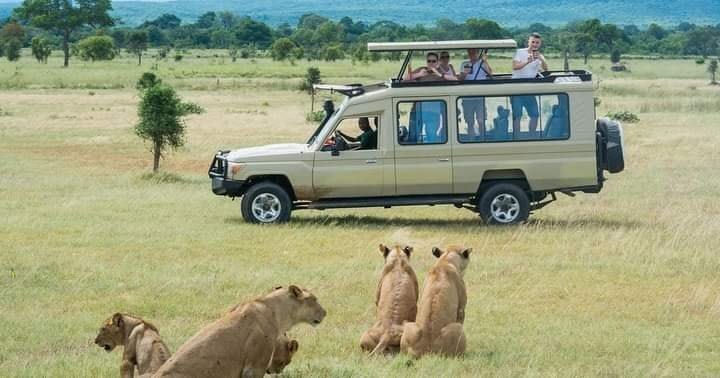
Yes. Visitors can encounter translocated wildlife in community conservancies, private conservancies, and protected areas. For example, guerezas reintroduced to Karura Forest near Nairobi are now viewable by ecotourists, and Grevy's zebras and hirola in NRT conservancies can be observed on guided safaris. Some conservancies offer educational experiences focused on rewilding and translocation, allowing visitors to learn directly from rangers and conservation staff about the process and its challenges.
Sources
- Rewilding relationships: Principles for forging relationships in social-ecological systems(official)
- Editorial: Rewilding in practice
- Human Dimensions of Wildlife Pathways – Conference Schedule
- National Wildlife Strategy 2030
- Mountain Bongo Restoration at Mount Kenya Wildlife Conservancy
- One More Critically Endangered Rothschild Giraffe Moved to Safer Grounds from 'disappearing' Island
- Case studies from around the globe – Conservation Translocation Perspectives
- Pilot case study Kenya: Lewa Wildlife Conservancy
- Tracing Community Conservation Evolution
- Kenya Annual Report 2017 – ZSL
Related to
Ready to start your safari adventure?
Explore curated safari packages and find your perfect African adventure with verified operators.