Safari Booking Season Affiliate: How to Plan in 2026
Safari demand changes by destination, wildlife event, school holiday, and booking lead time. This 2026 planning guide shows travel creators what to publish, when to publish it, and how to build a practical safari affiliate funnel.

Safari content can attract attention all year, but safari bookings do not happen evenly throughout the year. A reader researching a Kenya safari in January may be ready to travel in July. Someone comparing Botswana lodges in August may be planning a shoulder-season trip for the following April. For travel creators, understanding that delay is the foundation of a successful safari booking season affiliate strategy.
The opportunity is particularly interesting because African safaris are high-ticket purchases. A booking may cost $1,000–$10,000 or more depending on the destination, lodge, trip length, transport, and level of exclusivity. Yet safari planning content remains less saturated than general hotel, flight, and city-break content. The creators who explain seasons honestly, answer practical questions, and publish before demand peaks can build trust while sending qualified enquiries and bookings.
This guide covers the key safari booking seasons for 2026, the content calendar to use, the numbers behind realistic affiliate earnings, and a step-by-step way to turn search traffic into useful referrals.
What is the safari booking season?
There is no single African safari booking season. Demand varies by country, park, wildlife experience, weather, school holidays, and accommodation availability. It is also important to separate the travel season from the booking season.
- Travel season: when guests typically visit a destination.
- Booking season: when travellers research, compare, and reserve those trips.
- Lead time: the period between the first serious enquiry and the travel date.
For example, a traveller hoping to visit Tanzania during the July-to-October dry season may start researching six to twelve months earlier. A honeymoon couple with fixed dates may enquire even further in advance, while a flexible budget traveller may book a few months before departure.
That makes seasonal affiliate marketing a planning exercise rather than a rush to publish when animals or weather are already trending. Your content should be visible while the audience is still choosing where and when to go.
Safari demand by region in 2026
East Africa: Kenya and Tanzania
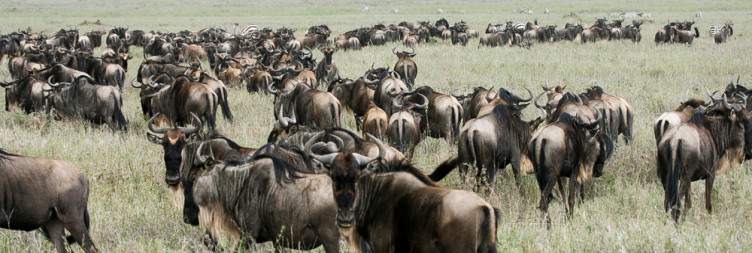
Kenya and Tanzania typically see strong interest during the June-to-October dry period. Wildlife is often easier to spot around water sources, roads can be more accessible, and the calendar includes the northern Serengeti and Maasai Mara migration period. However, migration timing is influenced by rainfall and should never be presented as a guaranteed date.
January and February are also important content and booking periods for parts of East Africa. These months can offer warm, relatively dry conditions and good wildlife viewing in several areas. The exact experience differs between parks, so destination-specific advice performs better than a blanket claim that one month is best everywhere.
Publish Kenya and Tanzania content from October through February for travellers considering the following dry season. Refresh it again in March and April with current planning advice, availability notes, and responsible wildlife-viewing guidance.
Southern Africa: South Africa, Botswana, Namibia, and Zambia
Southern Africa often experiences peak safari demand from June through October, when conditions are generally drier and vegetation may be less dense. In Botswana, the Okavango Delta flood cycle is a major planning consideration, but water levels and wildlife conditions vary from year to year. Namibia appeals to travellers combining wildlife with desert landscapes, while South Africa can be especially accessible for first-time safari guests and self-drive visitors.
Do not treat the dry season as the only sellable period. Green-season travel can offer lower rates, dramatic skies, lush scenery, and excellent birding. Some lodges and parks also have strong wildlife viewing outside the traditional peak. Content that compares peak, shoulder, and green seasons can capture both high-intent luxury travellers and value-conscious readers.
For June-to-October travel, aim to publish detailed destination guides between November and March. For green-season trips, create comparison content at least four to six months before the relevant travel window and update it as operators release seasonal offers.
Gorilla and chimpanzee trekking
Uganda and Rwanda trekking trips are shaped by rainfall, permit availability, fitness requirements, and limited accommodation. These trips often require more specialised planning than a standard game-drive holiday. Your content should explain permit rules, minimum age policies, walking conditions, packing, and responsible tourism rather than focusing only on the chance to see primates.
Because permits and lodge rooms can be constrained, publish trekking guides well ahead of the travel date. A useful article can earn trust even when the reader is still comparing countries, provided it clearly explains what changes by season and what must be reserved early.
When should a travel affiliate publish safari content?
A practical rule is to work backwards from the travel season. For a popular lodge, migration itinerary, honeymoon, or family holiday, six to twelve months of lead time is sensible. For more flexible trips or lower-season travel, three to six months may be enough.
- 12–9 months before peak travel: publish destination comparisons, season guides, and itinerary inspiration.
- 9–6 months before: publish lodge round-ups, budget explainers, family guides, honeymoon content, and park comparisons.
- 6–3 months before: add packing lists, transport guides, visa information, and “how many days” articles.
- 3–1 months before: target high-intent questions such as safari costs, availability, private versus group trips, and last practical decisions.
- During the travel season: publish real-time observations, ethical wildlife content, and updates that feed the next booking cycle.
This schedule gives search engines time to discover and rank a page, and it gives readers time to move from inspiration to a booking enquiry. It also prevents your affiliate strategy from depending entirely on short-lived social posts.
The content funnel that turns readers into safari enquiries
1. Capture broad seasonal searches
Start with questions such as “best time to go on safari in Kenya,” “Botswana safari in July,” or “is Tanzania worth visiting in the rainy season?” These searches may not convert immediately, but they attract people making an important destination decision.
Give a balanced answer. Explain rainfall, temperatures, wildlife concentration, crowds, pricing, and what may be uncertain. A trustworthy comparison is more likely to earn a click later than exaggerated claims about guaranteed sightings.
2. Build destination and itinerary pages
Once readers understand the seasons, help them choose a route. Compare the Maasai Mara with the Serengeti, Kruger with Botswana, or a classic Kenya itinerary with a Kenya-and-coast combination. Include realistic trip lengths, transfer considerations, accommodation styles, and who each route suits.
These pages are natural places for trackable links because readers are moving from research towards specific options. Link relevant phrases such as “compare safari itineraries” or “request a tailored safari” rather than placing unrelated links in every paragraph.
3. Answer purchase-stage questions
High-intent content often looks less glamorous but can be more valuable. Cover safari costs, deposit expectations, family suitability, solo travel, insurance, tipping, luggage limits, mobile connectivity, and what happens after an enquiry. These articles remove uncertainty at the point when a reader is deciding whether to proceed.
4. Use visual content to support, not replace, search content
Short videos and social posts are excellent for showing landscapes, lodge design, packing demonstrations, and wildlife etiquette. Point viewers to a detailed, season-specific page rather than a generic homepage. A caption such as “See the full July Botswana planning guide, including water levels, costs, and itinerary options” gives the audience a clear next step.
How to choose an affiliate program for safari content
Commission is only one factor. For a considered purchase such as a safari, creators should assess whether the program supports the entire path from click to enquiry to booking.
- Relevant inventory: Can your audience compare destinations, trip styles, and price points?
- Attribution: Are links trackable, and can you see clicks, leads, and bookings?
- Conversion support: Is there a knowledgeable team to handle questions your content cannot answer?
- Creative flexibility: Can you use widgets, deep links, or itinerary pages that fit your site?
- Payout clarity: Are the revenue-share rules, payment timing, and threshold explained before you start?
- Audience fit: Does the partner serve the countries and traveller types you already cover?
The SafariFind Partner Program is designed for content creators, influencers, and affiliates who want to refer safari travellers without building their own booking operation. It is free to join, applications are reviewed within 12 hours, and approved partners receive trackable links, embeddable widgets that can match a creator’s site style, real-time analytics, and a low payout threshold.
SafariFind pays a 30% revenue share on every safari booking referred by a partner. This is 30% of SafariFind’s revenue on the booking, not 30% of the traveller’s total trip price. For example, if a $3,000 safari generates approximately $500 in SafariFind revenue, the creator’s share would be around $150. Actual earnings depend on the booking and the revenue generated, so this should be treated as an illustration rather than a guarantee.
If your audience already reads your destination guides, watches planning videos, or asks you for itinerary advice, join the SafariFind Partner Program and connect those high-intent moments to relevant safari options.
How to build a 2026 safari affiliate content calendar
Begin with a spreadsheet containing four columns: destination, likely travel months, recommended publication months, and search intent. Add a fifth column for the relevant SafariFind page or widget. This simple system helps you avoid sending every reader to the same generic link.
For example, a 2026 calendar might include:
- January: publish “where to go on safari in July,” Tanzania and Kenya season comparisons, and honeymoon planning pages.
- February: create Botswana, Namibia, and South Africa itinerary content for the dry-season booking window.
- March: update costs, family guides, packing lists, and safari-versus-beach combination trips.
- April–May: publish practical guides for travellers finalising June-to-October departures and create green-season comparison pages.
- June–August: use current trip questions and social content to feed articles for the next year, rather than relying only on immediate bookings.
- September–December: target festive travel, next-year honeymoons, early family planning, and “best safari months” searches.
Review performance monthly. Look beyond clicks: measure engaged sessions, outbound click rate, enquiries, booking conversion, and revenue per article. A page with 500 highly relevant visitors may outperform one with 10,000 casual visitors. Also check which destinations generate enquiries, then expand those topics with supporting articles.
Trust, disclosures, and responsible safari marketing
Affiliate content should be transparent. Tell readers when a link may earn you a commission or revenue share, and make the disclosure easy to find. It should not change your advice: recommend a lower-cost season when it is genuinely more suitable, and explain when a premium lodge or private vehicle adds value.
Avoid promises of guaranteed Big Five sightings, exact migration dates, effortless luxury, or unusually low prices without evidence. Mention that wildlife is wild, weather changes, and availability can move quickly. Responsible content should also address park rules, distance from animals, community benefits, conservation fees, and the importance of choosing reputable local operators.
These details are not obstacles to conversion. They help the right traveller make an informed decision and reduce the risk of disappointment, refunds, or poor-fit enquiries.
Common mistakes in safari affiliate marketing
- Publishing too late: a peak-season article released during peak season may miss the main planning window.
- Using one season for an entire country: conditions differ between parks and regions.
- Targeting only inspiration: add cost, logistics, and booking content for readers close to action.
- Using generic links: deep-link to the destination or itinerary discussed in the article.
- Ignoring mobile readers: make widgets, tables, and enquiry buttons easy to use on a phone.
- Overstating earnings: explain revenue share accurately and show examples without promising income.
- Failing to refresh pages: review prices, dates, park rules, and seasonal advice before each major booking cycle.
Make seasonality your advantage
The strongest safari affiliate publishers do not simply post more content. They publish the right answer before the traveller reaches the booking stage, organise it around regional demand, and measure which pages produce meaningful enquiries.
SafariFind gives creators a practical way to connect that advice with safari inventory through trackable links, adaptable widgets, analytics, and a 30% revenue share on SafariFind’s booking revenue. If your 2026 content plan includes African wildlife, destination comparisons, or detailed trip planning, join the SafariFind Partner Program and start building your seasonal content funnel.
Start your 2026 safari affiliate plan
Choose three destinations your audience already cares about, map their travel and booking seasons, and publish one useful planning page before the next demand peak. Then add relevant SafariFind links, review the analytics, and improve the pages that attract serious travellers. Seasonal consistency—not hype—is what turns trusted travel content into sustainable affiliate revenue.
 Ask Tembo about this guide
Frequently Asked Questions
How much can travel creators earn with affiliate marketing?
There is no fixed amount because earnings depend on traffic quality, booking value, conversion rate, and the partner’s terms. SafariFind offers a 30% revenue share of its revenue on each referred safari booking. For illustration, a $3,000 safari that generates about $500 in SafariFind revenue could produce around $150 for the creator.
What is the best month to book an African safari?
The best booking month depends on where and when you want to travel. For popular June-to-October trips, starting research six to twelve months ahead is sensible. Some flexible or green-season trips can be arranged closer to departure, but availability varies by lodge and itinerary.
When should I publish safari content for peak season?
Publish core destination and season guides roughly six to twelve months before peak travel. Add itinerary, lodge, cost, and packing content three to six months before departure, then refresh the pages as dates, prices, and availability change.
Is there one safari season for all of Africa?
No. Kenya, Tanzania, Botswana, Namibia, South Africa, Zambia, Uganda, and Rwanda have different weather patterns, wildlife experiences, and demand cycles. Even within one country, conditions can vary between parks, so destination-specific advice is more accurate.
Can I earn affiliate revenue from social media safari content?
Yes, if the affiliate program allows social referrals and your links are disclosed clearly. Short videos, image posts, and live content work best when they direct viewers to a detailed season or itinerary page with a relevant trackable link.
What safari content converts best for affiliates?
High-intent topics often include safari costs, best times to visit, destination comparisons, lodge guides, family suitability, honeymoon itineraries, private versus group trips, and practical booking or packing questions.
How does the SafariFind Partner Program work?
Creators apply for free, and approval is provided within 12 hours. Approved partners can use trackable links and embeddable widgets, monitor performance through real-time analytics, and receive a 30% revenue share of SafariFind’s revenue on referred safari bookings.
Do I need a large audience to become a safari affiliate?
Not necessarily. A smaller audience with strong interest in African travel may be more valuable than a large, general audience. Useful destination expertise, qualified traffic, and clear trip-planning content matter more than follower count alone.
Ready to start your safari adventure?
Explore curated safari packages and find your perfect African adventure with verified operators.