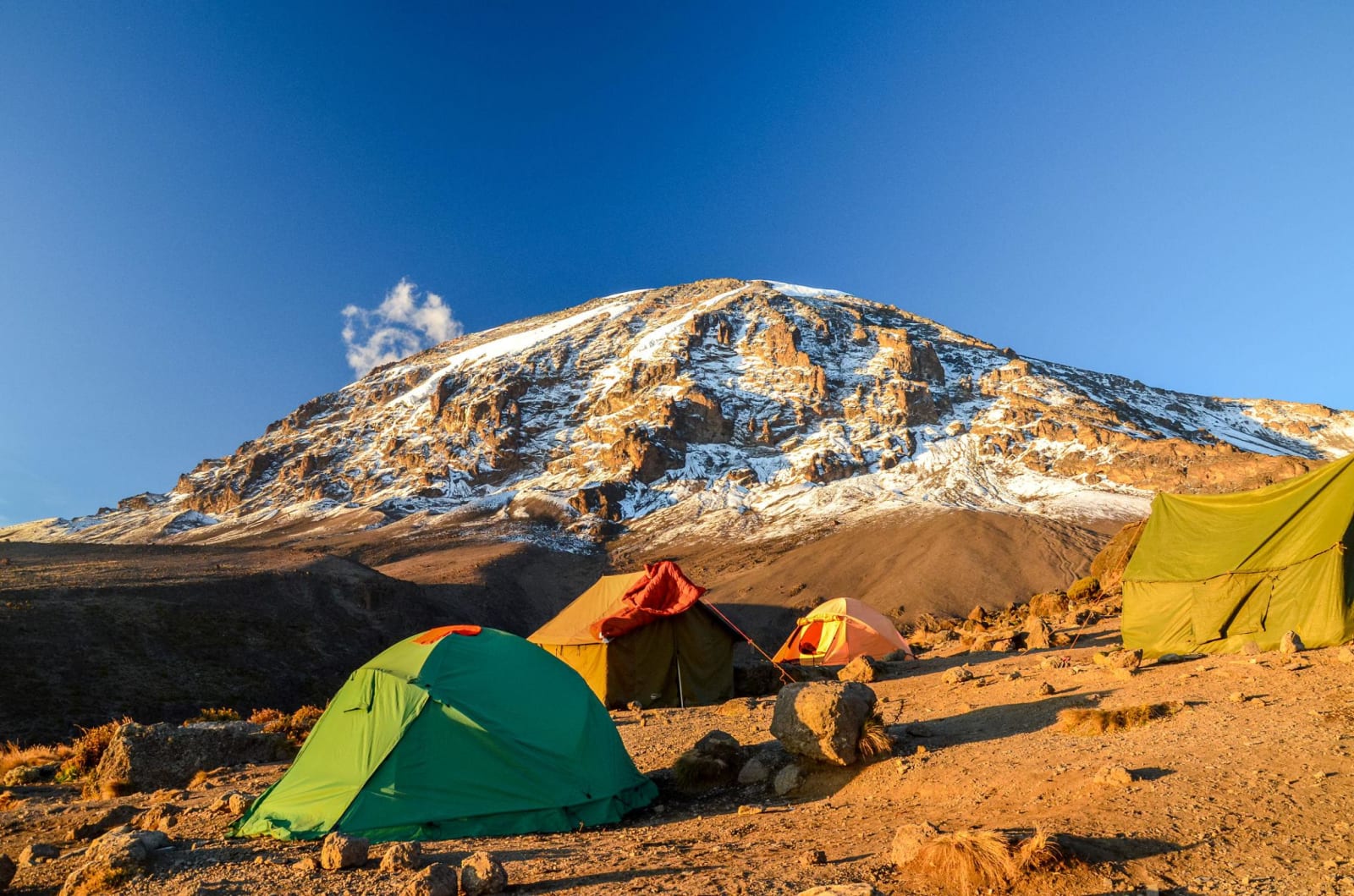
 1 / 8
1 / 8 6 daysPrivate
6-Day Days – Umbwe Route Kilimanjaro Trek
by
Loading SafariFind...
1 / 8by
SafariFind app
Keep up with your inquiries and bookings, and message operators wherever you are.

Arrival in Moshi City & Trek Begins at Umbwe Gate
Umbwe Gate
Meals: Dinner
Rainforest Ascent to Barranco Hut Camp
Kilimanjaro National Park
Meals: Breakfast, Lunch, Dinner
Barranco Wall Climb & Descent to Karanga Camp
Kilimanjaro National Park
Meals: Breakfast, Lunch, Dinner
Alpine Ascent to Barafu Camp
Kilimanjaro National Park
Meals: Breakfast, Lunch, Dinner
Midnight Summit Push to Uhuru Peak
Uhuru Peak
Meals: Breakfast, Lunch, Dinner
Descent to Mweka Gate & Journey's End
Mweka Gate
Meals: Breakfast
High Season
Jun 2026 – Oct 2026
Low Season
Nov 2026 – May 2027
| Season | Solo traveller | 2 people | 3 – 4 people | 5 – 6 people | 7+ people | Child rate | Single suppl. |
|---|---|---|---|---|---|---|---|
High Season Jun 2026 – Oct 2026 | $2,625 | $1,750 | $1,575 | $1,488 | $1,400 | $1,225 | $525 |
Low Season Nov 2026 – May 2027 | $2,231 | $1,488 |
Child rate applies to travelers under 12 years. Single supplement applies to solo travelers taking their own room.
The Umbwe Route is technically straightforward but physically demanding, making it better suited for climbers with prior high-altitude experience or excellent baseline fitness levels. While it doesn't require technical climbing skills, the steep gradients and compressed 6-day timeline leave limited room for acclimatization. First-time Kilimanjaro climbers often have better success rates on longer routes like Machame or Marangu (7-8 days), which allow more gradual altitude adjustment. If you're a first-timer with exceptional fitness and mountain experience, Umbwe is possible—but consider your acclimatization capacity carefully.
Success rates on the Umbwe Route typically range from 60-75% when guided by experienced expedition teams, though this varies based on individual fitness levels and acclimatization ability. The compressed 6-day timeline is the primary factor affecting success rates—climbers have less time to adjust to altitude before the summit push. Factors influencing success include your pre-trek fitness, adherence to acclimatization protocols, proper hydration, and how your body responds to high altitude. Choosing a reputable operator with experienced guides significantly improves your chances of reaching Uhuru Peak.
The Umbwe Route is significantly less crowded than popular routes like Marangu and Machame. Because of its steep terrain and demanding nature, fewer commercial tour groups operate on Umbwe, meaning you'll encounter far fewer trekkers on the mountain. This solitude is one of Umbwe's greatest appeals—you'll experience the mountain in a more intimate, authentic way without the parade of tour groups common on busier routes. If avoiding crowds is a priority for your Kilimanjaro experience, Umbwe delivers that in spades.
Mount Kilimanjaro's five distinct ecological zones create a remarkable journey from tropical to arctic conditions. Starting at lower elevations, you'll trek through lush montane forest with dense vegetation and wildlife. As you ascend, you enter the heath and moorland zone featuring alpine meadows and shrubland. Higher up, you reach the alpine desert zone with sparse vegetation and dramatic rocky terrain. Near the summit, you enter the arctic zone with frozen landscapes and minimal life. Finally, the glaciated summit zone around Uhuru Peak (5,895m) features permanent ice fields and extreme conditions. This vertical journey compresses climate zones you'd normally travel hundreds of kilometers to experience.
The midnight summit push from Barafu Camp to Uhuru Peak (5,895m) typically takes 5-7 hours depending on your pace, fitness level, and acclimatization. Most expeditions depart Barafu Camp around midnight to 1 AM, aiming to reach the summit at sunrise—both for the iconic views and to maximize daylight for the descent. The ascent is steep and physically demanding in darkness with only headlamps to guide you. The thin air (roughly 50% oxygen availability at the summit) means progress is slow. After reaching Uhuru Peak and celebrating, you'll descend back to Barafu Camp, making this a grueling 10-15 hour round trip that demands mental toughness and physical endurance.
Packing for Kilimanjaro requires preparation for extreme temperature swings—from warm rainforest conditions to freezing alpine temperatures. Essential items include: moisture-wicking base layers, insulating mid-layers (fleece or down jacket), a waterproof outer shell, warm hat and gloves, sturdy hiking boots broken in before the trek, thick hiking socks, and gaiters to keep debris out. Bring high-SPF sunscreen, sunglasses, and a headlamp with extra batteries for the summit push. A sleeping bag rated for sub-zero temperatures is critical. Pack blister treatment, altitude sickness medication (if prescribed), and a basic first-aid kit. Bring high-calorie snacks, electrolyte supplements, and a reusable water bottle. Minimize weight—porters carry camping gear, so focus on personal clothing and essentials. Avoid cotton; bring synthetic or wool alternatives that retain warmth when wet.
The best climbing seasons for Mount Kilimanjaro are the dry seasons: January-February (short dry season) and June-October (long dry season). June-October is considered peak season with the most stable weather, clearest skies, and highest summit success rates—though it's also the busiest period. January-February offers fewer crowds and good conditions, though some routes may have snow. Avoid the rainy seasons (March-May and November-December) when trails become muddy, visibility decreases, and weather is unpredictable. The compressed 6-day Umbwe Route is particularly weather-dependent, so climbing during established dry seasons significantly improves your chances of favorable conditions and successful acclimatization.
Altitude sickness medication (typically Diamox/acetazolamide) is not absolutely required but is highly recommended, especially for the compressed 6-day Umbwe Route where acclimatization time is limited. Many climbers use Diamox preventatively to reduce acute mountain sickness (AMS) symptoms like headache, nausea, and fatigue. Consult your doctor before climbing—they can assess your individual risk factors and prescribe medication if appropriate. Beyond medication, the most effective prevention is gradual acclimatization, staying hydrated, eating well, and listening to your body. Some climbers successfully summit without medication through excellent fitness and acclimatization discipline, while others benefit significantly from it. Your expedition operator and guide can advise based on your health history and how you're responding to altitude during the trek.
The Barranco Wall is a dramatic 250-meter high rock face located between Barranco Hut Camp and Karanga Camp on Mount Kilimanjaro. Despite its intimidating appearance, it's not a technical rock climb—it's a steep but scrambling route with established paths and natural handholds. The crossing typically takes 1-2 hours and is rated moderate in difficulty rather than difficult. While exposure (height above ground) can feel significant, the route is well-traveled and safe when approached carefully. The wall is actually a positive acclimatization feature because the scrambling engages your muscles and increases heart rate, helping your body adjust to altitude. Most trekkers find the Barranco Wall psychologically challenging due to its appearance rather than technically difficult—once you start, the path becomes clear and manageable.
Both Umbwe and Machame are steep, challenging routes, but they differ significantly. Umbwe is more direct and steeper, gaining elevation rapidly with less gradual acclimatization—making it more intense but shorter (6 days vs. Machame's typical 6-7 days). Machame is slightly less steep and more scenic, winding through diverse landscapes with better-established infrastructure and more porter support. Umbwe is far less crowded, offering greater solitude and a raw mountain experience. Machame is more popular, meaning more facilities and established camps, but also more trekkers. Success rates on Machame are typically higher (70-85%) due to better acclimatization time. Umbwe suits experienced mountaineers seeking challenge and solitude, while Machame appeals to fit trekkers wanting a slightly more forgiving timeline with maintained infrastructure.
 isale safaris company limitedkilimanjaro, Tanzania
© 2026 SafariFind. All rights reserved.
| $1,339 |
| $1,265 |
| $1,190 |
| $1,225 |
| $525 |
