 1 / 5
1 / 5 8 daysPrivate
8-Day Calving Season Safari
byTrusted
Loading SafariFind...
1 / 5byTrusted
SafariFind app
Keep up with your inquiries and bookings, and message operators wherever you are.

Day 1: Arrival at Kilimanjaro International Airport
Arusha City
Meals: Dinner
Day 2: Arusha – Tarangire National Park
Tarangire National Park
Meals: Breakfast, Lunch, Dinner
Day 3: Tarangire – Lake Manyara National Park
Lake Manyara National Park
Meals: Breakfast, Lunch, Dinner
Day 4: Karatu – Olduvai Gorge – Ndutu Game Reserve
Olduvai Gorge
Meals: Breakfast, Lunch, Dinner
Day 5: Ndutu Game Drives
Ngorongoro
Meals: Breakfast, Lunch, Dinner
Day 6: Ndutu – Serengeti National Park (Central Serengeti)
Serengeti National Park
Meals: Breakfast, Lunch, Dinner
Day 7: Serengeti – Ngorongoro Crater – Karatu
Ngorongoro Crater
Meals: Breakfast, Lunch, Dinner
Day 8: Karatu – Arusha – Departure
Karatu
Meals: Breakfast
Year Round
Year-round
| Season | Solo traveller | 2 people | 3 – 4 people | 5 – 6 people | 7+ people | Child rate |
|---|---|---|---|---|---|---|
Year Round Year-round | $6,989 | $6,989 | $6,989 | $6,290 | $6,989 | $5,591 |
Child rate applies to travelers under 12 years.
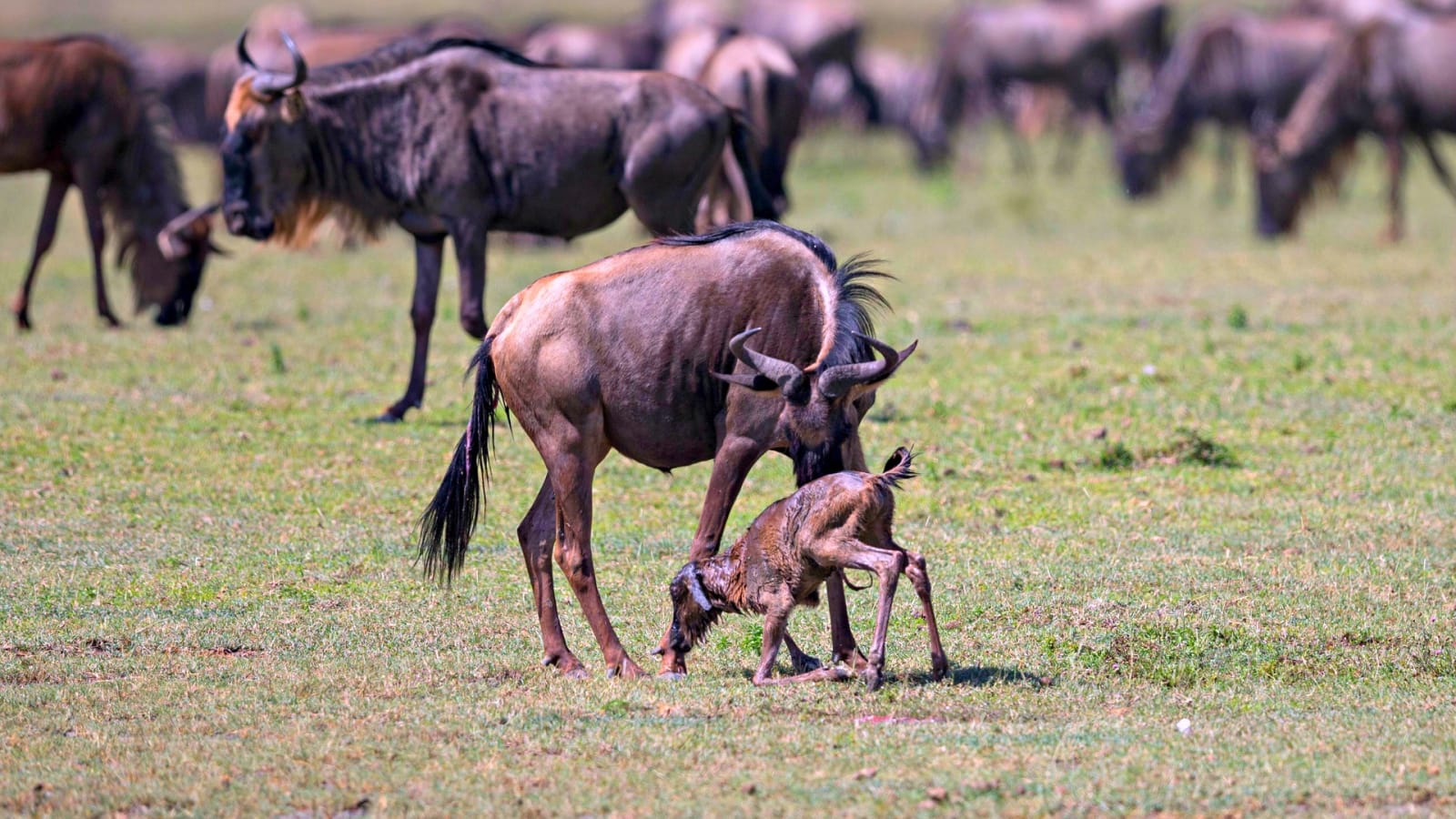
The wildebeest calving season is one of nature's most spectacular events, occurring annually in Tanzania's northern circuit, typically between January and March. During this period, hundreds of thousands of wildebeest gather in the Ndutu area and surrounding plains to give birth to their calves after the rains trigger the growth of fresh grasses. This synchronized breeding results in the birth of approximately 500,000 calves within just a few weeks. The exact timing can vary slightly depending on rainfall patterns, but January through early March offers the highest concentration of calving activity. This is when predators like lions, leopards, and hyenas are most active, creating dramatic wildlife encounters as newborns take their first steps into the African wilderness.
Tanzania's northern circuit during calving season offers exceptional wildlife viewing opportunities. You'll encounter massive herds of wildebeest and zebras on the plains, along with countless newborn calves. Large predators including lions, leopards, and cheetahs are highly active during this period, drawn by the abundance of prey. Other wildlife you're likely to see includes African buffalo, giraffes, impalas, gazelles, hyenas, and various antelope species. Birdwatching enthusiasts will spot numerous species including eagles, ostriches, and crowned cranes. The alkaline lakes attract flamingos and other water birds. Each region—from Tarangire's baobab plains to the Serengeti's open grasslands and the Ngorongoro Crater—offers distinct wildlife viewing experiences with different concentrations of species.
An 8-day safari is considered ideal for experiencing Tanzania's northern circuit comprehensively. This duration allows you to spend meaningful time in multiple ecosystems—including Tarangire, Lake Manyara, the Ndutu calving grounds, the Serengeti, and the Ngorongoro Crater—without feeling rushed. With 8 days, you'll have multiple game drives in each location, increasing your chances of witnessing diverse wildlife and natural behaviors. Shorter safaris of 3-4 days are possible but more limited in scope, while longer safaris of 10+ days allow for deeper exploration and more relaxed pacing. The 8-day timeframe balances comprehensive wildlife viewing, cultural experiences, and reasonable travel logistics.
Tanzania is generally considered a safe destination for safari tourism, with well-established tourism infrastructure and experienced guides. The northern circuit, which includes popular destinations like the Serengeti and Ngorongoro Crater, has decades of tourism experience and professional safari operators. Safety measures include traveling in enclosed 4x4 vehicles with professional guides who understand animal behavior and park regulations, staying within designated areas, and following ranger instructions. That said, it's a wild environment with unpredictable animals, so respecting wildlife boundaries and listening to your guide is essential. Before traveling, check current travel advisories from your government, ensure you have comprehensive travel insurance, and consult with a travel medicine clinic about vaccinations and health precautions. Choosing reputable, established safari operators significantly enhances your safety experience.
Packing for a Tanzania safari requires preparation for varied conditions and wildlife viewing. Essential items include lightweight, neutral-colored clothing (khaki, tan, green, grey) to avoid startling wildlife, long pants and long-sleeved shirts for sun and insect protection, a warm fleece or jacket for early morning game drives when temperatures drop, sturdy walking boots and comfortable safari shoes, a wide-brimmed hat, and high-SPF sunscreen. Bring binoculars for bird and wildlife viewing, a camera with extra batteries and memory cards, and any personal medications. Other necessities include a good water bottle (bottled water is provided during drives), toiletries, insect repellent, and a headlamp or flashlight. Neutral colors help you blend into the landscape for better wildlife photography and viewing. Consider the season—during calving season (January-March), afternoons can be warm while mornings are cool. Pack layers to adjust throughout the day.
Visa requirements for Tanzania depend on your nationality. Many countries' citizens can obtain a visa on arrival at Tanzanian airports, while others require pre-arranged visas through a Tanzanian embassy or online e-visa systems. Most visitors need a valid passport with at least six months of validity remaining beyond their travel dates. It's essential to check the specific visa requirements for your country of citizenship well before your trip, as regulations can change. Visit the official Tanzanian immigration website or contact your nearest Tanzanian embassy for the most current information. Additionally, some nationalities qualify for visa-free entry for short periods. Factor visa processing time into your travel planning, and consider obtaining travel insurance that covers visa-related issues. Your safari operator can often provide guidance on visa requirements, but ultimately you're responsible for ensuring your documentation is in order.
Before traveling to Tanzania, consult with a travel medicine clinic or your healthcare provider at least 4-6 weeks before departure. Yellow fever vaccination is strongly recommended and may be required depending on your itinerary and country of origin. Malaria is present in Tanzania, particularly at lower elevations, so antimalarial medications are typically advised. Routine vaccinations (measles, mumps, rubella, tetanus, polio) should be current. Hepatitis A and B vaccinations are often recommended. Typhoid vaccination may be suggested depending on your specific travel plans and activities. Drinking water safety varies, so some travelers take precautions against waterborne illnesses. The specific vaccines and medications recommended depend on your personal health history, the regions you'll visit, and current disease prevalence. A travel medicine specialist can provide personalized recommendations based on your individual circumstances. Ensure you have comprehensive travel insurance that covers medical emergencies and evacuation.
Tanzania safari costs vary significantly based on season, accommodation quality, group size, and operator. An 8-day safari typically ranges from mid-range to luxury pricing. Budget safaris might start around $2,000-$3,000 per person, mid-range options generally fall between $3,500-$6,000 per person, while luxury safaris can exceed $8,000-$15,000+ per person. The calving season (January-March) is peak season, which typically commands higher prices than shoulder seasons. Package inclusions matter significantly—all-inclusive safaris covering meals, accommodations, park fees, and guides offer better value than those requiring additional payments. Group size affects per-person costs; larger groups typically cost less per person than private safaris. International flights, travel insurance, visa fees, tips, and alcoholic beverages are usually not included and represent additional expenses. Request detailed quotes from multiple operators to compare what's included and find the best value for your budget and preferences.
Tanzania's northern circuit features four distinct ecosystems, each offering unique wildlife and landscapes. Tarangire National Park is known for its massive elephant herds, baobab trees, and river-based wildlife concentrations, particularly during dry seasons. Lake Manyara is a compact park featuring a soda lake that attracts flamingos and other water birds, tree-climbing lions, and diverse wildlife in a more intimate setting. The Serengeti is vast open grassland famous for the Great Migration and exceptional predator viewing, offering expansive vistas and abundant wildlife year-round. Ngorongoro Crater is a UNESCO World Heritage Site featuring a collapsed volcanic caldera that functions as a natural wildlife sanctuary, hosting dense concentrations of animals within its 8,000-meter walls. Each destination offers different photographic opportunities, wildlife densities, and landscape experiences. Visiting all four provides a comprehensive understanding of Tanzania's diverse ecosystems and maximizes wildlife viewing opportunities during an 8-day safari.
A private 4x4 safari vehicle is a specially equipped, open-sided or pop-up roof vehicle designed specifically for game viewing in African national parks. The elevated seating position provides excellent visibility for spotting wildlife across vast distances. The open design allows for unobstructed photography, better air circulation in warm climates, and an immersive experience of the African landscape. Four-wheel-drive capability enables access to remote areas and rough terrain where wildlife congregates, especially during calving season when animals disperse across vast plains. Private vehicles mean you travel with your own guide and group, allowing flexibility in pacing, stop duration, and route selection based on wildlife activity. This contrasts with shared vehicles where you're bound to other tourists' schedules. Professional guides operating private vehicles understand animal behavior, know where to find wildlife, and can explain ecological relationships and conservation efforts. The vehicle's design, combined with a knowledgeable guide, significantly enhances both safety and the quality of your safari experience.
© 2026 SafariFind. All rights reserved.