African Wild Dog Conservation in Zimbabwe (2026)
Zimbabwe supports an estimated 660 African wild dogs in 86 packs across three main landscapes. In 2026, the return of 20 wild dogs to Matusadona National Park marked a major restoration milestone, while snaring, disease, habitat fragmentation and human conflict remain serious threats.
Quick answer: African wild dog (Lycaon pictus) conservation in Zimbabwe is centred on protecting three major populations: the Greater Hwange Ecosystem, the Zambezi Valley and the south-east lowveld. The national population is estimated at approximately 660 dogs in 86 packs, although estimates vary by source and survey method. On 15–17 February 2026, the Zimbabwe Parks and Wildlife Management Authority (ZimParks) and African Parks translocated 20 African wild dogs to Matusadona National Park, returning the species after decades of local extinction.
Last reviewed August 2026. Conservation data changes — see the cited sources for the latest figures.
Why African wild dog conservation matters in Zimbabwe
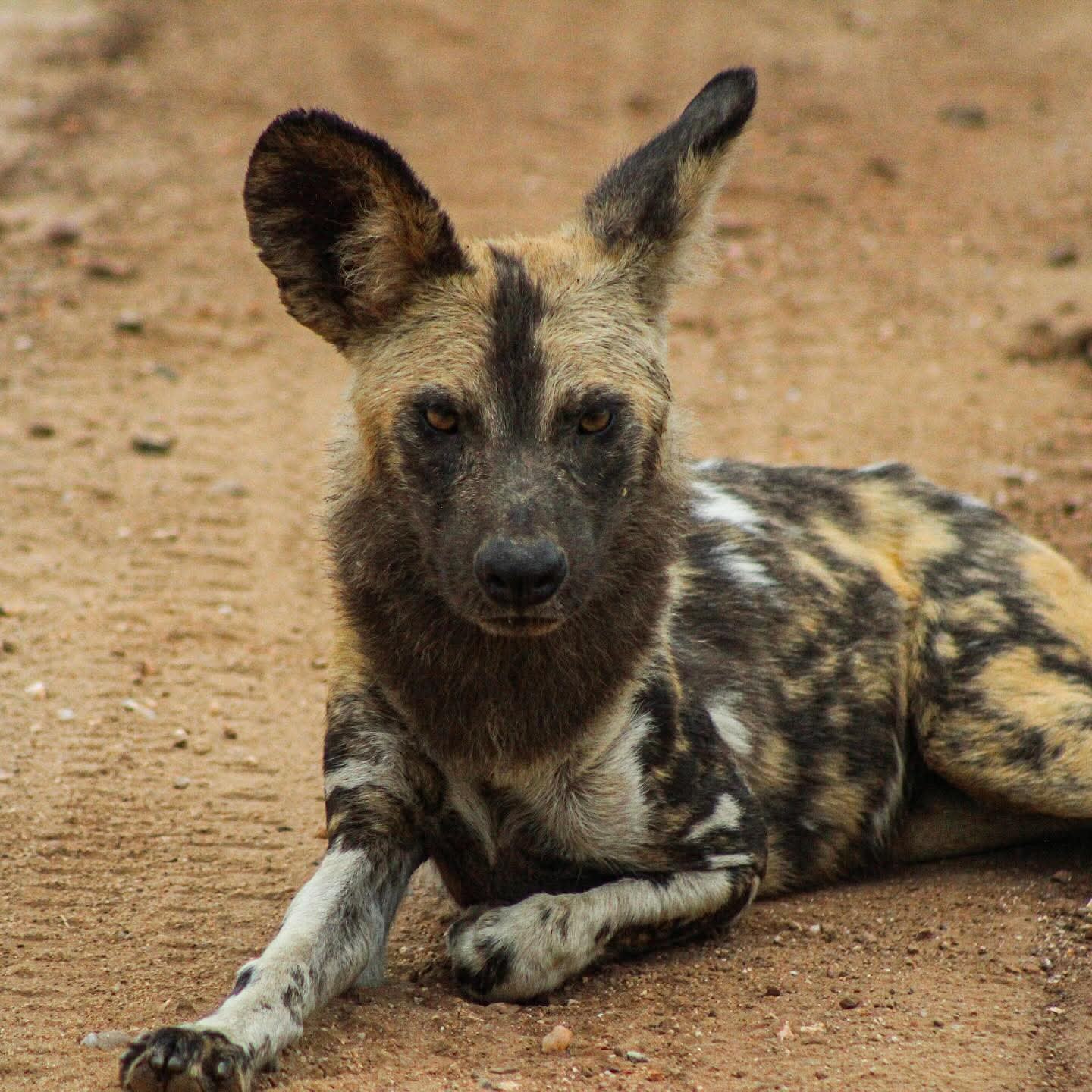
The African wild dog is one of Africa’s most distinctive large carnivores. Also called the painted dog or painted wolf, it is an endangered species with a highly social pack structure and a wide-ranging lifestyle. Its scientific name is Lycaon pictus, and it is not a feral form of the domestic dog; it belongs to its own evolutionary lineage.
Zimbabwe is important because its protected areas and adjoining wildlife landscapes retain several nationally significant populations. The main areas identified by the African Wildlife Conservation Fund are the Greater Hwange Ecosystem, the Zambezi Valley and the south-east lowveld. These landscapes include Hwange National Park, Mana Pools National Park, Gonarezhou National Park and the Savé Valley Conservancy, as well as surrounding community and safari areas.
Wild dogs need large, connected landscapes containing adequate prey and relatively low levels of direct persecution. Their average home ranges are reported at approximately 300–800 km², while a single pack can range across as much as 3,000 km²; during denning, the active range contracts substantially. This makes isolated parks and narrow protected-area boundaries insufficient on their own. Packs can cross park borders, roads, communal land and private conservancies, so long-term conservation depends on landscape connectivity and cooperation between land managers.
The species also contributes to ecosystem function as a predator that helps regulate prey populations. For safari travellers, seeing a pack is an exceptional wildlife experience, but the conservation value of wild dogs extends beyond tourism: protecting them also requires protecting the prey base, habitat connectivity, ranger networks and disease-management systems shared by many other species.
Where are African wild dogs found in Zimbabwe?
| Zimbabwe landscape | Conservation significance | Research or protection noted in the sources |
|---|---|---|
| Greater Hwange Ecosystem | One of Zimbabwe’s principal wild dog landscapes | Painted Dog Conservation and partners support anti-poaching, outreach and monitoring around Hwange. |
| Zambezi Valley | Includes the Mana Pools and Mid-Zambezi Valley landscape | Research has examined population demography, ecology, genetics and long-distance dispersal. |
| South-east lowveld | Includes Gonarezhou National Park and Savé Valley Conservancy | African Wildlife Conservation Fund has monitored packs and supported conservation in the lowveld. |
| Matusadona National Park | Historic local range where the species had been absent for decades | Twenty wild dogs were reintroduced in February 2026 by African Parks and ZimParks. |
Mana Pools is one of Zimbabwe’s best-known wild dog research landscapes. Bushlife Conservancy and The Zambezi Society are listed as partners working on wild dog protection there, while the Mana Pools Carnivore Research Project is intended to provide data for ZimParks ecologists. Painted Dog Conservation’s publications also document research on wild dog behaviour, predator interactions and dispersal in Mana Pools and Hwange.
The main threats to African wild dogs in Zimbabwe
Wire snares and by-catch poaching
Wire snares set to capture antelope for bushmeat can accidentally kill African wild dogs. This threat is particularly serious because dogs travel beyond protected-area boundaries and may encounter snares in buffer zones or communal land. African Wildlife Foundation reported that Hwange’s wild dogs face elevated risk in areas outside the national park, where poaching and snares are more difficult to control.
Painted Dog Conservation’s anti-poaching units have patrolled since 2001 and have collected more than 35,000 snares, according to the Wildlife Conservation Network’s programme summary. That figure represents a major practical effort, but it is not a measure of all snares present or of every animal saved. Snare removal must be combined with intelligence-led patrols, law enforcement and community-based approaches that address the economic drivers of illegal hunting.
Habitat fragmentation and loss of connectivity
Wild dogs naturally move across very large areas. Agricultural expansion, settlement growth, fences, roads and poorly planned land management can divide habitat and increase the likelihood of conflict or road mortality. Fragmentation can also restrict dispersal between packs, reduce access to prey and make small populations more vulnerable to local shocks.
For this reason, conservation in Zimbabwe cannot focus only on the core of a national park. The Greater Hwange Ecosystem and the Zambezi Valley require cooperation across national parks, safari areas, private land and community areas. Long-distance dispersal within the Kavango-Zambezi Transfrontier Conservation Area has been documented, demonstrating why cross-border and landscape-scale planning matters.
Conflict with people and livestock
Wild dogs can come into contact with people and domestic animals when their movements overlap with farms, villages and grazing areas. Occasional livestock predation can lead to direct persecution, while human settlement around protected areas increases pressure on habitat. Effective conservation therefore needs more than enforcement: it must include early-warning systems, rapid responses to problem packs, practical livestock-protection measures and tangible benefits for communities living alongside wildlife.
Infectious disease
Domestic dogs can transmit diseases including rabies and canine distemper to wild dogs. Outbreaks have the potential to affect entire packs, making disease prevention and monitoring important wherever wild dogs overlap with settlements or domestic animals. The research provided does not establish a current Zimbabwe-wide vaccination outcome, so disease risk should not be presented as solved. Domestic-dog health programmes, disease surveillance and coordinated veterinary response remain important conservation tools.
Roads, prey depletion and climate pressures
Road mortality is a documented threat to wild dogs, particularly where roads cut through movement routes or denning areas. Poaching can also reduce the prey available to wild dogs, while WildCRU identifies climate change as an emerging threat that may affect the species’ distribution, ecology and long-term population dynamics. These pressures interact: fragmented habitat, reduced prey and hotter or less predictable conditions can force packs into riskier areas.
What is being done to protect Zimbabwe’s wild dogs?
Matusadona’s 2026 reintroduction
The February 2026 translocation of 20 wild dogs to Matusadona National Park was an ecological-restoration project led by African Parks with ZimParks. African Parks has managed Matusadona since 2020, with investment in community development, law enforcement, biodiversity research and monitoring, and park infrastructure.
Daniel Sithole, African Parks’ Country Manager for Zimbabwe, emphasised that reintroductions depend on long-term investment in people, partnerships and systems. That point is central to judging the project: releasing animals is only one stage. The reintroduced pack must be monitored, protected from snares and disease, and supported by a landscape where prey, habitat and community relationships are adequate for persistence.
The Matusadona initiative is part of a broader restoration programme. African Parks stated that a black rhino reintroduction was also planned for 2026, although that is a separate species-recovery action rather than a wild dog result. Read more about the wider context in Rewilding & Wildlife Translocations in Zimbabwe (2026).
Anti-poaching and law enforcement
Painted Dog Conservation works with local communities and law-enforcement authorities, including ZimParks, on patrols and wildlife-crime monitoring. Its “Zero Tolerance to Wildlife Crime” outreach campaign was developed alongside anti-poaching work in the Hwange landscape. The Wildlife Conservation Network reports that PDC’s anti-poaching units protect a total of 13,000 square miles through their patrol work, while its programme summary says the units have removed more than 35,000 snares since patrols began.
African Wildlife Foundation reported reduced poaching activity in areas with regular ground-patrol presence and generally more positive local attitudes towards wild dogs in the Hwange landscape. These are encouraging programme-level results, but they should not be confused with proof that poaching has ended. Wild dogs still leave protected areas, and continued patrol funding, intelligence, equipment and local partnerships are necessary.
Monitoring, research and technology
Wild dog conservation relies on knowing where packs are, how many animals survive, where they disperse and what causes mortality. WildCRU’s carnivore monitoring programme in Botswana and Zimbabwe aims to establish baseline densities, track population trends and identify threats. Its methods include camera trapping, GPS collaring and community interviews.
Painted Dog Conservation’s Mid-Zambezi Valley research, conducted from 2017 to 2027, examines population demography, ecology and genetic composition in a landscape including Mana Pools, Chewore, Sapi and Hurungwe Safari Areas. Such work can inform decisions about connectivity, disease, dispersal and whether translocations are appropriate.
Research has also recorded long-distance African wild dog dispersal within the Kavango-Zambezi Transfrontier Conservation Area. This evidence supports conservation planning beyond individual park boundaries and strengthens the case for maintaining safe movement routes across national borders.
Community conservation and the role of safari tourism
Community participation is not an optional addition to wild dog conservation. Packs move through human-used landscapes, and local residents experience both the costs and potential benefits of living near wildlife. African Wildlife Conservation Fund describes community and conservation work in Zimbabwe’s lowveld, while Painted Dog Conservation combines conservation, education and outreach with local populations.
Tourism can help when revenue supports ranger operations, habitat management, scientific monitoring, local employment and community programmes. However, the connection is not automatic: travellers should ask operators how conservation fees are allocated, whether guides follow wildlife-viewing rules and whether local communities are genuine partners rather than simply marketing themes.
A responsible wildlife safari in Zimbabwe’s national parks can contribute to the wider conservation economy by supporting legitimate lodges, guides, camps and protected-area operations. Travellers can book conservation-supporting safaris on SafariFind, while checking each operator’s claims and asking for specific information about its local partnerships.
Wild dogs are not the only threatened carnivores requiring connected landscapes. Conservation approaches used for wild dogs overlap with work on lion conservation in Zimbabwe, including efforts to reduce conflict, improve monitoring and maintain functional habitats.
Results and setbacks: what has changed by 2026?
Zimbabwe has several clear conservation positives. The national population is estimated at approximately 660 dogs in 86 packs, and the species remains present in three principal landscapes. The Hwange population has been described as stable in an African Wildlife Foundation account, alongside reported reductions in poaching activity where regular patrols were present. In the lowveld, African Wildlife Conservation Fund reported strong numbers in Savé Valley Conservancy and Gonarezhou in a 2017 programme update, including estimates of 123 dogs in 16 packs in Savé Valley Conservancy and 120 dogs in 14 packs in Gonarezhou at the end of 2016.
Those historical programme figures should not be treated as a 2026 census. They show the value of sustained monitoring, not a current national trend. Similarly, estimates of approximately 660 to 700 wild dogs in Zimbabwe come from different organisations and may not be directly comparable. The safest conclusion is that Zimbabwe retains nationally important populations, but precise trends require consistent, repeatable surveys.
The Matusadona reintroduction is another important milestone, but a release is not the same as a secured population. The long-term test will be survival, breeding, dispersal and integration with the wider Sebungwe landscape. Ongoing threats include snares, disease transmission, roads, habitat fragmentation, conflict and prey depletion.
How travellers can help African wild dogs responsibly
- Choose conservation-minded operators: Ask whether a safari company contributes to park fees, anti-poaching, research or community programmes, and request specific examples.
- Follow wildlife-viewing rules: Keep a respectful distance, avoid crowding den sites and follow the guide’s instructions around resting or hunting packs.
- Do not feed or approach wild dogs: Habituation and disturbance can create risks for both animals and people.
- Support local businesses: Use Zimbabwean guides, camps, community enterprises and locally owned services where possible.
- Give carefully: Donate directly to established organisations such as ZimParks partners, Painted Dog Conservation, African Parks or African Wildlife Conservation Fund, and review how funds are used.
- Share accurate information: Avoid sensational claims about population totals or guaranteed sightings. Conservation estimates change as surveys improve.
For visitors planning a broader community-conservancy safari in Zimbabwe, the same principle applies: tourism works best when wildlife protection, local livelihoods and transparent governance are treated as connected priorities.
Conclusion
African wild dog conservation in Zimbabwe is making meaningful progress, but it is not a finished success story. Existing populations in Hwange, the Zambezi Valley and the south-east lowveld, combined with the 2026 return of 20 dogs to Matusadona, show what sustained partnerships can achieve. The remaining challenge is to make those gains durable across the large, shared landscapes that wild dogs need.
That means maintaining ranger presence, reducing snaring, monitoring disease, protecting movement routes, supporting communities and using tourism revenue responsibly. Zimbabwe’s wild dogs will be secure only when conservation systems work both inside protected areas and beyond their boundaries.
Frequently Asked Questions
How many African wild dogs are left in Zimbabwe?
The African Wildlife Conservation Fund estimates about 660 African wild dogs in Zimbabwe, distributed across 86 packs. Painted Dog Conservation gives a broader estimate of roughly 700, so figures should be treated as estimates rather than a single definitive census.
Where can African wild dogs be found in Zimbabwe?
Zimbabwe’s main wild dog populations are in the Greater Hwange Ecosystem, the Zambezi Valley and the south-east lowveld. Important landscapes include Hwange National Park, Mana Pools National Park, Gonarezhou National Park and Savé Valley Conservancy.
What happened to African wild dogs in Matusadona National Park in 2026?
African Parks and ZimParks translocated 20 African wild dogs to Matusadona National Park between 15 and 17 February 2026. The operation returned the species after decades of local extinction.
Are African wild dogs endangered?
Yes. The African wild dog is listed as Endangered, with major threats including habitat fragmentation, human conflict, infectious disease, snares, road mortality and prey depletion.
What is the biggest threat to African wild dogs in Zimbabwe?
Wire snares and by-catch poaching are among the most serious threats, especially when dogs move beyond protected-area boundaries. Habitat fragmentation, disease transmission from domestic dogs and conflict with people also remain significant.
How do snares kill African wild dogs?
Snares set to catch antelope for bushmeat can indiscriminately trap and injure wild dogs. African Wildlife Foundation identifies snaring as a pressing threat around Hwange, while Painted Dog Conservation has removed more than 35,000 snares through anti-poaching patrols since 2001.
Which organisations protect African wild dogs in Zimbabwe?
Key organisations named in the research include ZimParks, African Parks, Painted Dog Conservation, African Wildlife Conservation Fund, African Wildlife Foundation, Bushlife Conservancy, The Zambezi Society and WildCRU.
Can safari tourism help African wild dog conservation?
Yes, when tourism revenue supports protected-area management, rangers, research, local employment and community programmes. Travellers should ask operators for specific evidence of conservation funding and local partnerships rather than relying on general claims.
How can I help African wild dogs in Zimbabwe?
Choose responsible safari operators, support legitimate conservation organisations, follow wildlife-viewing rules, avoid disturbing packs and support local businesses and community enterprises. Conservation groups identify community participation, anti-poaching and monitoring as important parts of long-term protection.
Why do African wild dogs need such large areas?
Wild dogs are wide-ranging predators that live at low densities. Average home ranges are reported at about 300–800 km², while a single pack may range across up to 3,000 km², making connected habitat essential.
V2Ui.sources
- African Wild Dogs Return to Matusadona National Park After Decades of Local Extinction | African Parks(official)
- African Wild Dog | Global Conservation
- About Wild Dogs | African Wildlife Conservation Fund
- The effect of protected areas on pathogen exposure in endangered African wild dog populations(official)
- Publications | Painted Dog Conservation
- Programmes & Projects | WildCRU
- African Wild Dogs | WildCRU
- For Africa's Wild Dogs! | African Wildlife Conservation Fund
- Endangered African Wild Dogs Find Safety in Zimbabwe | African Wildlife Foundation
- African Wild Dogs: Research and Conservation | WildCRU
- World Painted Dog Day: Celebrating Exceptional Work in African Wild Dog Conservation in Zimbabwe | African Wildlife Foundation
- Painted Dogs | Wildlife Conservation Network
- Threats to Painted Dogs | David Shepherd Wildlife Foundation
Related to
Ready to start your safari adventure?
Explore curated safari packages and find your perfect African adventure with verified operators.