Cheetah Conservation in Burundi (2026): Status and Threats
Cheetahs are regionally extinct in Burundi according to the IUCN Cat Specialist Group. Conservation in 2026 therefore focuses on protecting connected habitats and prey across neighbouring range states, rather than on a confirmed wild cheetah population inside Burundi.

Quick answer: The cheetah (Acinonyx jubatus) is listed as regionally extinct in Burundi by the IUCN Cat Specialist Group, and the research available for this article does not identify a confirmed wild population or an active cheetah reintroduction programme in the country. Globally, the species is classified as Vulnerable, with only several thousand cheetahs remaining in the wild and a range reduced to a small fraction of its historical extent.
Last reviewed August 2026. Conservation data changes — see the cited sources for the latest figures.
Why cheetah conservation matters in Burundi
Burundi is important to the wider East and Central African conservation picture even though the cheetah is no longer confirmed as a resident wild species there. The country sits within a region where habitat conversion, prey depletion, infrastructure and human-wildlife conflict have reshaped the distribution of large carnivores. The IUCN Cat Specialist Group records the cheetah as regionally extinct not only in Burundi but also in several other former range countries, including Rwanda and parts of the Democratic Republic of the Congo.
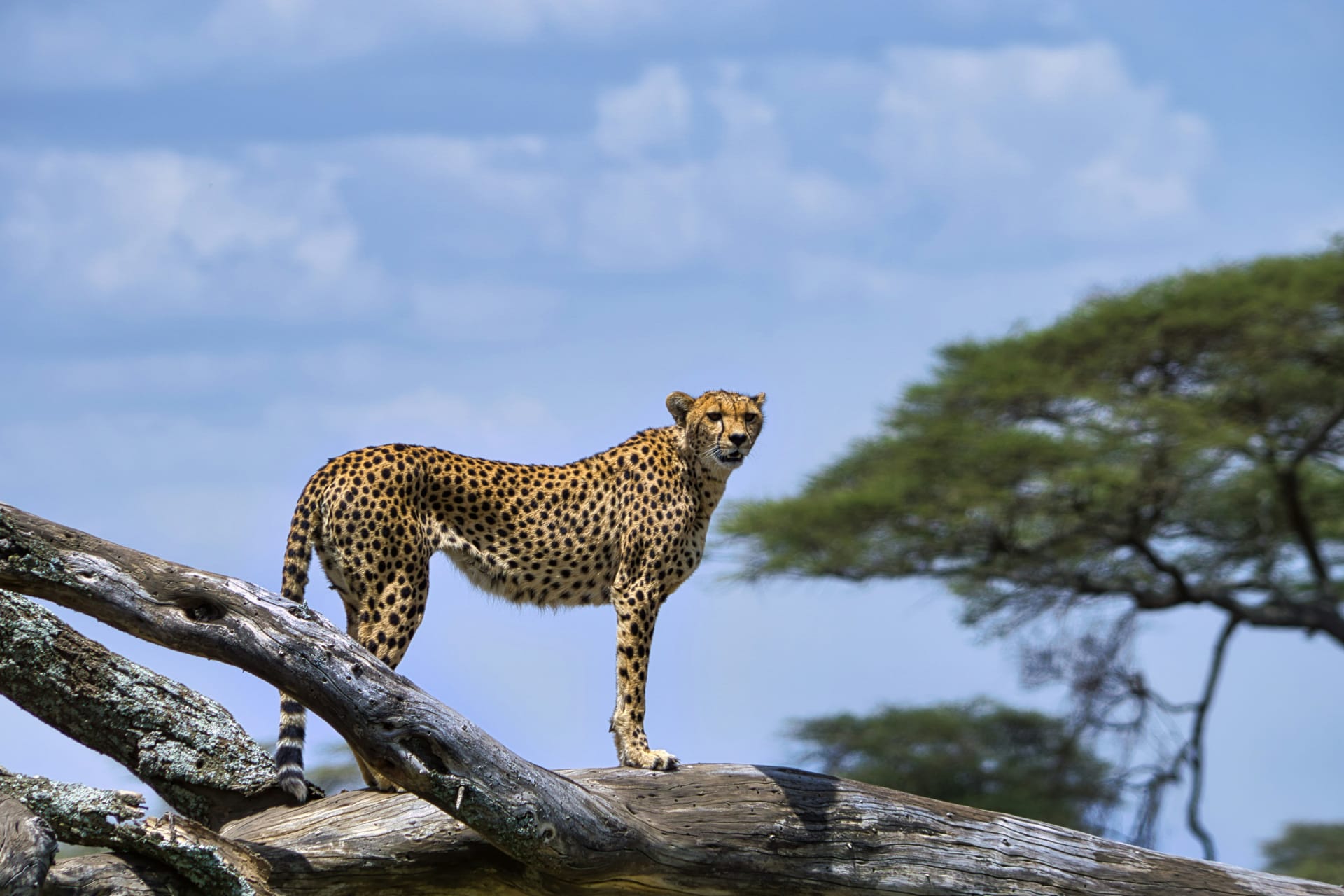
That regional pattern matters because cheetahs need extensive, connected landscapes. They occur in grasslands, savannahs, dry forests, open woodlands and some desert or mountainous habitats, but their low population densities mean that isolated protected areas may not be large enough to sustain viable populations on their own. The African Wildlife Foundation reports that most known cheetah range lies outside protected areas, increasing the importance of community land, wildlife corridors and cooperation between neighbouring countries.
Burundi’s conservation conversation is therefore broader than asking where visitors might see a cheetah today. It concerns whether landscapes can retain enough habitat and wild prey to support large carnivores in the future, while also meeting the needs of rural communities. This is the same landscape-level principle that underpins work on other threatened species and is discussed in SafariFind’s overview of protecting Burundi’s national parks.
Burundi’s best-known wildlife destinations include Rusizi National Park and forested protected areas such as Kibira. However, the research supplied for this article does not provide a current cheetah sighting, population estimate or verified reintroduction plan for any Burundian park. Responsible operators should not advertise a guaranteed cheetah encounter in Burundi without independently verifiable evidence.
The current cheetah status: Burundi and the wider region
| Question | Evidence available for 2026 |
|---|---|
| Global IUCN status | Vulnerable. |
| Status in Burundi | Regionally extinct according to the IUCN Cat Specialist Group. |
| Confirmed wild population in Burundi | No population estimate or confirmed resident population is provided in the supplied research. |
| Main global pressures | Habitat loss and fragmentation, prey depletion, human-wildlife conflict and illegal wildlife trade. |
| Regional conservation framework | The African Range Wide Cheetah Conservation Initiative supports regional strategies and national action plans in range states. |
Global population estimates vary by methodology and date. Panthera cites as few as 7,100 cheetahs in the wild, while WWF gives an estimate of about 6,500 and the African Wildlife Foundation cites approximately 6,674 adults and adolescents. These figures should not be added together: they are alternative estimates, not separate populations. The consistent conclusion is that wild cheetahs are scarce, fragmented and declining across much of their range.
The IUCN assessment identifies two especially threatened forms: the Asiatic cheetah, restricted to Iran, and the Northwest African cheetah, classified as Critically Endangered. The cheetah’s overall Vulnerable status should not be interpreted as security for every national population. Local extirpations, such as the recorded loss from Burundi, can occur while the species survives elsewhere.
What threatens cheetahs across their former range?
Habitat loss and fragmentation
Agriculture, settlements, roads and other land-use changes reduce and divide the open landscapes cheetahs require. Fragmentation can prevent dispersal, separate breeding groups and make it harder for animals to find prey or recolonise areas where they have disappeared. The African Wildlife Foundation estimates that 76% of known cheetah range occurs on unprotected land, a figure that illustrates why conservation cannot be limited to national parks.
For Burundi, habitat connectivity is especially relevant to any discussion of future restoration. A reintroduction would require more than releasing animals into a protected area: it would need a sufficiently large and secure landscape, reliable prey, effective monitoring, veterinary planning and long-term support from communities and government authorities. The supplied research does not show that these conditions have been assessed for a Burundian cheetah release.
Prey depletion
Cheetahs depend on adequate populations of small and medium-sized prey. Unsustainable hunting, bushmeat harvesting and illegal trade can reduce prey availability; the IUCN Cat Specialist Group links prey depletion with increased livestock predation and subsequent conflict with people. ZSL likewise identifies the loss of antelope prey through unsustainable poaching as a major pressure on African cheetahs.
Prey protection benefits more than cheetahs. It can support the wider food web and reduce the likelihood that carnivores turn to domestic animals. The same principle applies when planning a wildlife safari park or protected landscape: monitoring herbivores, controlling illegal hunting and maintaining habitat are foundational conservation actions, even when the target predator is absent.
Human-wildlife conflict
When natural prey declines or farms expand into wildlife habitat, cheetahs may kill livestock. Farmers may then retaliate, particularly where compensation, predator-proof enclosures or practical husbandry support are unavailable. Cheetahs are also active around dawn and dusk, which can increase encounters with people and make them vulnerable to misidentified livestock losses.
Conflict mitigation must address livelihoods as well as wildlife. Approaches identified across the research include working with rural communities, improving livestock protection, maintaining wildlife corridors and linking conservation benefits to local economies. These measures are relevant to Burundi’s broader conservation planning, but the available sources do not document a cheetah-specific conflict programme operating there.
Illegal capture and wildlife trade
Illegal wildlife trade affects cheetahs through the trafficking of live cubs, skins and other products. Research on the Horn of Africa identifies the illegal trade in live cubs for the pet market as a particularly serious threat in that region, although it does not establish a Burundi-specific trafficking route or seizure total.
Because there is no reliable Burundi-specific poaching statistic in the supplied research, it would be misleading to attach a national figure to the threat. The responsible conclusion is narrower: illegal trade is a recognised global and regional pressure, while the scale and current pattern in Burundi require better public evidence.
Climate and genetic vulnerability
The supplied sources identify climate change among the pressures affecting cheetahs, alongside habitat loss, prey decline and conflict. Climate-driven changes in rainfall, pasture and prey distribution could intensify competition for land and water, although the research does not provide a quantified climate impact for Burundi.
Cheetahs also have low genetic diversity as a result of historic population bottlenecks. This is associated with concerns about disease susceptibility, sperm quality, infertility and reproductive performance. Fragmented populations are particularly vulnerable because isolation reduces the exchange of genes and increases the risk that a local decline becomes permanent.
What is being done for cheetah conservation?
Regional planning and coordinated science
In 2007, ZSL, the Wildlife Conservation Society and the IUCN Cat Specialist Group launched an internationally coordinated approach that became the African Range Wide Cheetah Conservation Initiative, funded by the Howard G. Buffett Foundation. The initiative supports regional strategies and national action plans aligned with IUCN guidance.
This framework is important for countries such as Burundi because wildlife does not follow national borders. Monitoring, corridor planning and conservation policy can be more effective when neighbouring range states share data and coordinate priorities. However, Burundi’s listing as regionally extinct means that conservationists must first establish whether credible recent records exist before treating the country as a current cheetah range state.
Protection, monitoring and coexistence
Across Africa, cheetah conservation organisations use anti-poaching support, prey surveys, habitat protection, community engagement and long-term monitoring. Panthera describes the use of targeted surveys, real-time monitoring and GPS collars in some cheetah conservation landscapes, while the Cheetah Conservation Fund identifies capacity building, conflict mitigation, genetic health and illegal-trade prevention as core priorities.
These tools should not be presented as evidence of a Burundi programme unless a named organisation publishes results from the country. The research supplied here names no Burundian cheetah project, ranger programme, collaring effort, population survey or reintroduction outcome. That gap is itself significant: sound conservation decisions depend on transparent baseline data.
Community conservation and tourism’s role
Tourism can contribute to conservation when visitor spending supports protected-area management, local employment, habitat protection and community benefits. Panthera’s work elsewhere includes wildlife values programmes, livestock protection and livelihood diversification linked to the safe passage of cheetahs through communal lands. These approaches show why conservation success depends on local people being partners and beneficiaries, rather than treating communities only as a source of risk.
In Burundi, travellers should distinguish between supporting the country’s wider protected-area economy and paying for a cheetah experience that may not exist. A wildlife safari in Burundi can help generate attention and revenue for parks and communities, but the supplied research does not quantify tourism income, ranger funding or cheetah-specific benefits in Burundi. Visitors should ask operators exactly which park, community project or conservation organisation receives their money.
SafariFind travellers can book conservation-supporting safaris through SafariFind, provided the itinerary and operator clearly explain how tourism benefits local communities and protected-area management. A credible wildlife experience should prioritise accurate species information and avoid claims that cheetahs are resident or guaranteed in Burundi.
Tourism must also be responsible. Travellers should never support captive-cheetah petting, walking or photo attractions that encourage the exploitation of wild animals. The illegal pet trade is a recognised threat, and consumer demand—especially imagery presenting cheetah ownership as a luxury lifestyle—can help drive trafficking.
Results and setbacks: what the evidence actually shows
The clearest positive development is the existence of coordinated international conservation planning. The African Range Wide Cheetah Conservation Initiative, regional strategies, national action plans and collaborative programmes provide a structure for governments and conservation organisations to share information and target threats. Organisations including ZSL, WCS, the IUCN Cat Specialist Group, Panthera and the Cheetah Conservation Fund have developed approaches that combine science, protection and community engagement.
There are also documented examples of managed cheetah conservation elsewhere. The Endangered Wildlife Trust reports that South Africa’s managed metapopulation comprised roughly 540 cheetahs across all age classes by the end of 2025, with about 90 individuals reaching disperser and early-adult age classes during 2025. This is a South African result, not a Burundi result, but it demonstrates how coordinated monitoring, genetic management and translocations can support fragmented populations under carefully managed conditions.
The setback for Burundi is fundamental: the IUCN Cat Specialist Group records the species as regionally extinct in the country. No source supplied for this article documents a confirmed recovery, a viable resident population or a completed reintroduction. Global estimates remain low, and only a limited number of cheetah populations contain more than 1,000 mature individuals, increasing the importance of protecting each viable population and its habitat.
How travellers can help responsibly
- Choose accurate operators: Ask whether cheetah sightings are genuinely possible in the destination and request the source for any population claim.
- Support habitat, not spectacle: Prefer park fees, conservation funds and community programmes with transparent objectives over captive-animal encounters.
- Do not promote the pet trade: Avoid facilities or social-media experiences that allow handling, walking or close-contact photographs with cheetahs.
- Value less visible species: A trip that supports forest, wetland or savannah protection can benefit many species even when cheetahs are absent.
- Ask where money goes: Look for named partners, published reports and clear information about local employment or community benefits.
- Share verified information: Do not repost unconfirmed claims of cheetah sightings or reintroductions. Accurate reporting helps conservationists establish reliable baselines.
For Burundi, the most useful traveller contribution is informed support for credible protected-area and community conservation. Cheetah recovery, if ever considered, would require evidence-led planning at national and regional scales—not promises of guaranteed sightings.
Frequently Asked Questions
Are there cheetahs in Burundi in 2026?
The IUCN Cat Specialist Group lists the cheetah as regionally extinct in Burundi. The supplied research provides no confirmed resident population or current verified sighting.
Can I see cheetahs on safari in Burundi?
A cheetah sighting should not be expected or guaranteed. Burundi’s cheetah population is listed as regionally extinct, and no supplied source confirms a current wild population in a Burundian park.
What is the conservation status of the cheetah?
The cheetah is classified as Vulnerable on the IUCN Red List, while the Asiatic and Northwest African subspecies are classified as Critically Endangered.
How many cheetahs are left in the wild?
Published estimates vary: Panthera cites as few as 7,100, WWF about 6,500, and the African Wildlife Foundation approximately 6,674 adults and adolescents.
Why did cheetahs disappear from Burundi?
The supplied research does not document a country-specific cause or date for the loss. Across Africa, the main pressures are habitat loss and fragmentation, prey depletion, conflict with people and illegal wildlife trade.
What are the biggest threats to cheetahs in Africa?
The main threats are habitat conversion and fragmentation, declining prey, retaliatory killing after livestock losses, and illegal trade in live cubs and skins.
Is cheetah reintroduction planned for Burundi?
No confirmed Burundi reintroduction plan is identified in the supplied research. Any proposal would require habitat, prey, security, community and long-term monitoring assessments before release.
How does tourism help cheetah conservation?
Responsible tourism can support protected-area management, local employment, community benefits and habitat protection. The supplied research does not quantify cheetah-specific tourism funding in Burundi.
What should I avoid when supporting cheetah conservation?
Avoid petting, walking-with and photo attractions involving captive cheetahs, because demand for exotic pets is linked to illegal wildlife trade.
Why are connected habitats important for cheetahs?
Cheetahs occur at low densities and need large landscapes. Connectivity supports movement, access to prey and gene flow between fragmented populations.
V2Ui.sources
- Living Species - Cheetah | IUCN Cat Specialist Group
- Meet The Cheetah | Panthera
- Cheetah | WWF
- Cheetah | African Wildlife Foundation
- Cheetah conservation in Africa | ZSL
- Reverse The Red | Cheetah Conservation Fund
- Mapping illegal trade routes of live cheetahs from the Horn of Africa to the Arabian Peninsula(official)
- South Africa’s Managed Cheetah Metapopulation: A Collaborative Conservation Model | Endangered Wildlife Trust
- Status of the cheetah (Acinonyx jubatus) | Cheetah Conservation Fund
Related to
Ready to start your safari adventure?
Explore curated safari packages and find your perfect African adventure with verified operators.