How Safari Tourism Funds Conservation in Madagascar (2026)
Madagascar’s high-end ecotourism sector currently generates about $170 million annually, while park fees, guiding, hospitality and conservation-focused travel help connect tourism revenue with protected-area management and community livelihoods. Tourism is important, but it cannot fund conservation alone.

Quick answer: Safari tourism funds conservation in Madagascar through protected-area entrance fees, local employment, guide associations, hospitality spending, conservation donations and partnerships between tourism operators and Malagasy-led organisations. Madagascar’s high-end ecotourism sector currently generates approximately $170 million annually, and the country’s 30x30 Biodiversity Plan identifies ecotourism as one part of a broader strategy to mobilise $150–220 million a year for conservation by 2030.
Tourism is not a complete solution. Park revenues cannot cover the total cost of conservation in all protected areas, and Madagascar still requires public finance, international funding, conservation trusts, community investment and new mechanisms such as carbon programmes and debt-for-nature swaps.
Last reviewed August 2026. Conservation data changes — see the cited sources for the latest figures.
Why conservation funding matters in Madagascar
Madagascar is one of the world’s most distinctive biodiversity countries: approximately 80% of its flora and fauna are found nowhere else. That exceptional endemism makes habitat protection especially important because species lost from Madagascar cannot simply be conserved elsewhere.
Lemurs are the best-known example. The country’s forests support critically endangered species including the black-and-white ruffed lemur and greater bamboo lemur, while sites such as Kianjavato depend on a combination of community education, ecotourism and local conservation action. Protected landscapes also support endemic frogs, reptiles, birds and plant species. At the Mitsinjo breeding centre in Andasibe, conservation work includes breeding the endangered golden mantella frog, Mantella aurantiaca.
Protected areas are therefore more than visitor attractions. They are working landscapes where rangers, scientists, guides, community associations and local authorities must maintain habitat, monitor wildlife and develop livelihoods that reduce pressure on natural resources. Field programmes described by SIT Study Abroad include ecological monitoring, environmental education, sustainable natural-resource projects, fuel-efficient stoves, aquaculture and agroforestry.
The main threats that tourism can help address
Habitat loss and unsustainable resource use
Madagascar’s conservation challenge is closely connected to rural livelihoods and the condition of forests and other natural habitats. Conservation funding supports protected-area management, ecological restoration, sustainable agriculture and community projects intended to make local economies less dependent on damaging resource use.
The country’s 30x30 plan targets strengthened protection for 18 million hectares of terrestrial ecosystems and 40 million hectares of ocean by 2030, with direct benefits intended for more than three million people. In February 2026, Madagascar designated 21 new protected areas covering 1.82 million hectares, bringing the national protected-area total to nearly 9.4 million hectares.
Poaching and illegal activity
Tourism revenue can help pay for the practical work of conservation: ranger salaries, training, patrols, community liaison, monitoring and reporting of infractions. World Bank-supported protected-area programmes in Madagascar have included funding for foot patrols by Madagascar National Parks rangers, ranger training and community liaison activities.
The research supplied for this article does not provide a current, countrywide poaching total or a reliable 2026 trend figure. It is therefore more accurate to say that anti-poaching and protected-area enforcement remain recurring conservation needs than to attach an unsupported percentage to the problem. Tourism can contribute to these systems, but only where funds are transparently directed to field operations and local priorities.
Climate pressure and community vulnerability
Climate and livelihood resilience are increasingly part of conservation finance. WWF describes work in Madagascar involving community savings groups, sustainable livelihoods and a pilot Marine Biodiversity and Community Resilience Facility designed to support community-based marine conservation. These approaches matter because a protected area is difficult to maintain if neighbouring households have no secure, practical alternatives for income, energy or food production.
The supplied research does not quantify the separate contribution of climate change to biodiversity loss in Madagascar. A responsible account should therefore avoid presenting an unverified national climate statistic while recognising that conservation programmes increasingly combine habitat protection with resilience and sustainable-use measures.
How safari tourism generates conservation finance
| Tourism channel | How it can support conservation | What travellers should check |
|---|---|---|
| Protected-area entrance fees | Fees can contribute to park operations and visitor infrastructure. | Ask who collects the fee and how the protected area reports its use. |
| Local guiding | Guiding creates income and can strengthen village-based guide associations and community reserves. | Use qualified local guides and choose operators that pay fairly. |
| Lodges, restaurants and transport | Visitor spending supports local employment and businesses around protected areas. | Prefer locally owned services where possible and avoid making unsupported claims about their conservation contributions. |
| Conservation-focused itineraries | Some programmes donate a stated portion of proceeds to conservation organisations or field sites. | Look for a named beneficiary, a clear donation commitment and reporting. |
| Volunteer and research travel | Responsible programmes can support monitoring, education, restoration and community conservation. | Check safeguarding, scientific supervision, project continuity and whether volunteer work replaces local employment. |
At the most direct level, visitors pay for access and services. Entrance fees, local guiding, accommodation, restaurants and transport can keep money circulating in communities near parks. The conservation argument is strongest when residents receive visible benefits from protecting wildlife and when tourism creates a reason to maintain forests rather than convert or overexploit them.
Tourism can also provide unrestricted or semi-flexible support through partnerships. Wildlife Madagascar reported agreements with The Great Projects and Rewild Safaris beginning in May 2026. Its conservation-focused travel programmes include La Mananara, Anjanaharibe-Sud Special Reserve and Tsingy de Namoroka National Park, with a portion of programme proceeds donated to Wildlife Madagascar’s conservation work.
Organisations and programmes connecting tourism with conservation
Madagascar’s tourism-conservation system includes government agencies, protected-area managers, community organisations, conservation trusts, research institutions and private operators.
- Madagascar’s 30x30 Biodiversity Plan: A nationally owned, science-based and costed strategy to strengthen protection across terrestrial and marine areas by 2030. It includes ecotourism alongside carbon credits, debt-for-nature swaps, a Lemur bond and other green bonds.
- FAPBM: Madagascar’s independent national conservation trust fund, which channels long-standing bilateral support from KfW and AFD, as well as World Bank-linked support.
- Madagascar National Parks: Protected-area management and ranger functions are among the costs that tourism revenue can help, but tourism income does not cover the full conservation budget.
- Wildlife Madagascar: A Malagasy-led organisation developing field sites, agricultural training, volunteer programmes and conservation-focused travel partnerships. Its 2026 plans include a fourth field site in the southern spiny forest and expanded work at La Mananara and Anjanaharibe-Sud Special Reserve.
- Mitsinjo Association and local partners: Work around Andasibe includes ecological restoration, monitoring, community development, environmental education and frog conservation.
- Duke Lemur Center Sava Conservation Program: Its described activities include sustainable natural-resource projects, fuel-efficient stoves, aquaculture and environmental education.
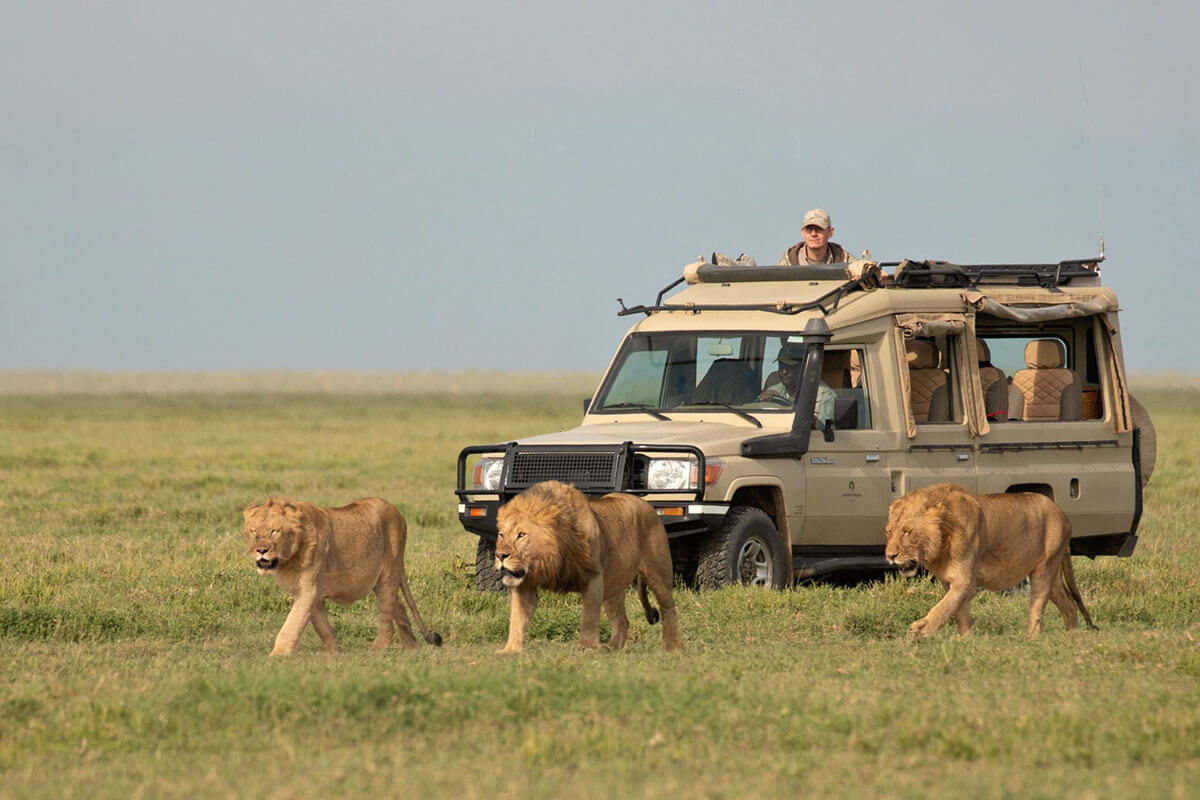
Travellers visiting Andasibe-Mantadia National Park or Ranomafana National Park should understand that a wildlife safari in Madagascar is usually a guided forest experience rather than a conventional vehicle-based game drive. The tourism value lies in expert interpretation, nocturnal walks, tracking, birding, rainforest landscapes and the opportunity to support local services around protected areas. The World Bank’s historical protected-area programme recorded visitor activity across parks including Ranomafana, but the research provided here does not establish a current 2026 visitor total for individual parks.
Community benefits are central to the funding model
Tourism only becomes durable conservation finance when communities are treated as rights-holders, partners and beneficiaries rather than as a backdrop to protected areas. Madagascar’s 30x30 plan explicitly places local communities at the centre of conservation as stewards and primary beneficiaries.
Practical community benefits can include guiding jobs, hospitality work, transport income, agricultural training, savings groups, environmental education and support for community-managed reserves. In Kianjavato, ecotourism and community education have been linked with expanded protection for critically endangered lemurs through the Madagascar Biodiversity Partnership and its conservation partners. Community-managed approaches are also reflected in projects supporting sustainable resource use and livelihood development around conservation sites.
However, “community benefit” should not be assumed merely because a lodge is near a park. Travellers and operators should ask whether local people participate in decisions, whether jobs and contracts go to Malagasy residents, how land and access rights are handled, and whether revenue-sharing arrangements are documented. Conservation finance that excludes communities can weaken trust and leave the underlying pressures unchanged.
Results and setbacks: what the evidence shows
There are clear signs of increased ambition. The 2026 designation of 21 new protected areas added 1.82 million hectares to the national network, while the 30x30 plan has set a national financing target of $150–220 million annually by 2030. Three pilot conservation landscapes are already operational, and the plan seeks $120 million for three new priority landscapes by 2028.
Scientific prioritisation is also becoming more systematic. In March 2026, 70 participants, including 50 scientists, completed a national terrestrial biodiversity re-prioritisation workshop; 70% of the scientists were Malagasy. The resulting consensus map covers roughly 44.5 million acres of priority land and is intended to guide government, communities, conservation organisations and funders.
These achievements do not mean that conservation is secure. Madagascar has received more than $700 million in international conservation funding since 1990 across more than 500 projects, yet the overall trajectory of biodiversity and natural landscapes has still been described as one of rapid decline. The 2009 political crisis also contributed to significant conservation-funding cuts, while rural poverty and corruption created additional difficulties for long-term conservation delivery.
Tourism itself is vulnerable. During the COVID-19 tourism shutdown, communities that depended on visitors lost an important source of income, demonstrating the risk of relying too heavily on visitor spending. The 2020 evidence also recorded 350,000 visitors nationally in 2019, compared with a protected-area objective of 190,000 visitors and a national target of 500,000; the same source stressed that tourism revenues could not meet the full cost of conservation in Madagascar National Parks-managed areas.
The lesson for 2026 is straightforward: tourism should be treated as one component of a diversified conservation-finance portfolio, not as a substitute for public funding, trust funds, community finance or accountable international support.
How travellers can help responsibly
- Choose transparent operators. Ask whether a stated percentage or fixed amount goes to a named conservation organisation, park programme or community initiative.
- Spend locally. Hire Malagasy guides, use local restaurants and accommodation where appropriate, and buy locally made products rather than assuming that an international operator automatically benefits nearby communities.
- Follow park rules. Do not touch, feed or bait wildlife; keep to authorised routes; and follow guide instructions around nocturnal animals and sensitive habitats.
- Support conservation beyond the entrance fee. A park ticket is valuable, but visitors can also support credible organisations with transparent programmes in monitoring, restoration, education or community livelihoods.
- Be cautious with volunteering. Prefer programmes with qualified supervision, clear conservation objectives, ethical wildlife handling and evidence that local employment is strengthened rather than displaced.
- Ask about impact. Responsible providers should be able to explain where money goes, who makes decisions and how results are measured.
Travellers can book conservation-supporting safaris on SafariFind, while recognising that the quality of the contribution depends on the operator’s transparency and the strength of its local partnerships. Madagascar is not a conventional wildlife safari park destination: its conservation tourism is often centred on rainforest walks, lemur tracking, community reserves, marine areas and specialist guiding. That difference is part of its value, but it also makes responsible planning essential.
Conclusion
Safari tourism funds conservation in Madagascar through a chain of economic relationships: visitors pay for protected-area access and local services; guides, lodges and community businesses earn income; conservation-focused operators may donate proceeds; and tourism helps make living wildlife and intact habitat economically significant. The model is most credible when local communities have decision-making power, revenue is traceable and tourism is combined with long-term public and philanthropic finance.
Madagascar’s 2026 conservation strategy is more ambitious and diversified than a tourism-only model. Ecotourism sits alongside FAPBM, international partners, carbon finance, debt-for-nature swaps and green bonds. The country has expanded its protected-area commitments, but underfunding, poverty, governance risks and dependence on volatile visitor numbers remain serious challenges. Tourism can help protect Madagascar’s unique biodiversity—provided it supports locally led conservation rather than treating conservation as a marketing label.
Frequently Asked Questions
How does safari tourism fund conservation in Madagascar?
Safari tourism contributes through protected-area entrance fees, local guiding, accommodation, restaurants, transport, employment and donations from conservation-focused travel programmes. It is one part of Madagascar’s wider conservation-finance strategy.
How much money does ecotourism generate in Madagascar?
Madagascar’s high-end ecotourism sector currently generates approximately $170 million annually, according to material supporting the country’s 30x30 Biodiversity Plan.
Can tourism pay for all conservation in Madagascar?
No. Tourism revenues cannot cover the total cost of conservation in all Madagascar National Parks-managed protected areas, so the country also needs public finance, trust funds, international support and other funding mechanisms.
What is Madagascar’s 30x30 Biodiversity Plan?
It is a nationally owned, science-based and costed strategy to strengthen protection for 30% of Madagascar’s terrestrial and marine areas by 2030. Its financing target is $150–220 million mobilised annually for conservation by 2030.
How many protected areas did Madagascar add in 2026?
In February 2026, Madagascar designated 21 new protected areas covering 1.82 million hectares, bringing the national protected-area total to nearly 9.4 million hectares.
Which organisations help fund conservation in Madagascar?
Organisations and institutions named in the research include FAPBM, Rainforest Trust, the Hempel Foundation, Conservation Allies, KfW, AFD, the World Bank, SPACES, Campaign for Nature and the High Ambition Coalition for Nature and People.
Do local communities benefit from ecotourism in Madagascar?
They can benefit through guiding, hospitality, transport, agricultural training, savings groups, education and community-reserve income, but benefits depend on fair participation, transparent revenue-sharing and locally led decision-making.
What conservation work can tourists support in Madagascar?
Tourists can support ranger and park operations, ecological monitoring, restoration, environmental education, community livelihoods and responsible conservation partnerships.
Is Madagascar a conventional wildlife safari destination?
Usually not. Madagascar wildlife safaris generally focus on guided rainforest walks, lemur tracking, nocturnal wildlife, birding, marine reserves and community conservation areas rather than conventional vehicle-based game viewing.
How can travellers choose a responsible conservation safari in Madagascar?
Choose operators that name conservation beneficiaries, explain how donations are calculated, employ local guides, follow park rules and can describe measurable community or conservation outcomes.
V2Ui.sources
- Madagascar's Prime Minister Announces Commitment to Protect the World's Most Irreplaceable Wildlife
- Conservation Allies — Madagascar biodiversity prioritisation and protected-area commitment
- Madagascar’s nature is one of a kind
- COVID-19 will hurt Madagascar’s conservation funding: Q&A with Minister Vahinala Raharinirina
- A Year in Review 2025 — Wildlife Madagascar
- Funding initiatives for conservation in Madagascar
- Conservationists Mobilize to Help Endangered Lemurs in Madagascar Through the Pandemic and Beyond
- World Bank Document — Madagascar protected-area management and conservation financing
Related to
Ready to start your safari adventure?
Explore curated safari packages and find your perfect African adventure with verified operators.