Human–Wildlife Conflict in Ethiopia (2026): Causes and Solutions
Human–wildlife conflict in Ethiopia is concentrated where farms, grazing areas and settlements overlap with protected landscapes. Crop damage, livestock predation and human injuries remain serious challenges, but community participation, better protected-area management and One Health approaches offer practical routes to coexistence [1][6].

Quick answer: Human–wildlife conflict in Ethiopia is a major conservation and livelihood issue, especially around protected areas where people and wildlife compete for land, water, grazing and crops. Reported impacts include crop destruction, livestock losses, human injury, retaliatory killing and negative attitudes towards wildlife; the strongest responses combine community participation, locally appropriate prevention, improved protected-area management and cross-sector health planning .
Last reviewed August 2026. Conservation data changes — see the cited sources for the latest figures.
Why human–wildlife conflict matters in Ethiopia
Ethiopia contains diverse wildlife habitats extending from Afroalpine ecosystems and highland parks to drylands, forests, wetlands and the lowlands of the Omo-Gambella landscape. Conservation boundaries do not contain wildlife movements, so communities living beside parks and sanctuaries may share fields, grazing grounds, forests and water points with wild animals .
The systematic review of terrestrial human–wildlife conflict research in Ethiopia found that studies have increased since 2009 but remain geographically uneven. Of the 26 articles reviewed, 80.8% examined more than one species, while 46.2% of studies were conducted in Oromia; Southwest Ethiopia accounted for 23.1%, Amhara for 11.5%, and SNNPR for 7.7% . This concentration matters because conflict-management decisions require evidence across wider landscapes, not only around nationally prominent protected areas .
For rural households, a wildlife encounter is not simply a conservation question. Lost crops can affect food security and income, while livestock predation can remove an important household asset. For wildlife, conflict can mean poisoning, trapping, shooting or retaliatory killing. In Alitash National Park, a study based on 198 households in 11 villages, three focus groups and 12 key-informant interviews found that wildlife damage affected both local livelihoods and conservation attitudes; participants reported 18 attacks by lions, spotted hyenas and leopards .
Conflict also affects the wider conservation economy. The GEF-supported integrated conservation project for Ethiopia identifies crop damage, livestock predation and human casualties as factors that reinforce negative perceptions of wildlife and hinder conservation, while underfunded protected areas have limited management effectiveness and tourism potential .
The main forms of conflict
| Conflict type | Wildlife and places identified in the research | Why it matters |
|---|---|---|
| Crop raiding | Grivet monkeys and porcupines around Borena Sayint; gelada baboons were identified as both crop raiders and livestock depredators | Damages fields and can encourage negative attitudes or retaliatory action |
| Livestock predation | Leopards and spotted hyenas were among the principal livestock predators reported around Borena Sayint | Reduces household assets and may trigger lethal responses |
| Human injury or death | Elephants, lions, hyenas and leopards are identified in the supplied studies as sources of risk in particular localities | Creates direct safety concerns and can intensify resentment towards wildlife |
| Shared health risks | Elephants, monkeys and buffaloes around Chebera Churchura National Park; people and livestock share water points and fields | Raises One Health concerns involving human, animal and environmental health |
What causes human–wildlife conflict in Ethiopia?
Competition for land, water and grazing
At Chebera Churchura National Park in Southwest Ethiopia, communities described competition for land, grazing and water as central drivers of conflict. Humans, livestock and wildlife may be forced to use the same water points and agricultural fields, increasing both contact and the potential for disease transmission .
In and around Borena Sayint National Park, respondents most often attributed conflict to an increase in wildlife numbers, reported by 56 respondents (42.4%), followed by human proximity to the park, reported by 44 respondents (33.3%) . These are perceptions recorded by the study, rather than a national wildlife census, but they show how local experiences shape tolerance and conservation support .
Encroachment and restricted movement
Illegal encroachment-led agricultural expansion, dependence on forest resources and restricted elephant movement were identified as pressure points in Babile Elephant Sanctuary . The same account links crop raiding, human harm by elephants, poaching and retaliatory killings, showing that conflict and wildlife crime can reinforce one another .
Habitat loss and fragmentation also bring people and animals into closer contact. The national systematic review describes encroachment around protected areas as widely documented and emphasises that wildlife habitat extends beyond park boundaries . In practice, this means that fencing, corridors, land-use planning and community governance need to be considered at landscape scale rather than only inside protected-area borders .
Poaching, poisoning and retaliatory killing
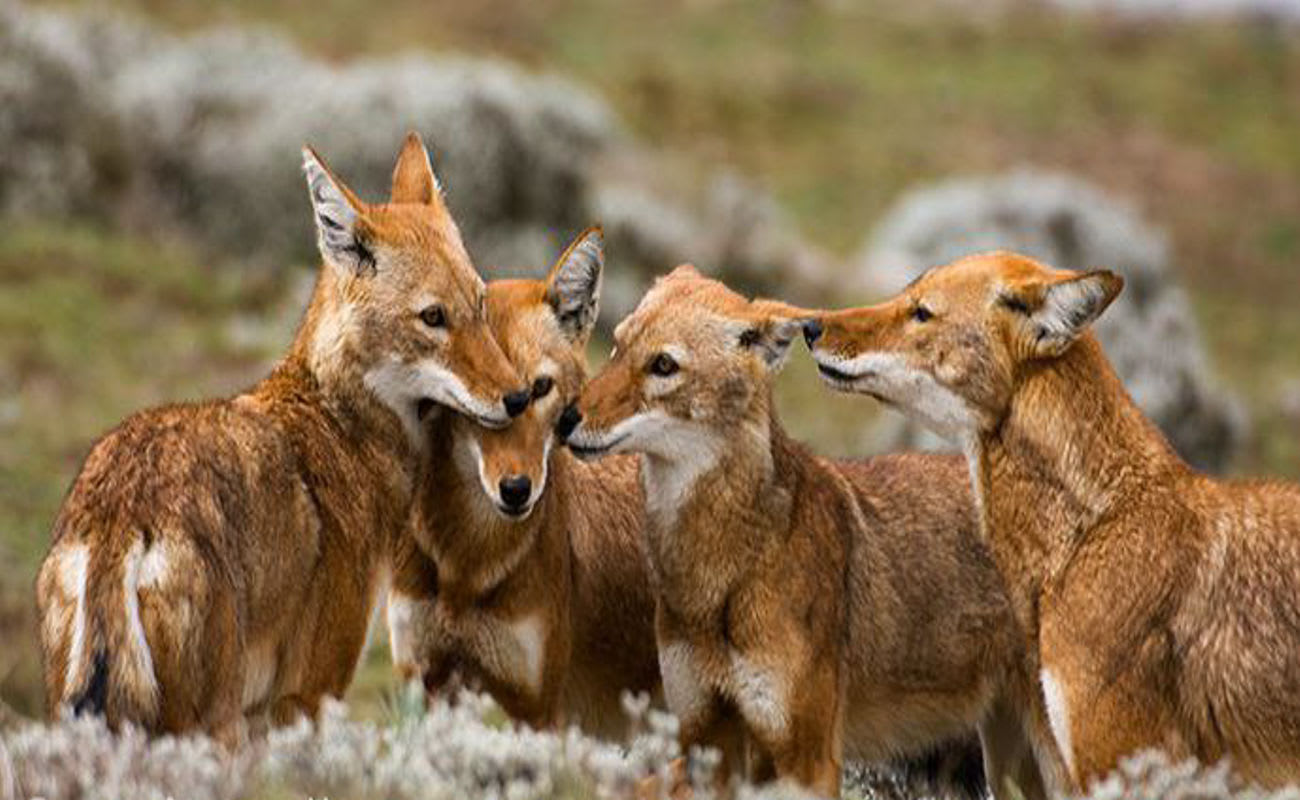
Conflict can directly threaten species when people respond to actual or perceived damage by killing wildlife. The systematic review records illegal poisoning affecting the endangered Ethiopian wolf, Canis simensis, and identifies shooting and trapping among lethal conflict-management methods . Retaliatory killings are also reported as a pressure on elephants in Babile .
Poaching has a broader effect than the loss of individual animals. It can reduce trust between communities and conservation authorities, complicate investigations and create political sensitivities around enforcement, according to reporting on protected-land governance in Ethiopia .
Climate and environmental pressure
The available research supports a resource-competition interpretation of climate-related risk rather than a single national climate statistic. When water, grazing or productive land become more limited, the chance of people, livestock and wildlife using the same places increases . The GEF project therefore links coexistence with ecosystem conservation, ecological connectivity and improved protected-area management rather than treating individual conflict incidents in isolation .
Species and landscapes at the centre of the problem
Conflict is highly localised, and the species involved vary by habitat. Around Borena Sayint, respondents identified leopards and spotted hyenas as leading livestock depredators, while grivet monkeys and porcupines were described as important crop raiders; geladas were associated with both categories of damage .
At Chebera Churchura National Park, elephants, monkeys and buffaloes were identified as major threats to livelihoods, health and environmental integrity . In Babile Elephant Sanctuary, crop-raiding elephants and restricted movement are connected to encroachment, community dependence on forest resources and retaliatory killing .
The Ethiopian wolf presents a different conflict profile. Illegal poisoning is a documented threat, and the Ethiopian Wolf Conservation Programme uses monitoring to detect changes in pack composition, breeding success, disease and human–wildlife conflict . The programme works with WildCRU, Dinkenesh Ethiopia, the Ethiopian Wildlife Conservation Authority and regional governments .
Conflict should not be confused with a general increase or decrease in every wildlife population. The available studies are often site-specific, use different methods and focus on perceptions, reported incidents or selected species . National comparisons therefore require caution.
What is being done to reduce conflict?
Prevention before lethal control
The systematic review lists several non-lethal measures used in Ethiopia: guarding, livestock-guarding dogs, fencing and other physical barriers, loud noises, seasonal displacement, scarecrows, beating drums, sound-based deterrents and repellent scents . These tools are not universally effective; their suitability depends on the species, crop, season, settlement pattern and ability of households to maintain them .
Guarding was the main traditional management measure reported around Borena Sayint National Park . A prevention plan should therefore start with local practice and experience, then test whether additional tools reduce damage without transferring risk to neighbouring households or wildlife .
Monitoring, rapid response and land-use planning
In Babile, identifying pressure points such as encroachment, forest-resource dependence, crop raiding and restricted elephant movement can help target interventions sanctuary by sanctuary . The African Elephant Conservation Fund has also supported an assessment of elephants and other large mammals in the Omo-Gambella landscape, including aerial and ground surveys, mapping land use and potential conflict areas, and development of an elephant conservation plan with EWCA .
Technology can support this work when it is linked to field decisions. Elsewhere in Africa, satellite collars and overflights have been used to understand elephant movements outside protected areas, alongside community engagement and ranger and community-team mitigation . The lesson for Ethiopia is not to adopt technology for its own sake, but to connect movement data with corridor planning, early warning, incident reporting and practical support for affected households .
One Health coordination
The Chebera Churchura study calls for an integrated One Health approach because human, livestock and wildlife health are connected where animals share water and farmland. Participants reported persistent malaria episodes and livestock deaths from unexplained febrile diseases, while the study identified limited coordination among human-health, veterinary and environmental sectors as an aggravating factor .
One Health does not mean that every illness is caused by wildlife. It means that health authorities, veterinary services, conservation managers and communities should share surveillance, risk communication and response planning where contact is frequent .
Stronger protected-area governance
The GEF project “Promoting Integrated Conservation of Wildlife and Landscapes for Sustainable Development of Ethiopia” is implemented by UNDP with EWCA and the Ethiopian Biodiversity Institute. Its objectives include improving protected-area management, ecological connectivity, human–wildlife coexistence, illegal-wildlife-trafficking prevention and landscape management .
The project has a GEF grant of US$11,932,415 and reported total co-financing of US$59,675,417 . These figures describe project financing, not a national HWC budget or proof that conflict has already been reduced nationwide. Implementation remains dependent on governance, coordination, local participation and sustained resources .
Community participation and tourism's role
People living beside protected areas bear many of the immediate costs of coexistence, so conservation decisions that exclude them are unlikely to build durable support. The Borena Sayint study recommends community-based ecotourism, while wider Ethiopian HWC research recommends benefit-sharing, participatory management, local involvement in resource decisions, conservation education and limited community ownership rights for some resources .
Tourism can help when money, employment or services reach neighbouring communities and when visitor activity does not increase pressure on wildlife or local resources. It is not an automatic solution: the GEF project notes that underfunding, weak management and limited financial diversification constrain protected-area and tourism potential . A responsible wildlife safari park experience should therefore be assessed by more than scenery or animal sightings; travellers should ask how operators work with local communities, support conservation authorities and manage waste, water and wildlife encounters.
Safari tourism is also not a “human safari”. That phrase can trivialise the people who live with wildlife and carry the risks of conflict. The appropriate focus is a wildlife safari built around respect for communities, safe viewing and credible local conservation partnerships. Travellers can book conservation-supporting safaris on SafariFind, while checking the operator's stated community and conservation practices before paying.
Results and setbacks: what the evidence says
The evidence shows progress in knowledge and planning, but not a nationwide resolution. Research interest has increased, and Ethiopia has documented a range of non-lethal methods, local management practices and landscape-level planning needs . The Ethiopian Wolf Conservation Programme's long-term monitoring provides information on pack composition, breeding success, disease and conflict warnings that can support evidence-based interventions .
At the same time, the systematic review found strong geographic bias in HWC research, meaning that less-studied regions and species may be underrepresented in national discussions . Around Borena Sayint, 85.6% of respondents perceived both crop and livestock damage as impacts of wildlife, and the study linked incidents to economic losses and adverse conservation effects . At Chebera Churchura, limited infrastructure, low community participation in governance and weak cross-sector coordination continue to exacerbate risks .
Insurance and compensation may help, but they are not simple fixes. Evidence reviewed by IIED shows that poorly designed schemes can alienate communities through late or inadequate payments; effective systems need fair verification, timely compensation, incentives for prevention and sustainable financing . Ethiopia's future approach should therefore combine prevention, transparent incident records, fair benefit-sharing and—where feasible—well-designed compensation rather than relying on payment after damage alone .
How travellers can help responsibly
- Choose locally accountable operators. Ask whether guides and camps employ local people, contribute to community initiatives and work with authorised conservation bodies. The principle is consistent with research recommending participation and benefit-sharing .
- Keep wildlife wild. Do not feed animals, provoke them, leave vehicles to approach wildlife without guidance or encourage unsafe close encounters. Prevention protects both visitors and animals, particularly where communities already face conflict risks .
- Respect protected-area rules. Follow ranger and guide instructions, remain on permitted routes and avoid activities that disturb breeding areas or restrict animal movement. Improved protected-area management and connectivity are central to Ethiopia's conservation planning .
- Support evidence-based conservation. Prefer organisations that explain how donations or visitor fees support monitoring, community engagement, ranger work, habitat management or conflict prevention, rather than making unsupported claims.
- Do not photograph or publish sensitive locations. Avoid sharing exact locations of threatened species or patrol activity when doing so could increase disturbance, capture risk or poaching pressure; poisoning, shooting, trapping and illegal wildlife use remain documented threats .
- Report incidents through official channels. If you witness injured wildlife, illegal activity or a dangerous encounter, notify your guide, park authority or EWCA rather than intervening directly. The Ethiopian Wolf Conservation Programme specifically uses monitoring to identify emerging threats and guide responses .
The outlook for coexistence in 2026
Ethiopia's HWC challenge is not solved by removing wildlife or expanding protected-area boundaries alone. The strongest evidence points towards locally designed prevention, connected habitats, better incident data, community benefits, accountable governance and One Health coordination .
The conservation gains that matter most will be those that reduce household losses while keeping wildlife populations and ecological functions viable. That requires acknowledging the costs carried by communities, measuring whether interventions work, and adapting park and landscape management when they do not .
Frequently Asked Questions
What is the main cause of human–wildlife conflict in Ethiopia?
The main causes are competition for land, water and grazing, human proximity to protected areas, habitat encroachment, crop raiding and livestock predation. Around Borena Sayint, respondents most often identified increasing wildlife numbers and human proximity to the park as causes ; the Chebera Churchura study also identified competition for land, grazing and water .
Which animals cause the most human–wildlife conflict in Ethiopia?
The species vary by location. Leopards and spotted hyenas were important livestock predators around Borena Sayint, while grivet monkeys and porcupines were major crop raiders; geladas were associated with both types of damage . Elephants, monkeys and buffaloes were major conflict species around Chebera Churchura National Park .
How does human–wildlife conflict affect Ethiopian communities?
It can damage crops, kill livestock, threaten human safety, reduce household income and increase negative attitudes towards wildlife. Around Borena Sayint, 85.6% of respondents perceived both crop and livestock damage as impacts of wildlife .
Is human–wildlife conflict a threat to the Ethiopian wolf?
Yes. The systematic review records illegal poisoning as a threat to the endangered Ethiopian wolf, Canis simensis . The Ethiopian Wolf Conservation Programme monitors packs, breeding, disease and human–wildlife conflict to support evidence-based responses .
What methods reduce human–wildlife conflict in Ethiopia?
Reported non-lethal methods include guarding, livestock-guarding dogs, fencing, loud noises, seasonal displacement, scarecrows, drums, sound deterrents and repellent scents . The best method depends on the species and local conditions, so interventions should be designed and evaluated with affected communities .
Does tourism help reduce human–wildlife conflict in Ethiopia?
Tourism can help when revenue, employment and other benefits reach neighbouring communities and support protected-area management. Community-based ecotourism and benefit-sharing are recommended in the research, but tourism is not an automatic solution where governance, funding and local participation remain weak .
What is a One Health approach to wildlife conflict?
A One Health approach coordinates human-health, veterinary and environmental services because people, livestock and wildlife may share water points and agricultural fields. The Chebera Churchura study recommends this approach to address linked livelihood, health and ecosystem risks .
What is being done to protect elephants from conflict in Ethiopia?
Responses include identifying conflict pressure points in Babile Elephant Sanctuary and supporting surveys, land-use mapping and elephant conservation planning in the Omo-Gambella landscape with EWCA . These measures are intended to improve planning and reduce dangerous overlap between elephants and people.
Why Trekking in the Simien Mountains of Ethiopia is Bucket List Worthy
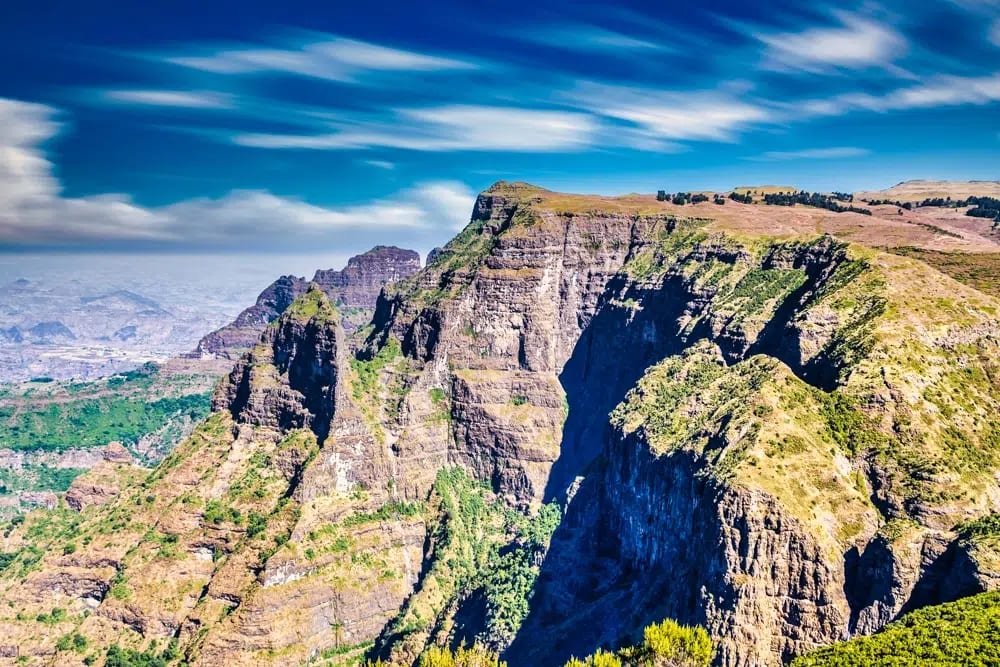
Trekking in the Simien Mountains can provide a close look at Ethiopia's highland landscapes and wildlife, but visitors should follow local guide and protected-area rules and avoid treating wildlife encounters as entertainment. The supplied HWC research does not provide a specific conflict assessment for Simien trekking routes .
Alternative treks in Ethiopia due to Simien Mountains safety concerns?
The supplied research does not assess trekking-route safety or provide a ranked list of alternative treks. Travellers should check current government and operator advice, use qualified local guides and confirm conditions before choosing an itinerary.
V2Ui.sources
- Human-Terrestrial Wildlife Conflict in Ethiopia: A Systematic Review(official)
- Human Wildlife Conflict in Ethiopia—A Review
- Human-Wildlife Conflict in and Around Borena Sayint National Park, Northern Ethiopia
- Human-wildlife conflict and its impacts on livelihoods, health, and the environment in Chebera Churchura National Park, Southwest Ethiopia
- Addressing Human-Wildlife Conflict in Ethiopia’s Protected Lands
- Promoting Integrated Conservation of Wildlife and Landscapes for Sustainable Development of Ethiopia
- African Elephant Conservation Fund(official)
- Effects of human-wildlife conflicts on local people’s livelihoods and wildlife conservation in and around Alitash National Park, Northwest Ethiopia
- Ethiopian Wolf Conservation Programme: Monitoring and Conservation Updates
- Human–wildlife conflict and insurance
Related to
Ready to start your safari adventure?
Explore curated safari packages and find your perfect African adventure with verified operators.