Human–Wildlife Conflict in Uganda: Conservation in 2026
Human–wildlife conflict in Uganda is driven by crop raiding, livestock predation, property damage and attacks involving people and wildlife near protected areas. Community scouts, beehive fences, trenches, early-warning systems and improved water infrastructure are reducing risk in targeted locations, but coexistence remains a major conservation challenge.

Last reviewed August 2026. Conservation data changes — see the cited sources for the latest figures.
Quick answer: Human–wildlife conflict in Uganda remains a significant challenge where farms, livestock areas and settlements overlap with protected areas, wildlife corridors and seasonal water sources. The main impacts are crop destruction, livestock losses, property damage and injuries or deaths involving people, while retaliation can threaten wildlife and weaken support for conservation .
Uganda’s response is moving towards prevention and shared responsibility. The Uganda Wildlife Authority (UWA), communities, district authorities and conservation organisations are using community wildlife scouts, trenches, electric fencing, beehive fences, early-warning alerts, water infrastructure and livelihood programmes; reported crop-raiding reductions of up to 75% have been recorded in targeted sub-counties supported by the African Wildlife Foundation (AWF), although that result should not be treated as a national trend .
Why human–wildlife conflict matters in Uganda
Uganda’s protected areas conserve wildlife while also bordering farms, grazing areas and communities whose livelihoods depend on land and natural resources. UWA’s strategic planning documents identify crop destruction, attacks on people and livestock, property damage and disease transmission as important costs of conflict. They also link growing pressure to settlement and cultivation near protected areas, the loss of wildlife dispersal areas and migration corridors, and competition for resources around landscapes such as Lake Mburo National Park and the Kafu Basin .
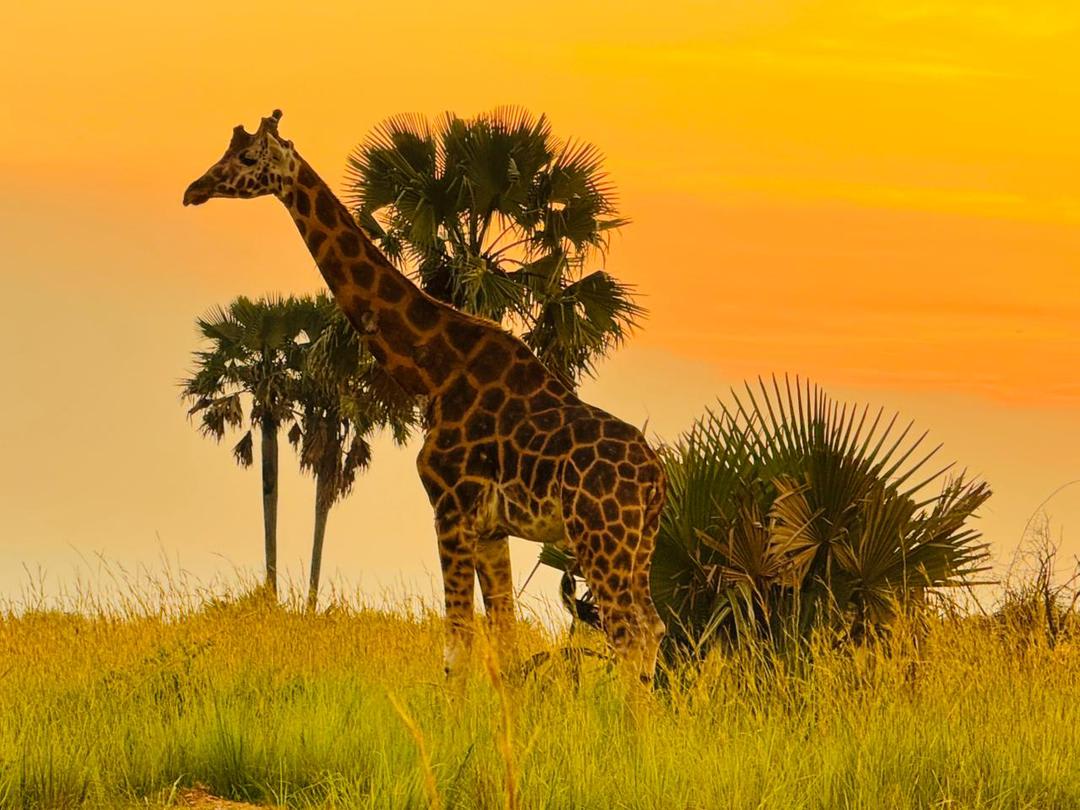
Conflict is not limited to one species or one landscape. Elephants can raid crops; large carnivores can prey on livestock; hippos and crocodiles can pose risks near water; and other wildlife can damage gardens, fences or stored food. The exact pattern varies by location, season, species and access to water. UWA’s national conflict database records the date, protected area, district, sub-county or parish, village, species involved and type of impact, allowing authorities to identify hotspots and assess interventions .
The conservation consequences are closely connected to household welfare. Research led by the International Institute for Environment and Development (IIED) at Murchison Falls Conservation Area found that resentment associated with limited income opportunities and insufficient support for conflict affected local attitudes and could contribute to participation in illegal hunting or wildlife trade. IIED cautions that enforcement alone can worsen fragile relationships between communities and park authorities .
The main threats and conflict drivers
Crop raiding and competition for water
Crop raiding is one of the most direct forms of conflict for farmers living beside wildlife areas. Elephants and other animals may leave protected areas when crops, water or forage are more accessible outside their boundaries. In Kidepo Valley National Park, AWF supported desilting the Lochorkinae earth dam to increase water-retention capacity to an estimated 10,000 cubic metres. The objective is to keep more water available inside the park during dry periods, reducing the need for wildlife to move towards community farmland .
Water scarcity can also increase contact between people, livestock and wildlife at shared sources. From a One Health perspective, closer interaction at water points, crop fields and grazing areas may increase the risk of pathogen transmission across the human–animal–environment interface. This means that conflict prevention is relevant not only to conservation and food security but also to public and livestock health .
Livestock predation and human–carnivore conflict
Lions and other carnivores can kill livestock when natural prey, water or secure habitat are less available, or when grazing takes place close to wildlife habitat. Such losses can lead to retaliatory killing, particularly where affected households lack rapid support or practical deterrents. In Queen Elizabeth National Park, the IUCN Save Our Species African Wildlife Initiative reports that the Lion Queens and Kings project helped eliminate reported retaliatory lion killings at the project site and significantly reduce livestock predation; the source describes this as a project outcome rather than a national measure .
WWF Uganda and UWA have also launched a Darwin Initiative-funded project focused on systematic approaches to human–carnivore conflict. Its purpose is to develop sustainable solutions rather than rely only on emergency responses after livestock have been killed .
Habitat loss, settlement and blocked movement
When settlements and cultivation occupy former dispersal areas or movement corridors, wildlife has fewer options for moving between feeding, breeding and watering sites. UWA’s planning documents describe settlement and cultivation near protected areas as factors that increase conflict, while the Community Conservation Policy identifies crop loss, property damage and human attacks as pressures that can damage relationships between communities and protected-area management .
This is why conflict mitigation cannot consist only of chasing animals back into parks. Land-use planning, boundary management, corridor protection, reliable reporting and locally accepted agreements are also needed. The appropriate combination differs between a forest edge, a savannah park, a cattle landscape and a lakeshore.
Poaching and retaliatory responses
Poaching is not identical to human–wildlife conflict, but the two problems can reinforce each other. IIED’s work in the Murchison Falls landscape found that negative conservation attitudes, limited livelihood opportunities and unresolved conflict could be associated with local participation in wildlife crime . Meanwhile, Global Conservation reports that UWA and Uganda Conservation Foundation teams removed large numbers of snares and wheel traps from Murchison Falls National Park; Kulu Haruna, the park’s Warden in Charge of Law Enforcement and Operations, estimated that at least 12 “snare mountains” had been collected since the recovery programme began .
The lesson is important: stronger law enforcement can protect wildlife, but durable conservation also requires communities to see a fairer route to safety, income and problem resolution.
What Uganda is doing to reduce conflict
Community scouts and early warning
AWF trained, refreshed and equipped 80 community wildlife scouts and deployed 90 Roman candles as deterrent tools in high-conflict areas. AWF reports crop-raiding reductions of up to 75% in targeted sub-counties. The result is encouraging, but it is geographically specific and should not be extrapolated to all of Uganda . AWF’s next phase focuses on community-owned early-warning systems, safe response options and coordination with UWA and district leadership .
Technology is also being used to improve the quality and speed of information. Global Conservation describes timely automated alerts and incident recording in Murchison Falls National Park as part of a proactive approach to conflict management . UWA’s national database is designed to aggregate reports from protected areas, wardens and head office so managers can identify trends and allocate resources to hotspots .
Physical and non-lethal barriers
Uganda has used several non-lethal measures, including elephant trenches, electric fencing, live fencing, chilli applications, scare shooting, beekeeping and capture or translocation in appropriate situations . Earlier UWA planning records report a pilot electric-fencing programme in Queen Elizabeth National Park, with 23 kilometres constructed, alongside elephant-trench excavation and maintenance in other areas . These figures describe the period covered by that plan and are not a current national infrastructure total.
Bees can deter elephants because elephants generally avoid active beehives, while farmers may gain honey and pollination benefits. The IUCN country brief reports that beehive fences in Murchison Falls National Park helped deter elephants and reduce crop raiding, and that non-lethal deterrents and trenches were used in Kibale National Park . Effectiveness depends on maintenance, placement, local ownership and the behaviour of the animals involved.
Water, livelihoods and benefit-sharing
Preventing wildlife from leaving a protected area is only one part of the solution. AWF plans to rehabilitate eight boreholes to improve clean-water access for communities near Kidepo Valley National Park, while also strengthening wildlife-friendly enterprises and ecotourism value chains . The approach links conflict reduction with household resilience rather than treating communities only as recipients of conservation rules.
UWA’s community-conservation framework includes collaborative management, revenue sharing, enterprise development, human–wildlife-conflict mitigation, education and other community programmes . The IUCN-supported grants in Uganda also backed alternative livelihoods such as beekeeping, agroforestry and ecotourism, alongside awareness campaigns and compensation schemes . These measures cannot replace prompt responses to dangerous animals or fair handling of verified losses, but they can improve the incentives and relationships on which coexistence depends.
Conflict-to-Coexistence planning
In the Kagombe–Bugoma landscape, WWF Uganda is promoting its Conflict-to-Coexistence approach. The framework has six pillars: understanding interactions, governance and policy, prevention, response, mitigation and monitoring. WWF presents the model as a participatory process in which communities, authorities and other stakeholders identify problems and agree practical actions .
That model reflects a wider shift in conservation practice: a conflict incident is not just an enforcement event. It is also evidence about land use, animal movement, household vulnerability, institutional trust and the effectiveness of previous interventions.
Key landscapes and conservation partnerships
| Landscape or organisation | Conflict-relevant work reported in the research |
|---|---|
| Kidepo Valley National Park | AWF supported desilting the Lochorkinae dam and plans rehabilitation of eight community boreholes; the Uganda Conservation Foundation works with UWA on protected-area recovery and nearby livelihoods . |
| Murchison Falls National Park | Beekeeping and beehive fences have helped deter elephants; automated alerts and incident recording are being used; UWA and partners are also addressing snaring and community relationships . |
| Queen Elizabeth National Park | Earlier UWA planning records describe a 23-kilometre electric-fencing pilot; the Lion Queens and Kings project is reported to have eliminated retaliatory lion killings at its project site . |
| Kibale National Park | The IUCN country brief reports the use of non-lethal deterrents and trenches to mitigate conflict . |
| Kagombe–Bugoma landscape | WWF Uganda is developing a participatory action plan using its six-pillar Conflict-to-Coexistence framework . |
| Uganda Wildlife Authority | UWA maintains a national conflict database and launched strategies for 2026–2030 on 30 June 2026, emphasising collaboration with government, development partners, the private sector and neighbouring communities . |
Results and setbacks: what the evidence says
There are measurable successes. AWF reports up to a 75% reduction in crop raiding in selected sub-counties after community-scout training and deterrent deployment . The IUCN country brief reports reduced livestock predation through the Lion Queens and Kings project, reduced elephant crop raiding through beehive fences at Murchison Falls, and conflict mitigation across several grant-supported landscapes . UWA’s earlier strategic-plan review also recorded 12,377 conflict cases from inside and outside protected areas, of which 10,700, or 86.5%, received a response during the reporting period . Because that figure belongs to an earlier plan period and includes cases both inside and outside protected areas, it should not be presented as a 2026 national response rate.
The setbacks are equally important. Conflict remains linked to settlement, cultivation, habitat loss, water scarcity and livestock exposure . Physical barriers require maintenance and may shift problems to neighbouring areas. Early-warning tools depend on reliable communication and a response team. Compensation or assistance systems can be difficult when incidents are under-reported, damage is disputed or funds are limited. Finally, enforcement without meaningful community participation can deepen resentment and undermine conservation support .
UWA’s 2026–2030 strategy launch therefore matters less as a single solution than as an indication of the required governance model: long-term implementation with government, development partners, private-sector actors and communities living beside protected areas .
Community and tourism’s role
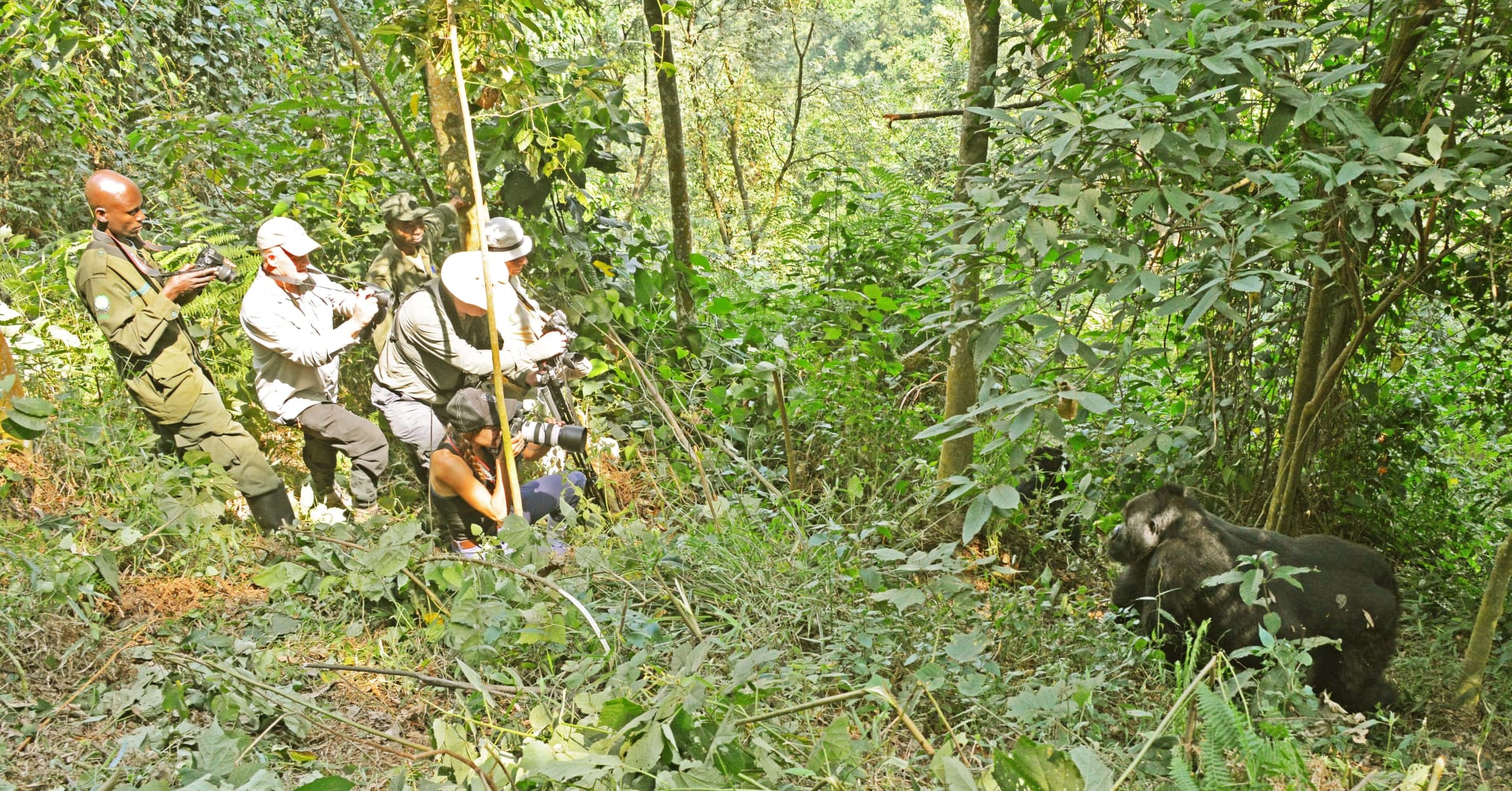
Tourism can contribute to coexistence when money, employment and partnerships reach communities and protected-area management. The IUCN country brief identifies ecotourism and other livelihood activities as part of the wider conservation response, while UWA’s community-conservation framework includes revenue sharing and enterprise development . A well-managed wildlife safari park experience can therefore be connected to ranger operations, habitat protection and local businesses, although visitors should not assume that every tourism payment directly funds conflict mitigation.
Travellers can book conservation-supporting safaris on SafariFind and ask operators how their itineraries support UWA-approved activities, local guides, community enterprises or conservation partners. A responsible wildlife safari should respect park rules, avoid pressuring guides to approach animals too closely and recognise that people living beside protected areas bear many of the costs of maintaining wildlife habitat.
Tourism is not a substitute for public funding, fair governance or effective incident response. Its value is strongest when it complements those systems and gives local communities a credible economic reason to support wildlife protection.
How travellers can help responsibly
- Choose transparent operators. Ask who employs the guides, where community payments go and whether the operator works with recognised conservation or community organisations.
- Follow wildlife-viewing rules. Keep the distance and behaviour required by park authorities; do not encourage guides to chase, surround or bait animals.
- Do not buy wildlife products. Illegal wildlife trade can intensify enforcement pressure and damage the trust needed for community conservation .
- Respect local communities. Ask permission before photographing people, pay for services fairly and support locally owned accommodation, guiding and craft enterprises.
- Report incidents safely. If you see an injured animal, snare or dangerous wildlife encounter, tell your guide or UWA staff rather than intervening yourself.
- Support practical programmes. Donations to credible organisations should be directed towards clearly described work such as scouts, veterinary response, water infrastructure, habitat protection or community livelihoods .
Uganda’s conservation future depends on whether wildlife and people can share landscapes without making either side carry an intolerable cost. The strongest evidence in 2026 favours locally informed prevention, rapid response, reliable data, fair benefits and partnerships that treat communities as decision-makers—not simply as neighbours expected to tolerate wildlife losses.
Frequently Asked Questions
What is the main cause of human–wildlife conflict in Uganda?
The main drivers are crop raiding, livestock predation, attacks on people, habitat loss, settlement and cultivation near protected areas, and competition for water and grazing resources .
Which animals cause human–wildlife conflict in Uganda?
Conflict involves several species, including elephants that raid crops, lions and other carnivores that prey on livestock, and wildlife such as hippos and crocodiles that can create risks near water. The species and impact vary by landscape and season .
How is Uganda reducing human–elephant conflict?
Measures include beehive fences, elephant trenches, electric fencing, community scouts, warning systems, deterrents and improved water availability inside protected areas. AWF reported up to a 75% reduction in crop raiding in targeted sub-counties, not across Uganda as a whole .
What is Uganda’s Conflict-to-Coexistence approach?
WWF Uganda’s Conflict-to-Coexistence approach uses six pillars: understanding interactions, governance and policy, prevention, response, mitigation and monitoring .
Does tourism help reduce human–wildlife conflict in Uganda?
Tourism can help when it supports protected-area management, local employment, revenue sharing and community enterprises. It is a complement to, not a replacement for, public funding, effective governance and rapid conflict response .
What is the Uganda Wildlife Authority’s role in conflict management?
UWA manages protected areas, coordinates wildlife responses, works with communities and partners, and maintains a national human–wildlife-conflict database containing information on incidents, locations, species and impacts .
How does climate and water scarcity affect human–wildlife conflict?
When water and forage become scarce, wildlife may move towards community farms or shared water points. AWF’s work at Kidepo includes improving water retention inside the park and rehabilitating community boreholes to reduce competition over water .
Can beehive fences protect farms from elephants?
Beehive fences can deter elephants and may provide honey and pollination benefits. The IUCN country brief reports reduced crop raiding associated with beehive fences in Murchison Falls National Park, but effectiveness depends on local conditions and maintenance .
How can visitors support coexistence in Uganda?
Visitors can choose transparent operators, support locally owned services, follow wildlife-viewing rules, avoid wildlife products, respect communities and contribute to credible programmes working on scouts, livelihoods, water, habitat protection or veterinary response .
Is human–wildlife conflict getting worse in Uganda?
The available research confirms that conflict remains a major challenge, but the supplied sources do not provide a current, standardised national trend for 2026. UWA’s database is intended to improve hotspot analysis and evaluation of responses .
V2Ui.sources
- UWA Launches Strategies for 2026-2030 - Uganda Wildlife Authority
- Country Brief: Uganda
- Uganda HWC Database
- Uganda Wildlife Authority Strategic Plan
- Strategic Plan
- Uganda’s 2025 Conservation Journey: Building the Foundations for 2026
- WWF Uganda Leads Collaborative Effort to Tackle Human–Wildlife Conflict in the Kagombe–Bugoma Landscape
- WWF Uganda Launches Project to Address Human-Carnivore Conflicts
- Improving community attitudes towards conservation
- GC Impact Report 2024-25: Enabling the Recovery of Murchison Falls National Park, Uganda
- UCF – Uganda Conservation Foundation
- Human-wildlife conflict and its impacts on livelihoods, health, and the environment(official)
Related to
Ready to start your safari adventure?
Explore curated safari packages and find your perfect African adventure with verified operators.