Mountain Gorilla Conservation in Uganda (2026): Status & Threats
Mountain gorillas remain Endangered, but Uganda’s Bwindi population and the wider Virunga–Bwindi population have increased through long-term protection, research and community partnerships. The latest confirmed combined count is 1,063 animals, while a new Bwindi-Sarambwe census is expected to provide updated results in 2026 [2].
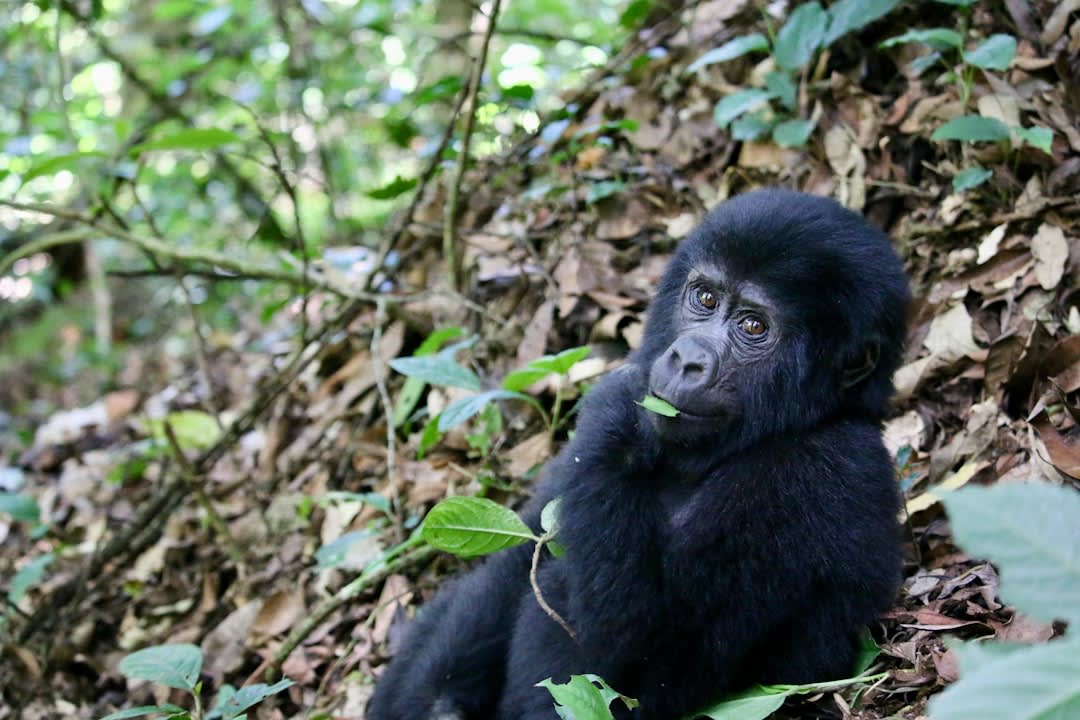
Quick answer: Mountain gorillas (Gorilla beringei beringei) are classified as Endangered, not Critically Endangered, after decades of conservation in Uganda, Rwanda and the Democratic Republic of the Congo (DRC) . The latest confirmed combined population estimate in the research is 1,063 wild mountain gorillas, based on the 2018 Bwindi count and the 2015 Virunga census; Uganda’s 2025–26 Bwindi-Sarambwe census is intended to update the status of the Ugandan population .
Last reviewed August 2026. Conservation data changes — see the cited sources for the latest figures.
Why mountain gorilla conservation matters in Uganda
Uganda protects two important mountain-gorilla landscapes: Bwindi Impenetrable National Park in the country’s south-west and the Ugandan section of the Virunga Volcanoes in Mgahinga Gorilla National Park . These forests are not simply wildlife safari destinations. They are the habitat of one of the world’s rarest great-ape subspecies and part of a single transboundary conservation system shared with Rwanda and the DRC .
In Uganda, the largest population is associated with Bwindi Impenetrable Forest, a steep, wet and biologically rich forest whose protection also benefits many other endemic and threatened species. Research and conservation work supported the area’s designation as a national park in 1991 . Mgahinga, by contrast, forms Uganda’s portion of the Virunga mountain landscape, where gorilla groups move within an ecological system that crosses national borders .
The species’ conservation history explains why present-day progress matters. Initial surveys estimated approximately 130 mountain gorillas in Bwindi and about 450 in the Virunga Volcanoes in 1960. Habitat loss and hunting subsequently drove the Virunga estimate down to about 230 in the mid-1970s . In the Virunga population, habitat destruction, political instability and poaching created exceptionally difficult conditions for conservation teams .
The recovery has required more than a single park or organisation. The International Gorilla Conservation Programme (IGCP) describes mountain-gorilla conservation as a partnership among national authorities, local communities and international organisations working across Uganda, Rwanda and the DRC . That cross-border approach is essential because the gorillas’ habitat and conservation risks do not stop at national boundaries.
Mountain gorilla population in Uganda: what the data shows
There is no fully published 2026 census result in the supplied research, so the most responsible approach is to distinguish confirmed historical counts from the survey now intended to update them. The table below summarises the principal figures available.
| Population or survey | Reported result | What it means |
|---|---|---|
| Bwindi, 1997–2002 | Growth from 286 to 320 animals | An earlier sign of recovery in Uganda’s Bwindi population |
| Bwindi, 2002–2006 | Growth from 320 to 340 animals | A 6% increase from 2002 and a 12% increase from 1997 |
| Bwindi, 2018 | 459 animals in 36 social groups, plus 16 solitary gorillas | The latest Bwindi-specific count reported in the supplied research |
| Virunga Massif, 2018 | 604 animals | An increase from 480 in 2010, according to WWF |
| Combined global total | 1,063 animals | The 2018 Bwindi result combined with the 2015 Virunga census |
| Bwindi-Sarambwe survey, 2025–26 | Final results expected in 2026 | Designed to provide an updated estimate and assess ecosystem and gorilla health |
The direction of change is encouraging, but the numbers should not be treated as a guarantee of security. Mountain gorillas remain a small, geographically restricted and conservation-dependent population. The Dian Fossey Gorilla Fund describes their total habitat as only about 300 square miles and warns that disease, human pressure, climate change and limited space could alter their conservation status quickly .
The main threats to mountain gorillas in Uganda
Poaching and snares
Mountain gorillas are not generally targeted as bushmeat in the same way as some other wildlife, but they can be injured or killed by snares set for antelope and other animals. In the Virunga landscape, research recorded more than 1,500 snares confiscated each year during an intensive protection period . The same study notes that infants have also been abducted for the illegal pet trade, with adults sometimes killed during such incidents .
For Uganda, this means that anti-poaching work must include regular patrols, intelligence, snare removal and engagement with communities living beside the forest. A broader overview of anti-poaching in Uganda provides useful context, but gorilla protection also depends on specialised tracking and close daily monitoring.
Habitat loss and limited room to expand
Both Bwindi and the Virunga forests are surrounded by densely settled agricultural communities. The Virunga gorilla population occupies a confined mountain landscape, while all mountain gorillas live in fully protected parks with limited opportunities for spatial expansion . Forest encroachment, farming, settlement and demand for household energy can place pressure on the boundaries and buffer areas around protected habitat.
The challenge becomes more complex as the gorilla population grows. Conservation success can increase competition for food and space within a small habitat. A study reported differences in population growth, social structure and parasite infection across the Virunga and Bwindi populations, suggesting that ecological conditions and rising densities require continuing research and management .
Disease and human contact
Mountain gorillas are vulnerable to infectious disease because they are closely related to humans and live in small, isolated populations. Gorilla Doctors and research partners have identified geographic differences in strongylid parasite infections and linked higher parasite egg counts in some areas with a greater occurrence of gastrointestinal disease .
Tourism and research can support conservation, but close human contact must be managed carefully. A scientific review of Virunga protection measures records a minimum visitor distance of seven metres as a disease-reduction measure, while also noting that dense vegetation can make adherence difficult . Travellers should therefore follow the latest instructions from Uganda Wildlife Authority (UWA), guides and park staff rather than relying on outdated online advice.
Conflict, insecurity and climate change
Conservation teams operate in a region affected by recurrent insecurity and political conflict. The African Wildlife Foundation reported that protection efforts continued to produce population gains despite security threats in the region, while also noting poaching incidents in the DRC . Conflict can disrupt patrols, research, tourism income and cooperation between institutions.
Climate change adds a longer-term uncertainty. The available research identifies climate change as a significant threat alongside disease, human pressure, limited habitat and the species’ small overall number . The practical effects may include shifts in vegetation, water availability and disease conditions, but the supplied sources do not provide a Uganda-specific climate impact estimate. Conservation planning must therefore remain adaptive rather than assuming that past population growth will continue automatically.
What is being done to protect Uganda’s gorillas?
Protected areas and ranger-based monitoring
UWA manages Uganda’s protected mountain-gorilla areas, including Bwindi Impenetrable National Park and Mgahinga Gorilla National Park . Rangers and trackers protect habituated groups, monitor their health and behaviour, remove snares and help researchers maintain long-term records. IGCP identifies rangers as central to the improvement in population status; Nelson Guma, Chief Park Warden for the Bwindi Mgahinga Conservation Area, describes habituation as a way to monitor and protect gorillas more effectively .
The work is demanding and highly specialised. Trackers must identify individual animals, recognise signs of illness or injury, record group movements and communicate threats quickly. Close monitoring also makes it possible to detect changes in social structure, group composition and habitat use. The role of local expertise is illustrated by Bernard Tumwesigye, a mountain-gorilla head tracker from Rubanda District who works in Bwindi .
Transboundary coordination
The Greater Virunga Transboundary Collaboration (GVTC) and IGCP help coordinate conservation across Uganda, Rwanda and the DRC. The 2025 Bwindi-Sarambwe survey was led by GVTC with support from conservation partners, while the census involved expertise from organisations including the Max Planck Institute for Evolutionary Anthropology and the Dian Fossey Gorilla Fund .
Cross-border cooperation supports coordinated censuses, information sharing, veterinary response and landscape-level planning. It also recognises that the mountain gorilla is one population divided among national jurisdictions, rather than three entirely separate conservation problems. IGCP reports that collaboration has strengthened support for conservation, tourism revenue-sharing and protected-area management .
Veterinary care, science and disease surveillance
Gorilla Doctors, the Dian Fossey Gorilla Fund and other scientific partners contribute veterinary, genetic, behavioural and health expertise. Disease surveillance is increasingly important because a growing population in restricted habitat may face higher exposure to infectious disease . The purpose of this work is not only to treat individual gorillas, but also to understand population-level risks and guide future protection plans.
The 2025–26 census has a broader purpose than counting animals. According to the research, it is also intended to assess the health of the ecosystem and the condition of the gorillas . Reliable monitoring allows conservation managers to compare population trends, identify problem areas and decide where protection and community investment are most needed.
Community conservation and tourism’s role
Gorilla conservation cannot succeed through enforcement alone. People living around Bwindi and Mgahinga need practical reasons and opportunities to support protected areas, especially where farming land and household incomes are limited. IGCP and partners have supported tourism revenue-sharing between protected-area management and local governments, with funds directed towards projects benefiting communities beside gorilla habitat .
Tourism can also change incentives at household level. The Associated Press reported examples of former poachers becoming involved in conservation and described how tourism has supported porters, guides and rangers in communities around Bwindi . These outcomes are important, but they should not be presented as automatic. Tourism revenue must be transparent, fairly distributed and linked to locally identified priorities if it is to maintain trust.
Visitors also create demand for skilled local employment. A gorilla trekking permit supports a regulated tourism system involving park authorities, trackers, guides and porters, although the supplied research does not provide a current breakdown of how permit revenue is allocated. Travellers should ask operators how they support local staff and community projects rather than assuming that every safari contributes equally to conservation.
Gorilla trekking is one part of a wider Uganda national parks conservation system. On SafariFind, travellers can book conservation-supporting safaris, while choosing operators that use authorised guides, employ local people and communicate clearly about responsible wildlife viewing.
Results and setbacks: a fragile conservation success
The strongest result is the long-term population recovery. Bwindi increased from 320 to 340 gorillas between 2002 and 2006, and the 2018 Bwindi count reported 459 gorillas in social groups and solitary animals . WWF reports that the Virunga Massif reached 604 gorillas in 2018, compared with 480 in 2010 . Together, the 2018 Bwindi and 2015 Virunga results produced a global estimate of 1,063 mountain gorillas .
This progress contributed to the IUCN Red List reclassification from Critically Endangered to Endangered in 2018 . It is an important conservation achievement achieved through rangers, veterinary teams, researchers, governments, communities and responsible tourism.
The setbacks are equally clear. No final 2026 census figure is available in the supplied research. Habitat is limited, disease risks remain, climate change may alter conditions, and conflict can undermine protection . Higher population density may also create new social and health pressures, including changes in group structure and parasite exposure . Mountain gorillas therefore remain dependent on continuous protection; a lower threat category does not mean that they are safe without conservation investment.
How travellers can help responsibly
- Use authorised tourism channels. Book permits and trekking activities through recognised authorities and reputable operators that follow park rules.
- Keep your distance and avoid illness-related travel. Follow the latest UWA and guide instructions, including any minimum viewing distance and hygiene requirements. Disease transmission is a serious conservation concern .
- Never pressure guides to approach wildlife. A close photograph is not worth altering a gorilla group’s behaviour or increasing health risks.
- Choose locally beneficial services. Use community-based porters, local guides and accommodation providers where possible, and ask how tourism income supports neighbouring communities.
- Do not leave waste or food. Carry rubbish out, avoid feeding wildlife and remain on designated routes.
- Respect privacy and safety. Do not publish precise locations, harass animals or attempt to touch gorillas.
- Support conservation beyond a single visit. Consider donating to credible organisations such as IGCP, UWA-supported initiatives, Gorilla Doctors or research and community programmes with transparent reporting.
Uganda’s mountain gorillas demonstrate what sustained, science-led and community-linked conservation can achieve. They also show why success must be treated as a responsibility rather than an endpoint: the population is larger than it was in earlier decades, but its habitat remains restricted and its future still depends on protection.
Frequently Asked Questions
What is the conservation status of mountain gorillas in Uganda in 2026?
Mountain gorillas are classified as Endangered. Their status improved from Critically Endangered in 2018, but they remain conservation-dependent because of limited habitat, disease, human pressure, climate change and their small population .
How many mountain gorillas live in Uganda?
The latest Bwindi-specific figure in the supplied research is 459 gorillas counted in 2018, comprising 36 social groups and 16 solitary animals. A new Bwindi-Sarambwe survey was conducted in 2025–26, but its final result is not provided here .
How many mountain gorillas are left in the wild?
The latest combined figure cited in the research is 1,063 wild mountain gorillas, calculated from the 2018 Bwindi count and the 2015 Virunga census. This is not a confirmed 2026 total .
Where can you see mountain gorillas in Uganda?
Wild mountain gorillas can be tracked in Bwindi Impenetrable National Park and Mgahinga Gorilla National Park. Bwindi has the larger Ugandan population, while Mgahinga forms Uganda’s section of the transboundary Virunga Volcanoes .
What are the main threats to mountain gorillas in Uganda?
The main threats are snares and other poaching risks, habitat pressure, infectious disease, human contact, insecurity and climate change. Limited space is a particular concern because the gorillas live in protected but geographically restricted forests .
Does gorilla trekking help conservation in Uganda?
Yes, regulated gorilla tourism can support park management, local employment and community revenue-sharing. IGCP and partners have supported policies directing tourism-related funds towards communities near gorilla habitat, although the quality and distribution of benefits depend on implementation .
How does Uganda protect mountain gorillas from poaching?
Protection combines ranger patrols, snare removal, tracking, monitoring of habituated groups, intelligence and community engagement. In the wider Virunga landscape, intensive patrols have removed more than 1,500 snares per year during a documented protection period .
Are mountain gorillas still at risk of extinction?
Yes. Their population has recovered, but mountain gorillas remain at risk because they occupy a small range, face disease and human pressures, and depend on continuous protection. Conservation experts warn that their status could change quickly if threats intensify .
What should I do before going gorilla trekking in Uganda?
Use authorised operators, follow all Uganda Wildlife Authority and guide instructions, keep the required distance, avoid trekking when ill, do not touch or feed gorillas, and choose locally beneficial services. Visitor contact must be managed carefully because infectious disease is a recognised risk .
When will the next Uganda mountain gorilla census results be available?
The 2025 Bwindi-Sarambwe population survey was expected to produce final results in 2026. The supplied research does not provide a final published figure, so travellers should consult UWA, GVTC or the survey partners for the latest result .
V2Ui.sources
- Mountain Gorilla Population Steadily Increasing
- Uganda Counts Its Mountain Gorillas
- Mountain gorilla: From tragedy to fragile success
- International Gorilla Conservation Programme
- Mountain Gorillas: Rising From the Brink of Extinction
- Extreme Conservation Leads to Recovery of the Virunga Mountain Gorillas(official)
- Rangers: Going Against all Odds to Protect the Endangered Mountain Gorillas!
- WCS Uganda: Gorillas
- Tourism is helping Uganda’s endangered mountain gorillas make a comeback
- Conservation Success Leads to New Challenges for Endangered Mountain Gorillas
Related to
Ready to start your safari adventure?
Explore curated safari packages and find your perfect African adventure with verified operators.


