Wildlife Corridors & Habitats in Namibia (2026) Conservation Guide
Namibia’s conservation model connects national parks, communal conservancies and private land to protect habitats and wildlife movement. Community conservancies now cover roughly one-fifth of the country, but fragmentation, human-wildlife conflict, drought and climate change continue to threaten connectivity.
Last reviewed August 2026. Conservation data changes — see the cited sources for the latest figures.
Quick answer: what is the conservation status of Namibia’s wildlife corridors?
Namibia’s wildlife corridors are being protected through a landscape approach that links national parks, communal conservancies, private land and transboundary conservation areas. Community conservancies cover approximately one-fifth of the country, and many share borders with state-protected areas, creating routes through which elephants, zebra, cheetahs, lions and other wildlife can move between habitats.
The model has produced important gains, including wildlife recovery in some conservancy regions and increased local income from tourism and other wildlife-based enterprises. However, habitat fragmentation, roads, fences, settlement, livestock pressure, human-wildlife conflict, drought and climate variability continue to make connectivity vulnerable.
Why habitats and corridors matter in Namibia
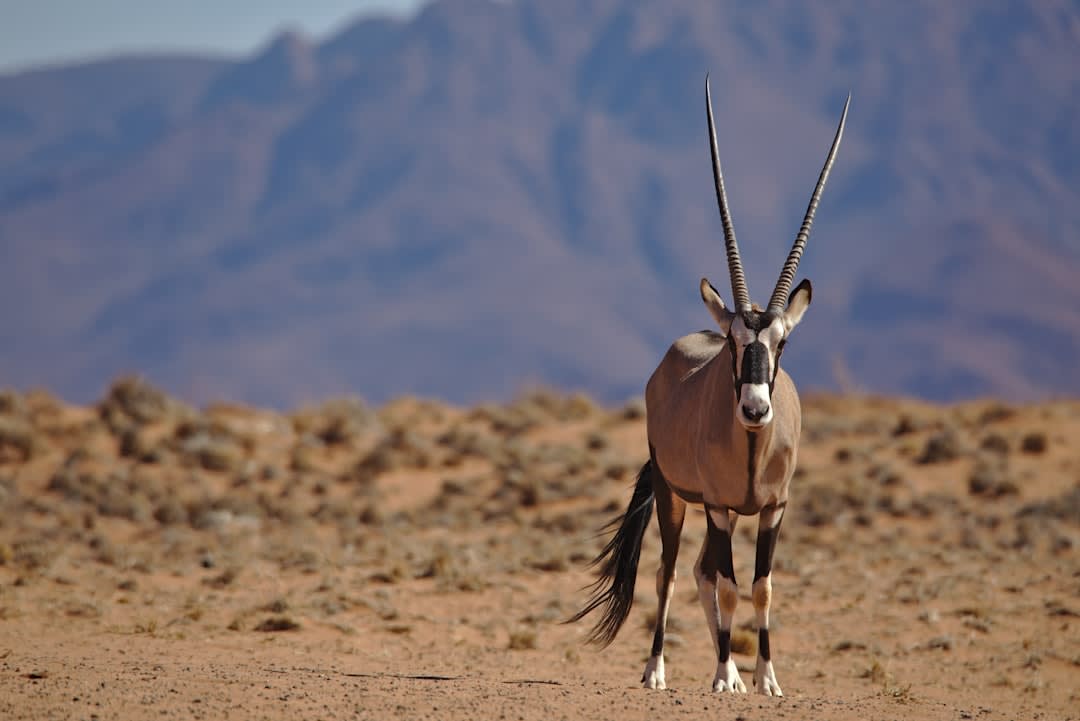
Namibia is one of sub-Saharan Africa’s most arid countries, but its landscapes are remarkably varied. The country includes desert, semi-desert, escarpment, savanna, woodland, riverine systems, wetlands and coastal habitats. These environments support species such as desert-adapted elephants and lions, black rhinos, cheetahs, leopards, mountain zebra, oryx, giraffes and numerous bird species.
A habitat is the ecological setting in which a species feeds, breeds, shelters and moves. A wildlife corridor is a connected strip or wider landscape that allows animals to travel between otherwise separated habitats. Corridors can support seasonal movements towards food and water, maintain contact between populations and reduce the risks associated with isolated habitat patches.
In Namibia, connectivity is especially important because rainfall and surface water are unevenly distributed. Riverine habitats may occupy a relatively small area, yet they act as vital refuges across arid terrain. Community conservancies in the arid north-west therefore protect habitats that might otherwise have less formal conservation coverage.
Connectivity also extends beyond Namibia’s borders. The Kavango Zambezi Transfrontier Conservation Area, or KAZA, was formally created in 2011 by Angola, Botswana, Namibia, Zambia and Zimbabwe. Its purpose is to conserve connected ecosystems while supporting communities and sustainable economic development across national boundaries.
Namibia’s main habitats and conservation landscapes
Desert and semi-desert
The Namib Desert and surrounding semi-desert landscapes are characterised by low rainfall, sparse vegetation and highly specialised wildlife. The Namib-Naukluft National Park protects a large desert landscape, while areas around the Naukluft Mountains, Aus and Lüderitz illustrate how desert plains, mountains and coastal environments form part of a wider ecological system. Habitat protection in these areas must account for water scarcity, tourism infrastructure, mining and land degradation.
Savanna, rangelands and bushveld
Central and northern Namibia contain extensive rangelands used by both livestock and wildlife. In some areas, bush encroachment reduces open grazing and can affect hunting conditions for predators such as cheetahs. The Cheetah Conservation Fund has worked for more than three decades on targeted bush thinning and habitat restoration, with the aim of improving ecological balance, cheetah hunting conditions and livestock grazing potential.
Rangelands are also economically important to rural households. Conservation planning therefore has to balance wildlife habitat, livestock production, water access and the needs of communities rather than treating these land uses as separate systems.
Woodlands and river corridors
In north-eastern Namibia, woodland and riverine habitats provide food, cover and routes between protected areas and community-managed land. These landscapes are particularly important for large mammals, but they are also exposed to settlement growth, roads and other development along river courses.
The Etosha National Park is one of Namibia’s best-known wildlife destinations, but its conservation value cannot be considered in isolation from neighbouring land. Effective movement routes depend on how park boundaries, surrounding farms, conservancies, roads, fences and water points are managed.
Coastal, wetland and marine-linked habitats
Namibia’s coastal and marine environments include coastal wetlands, estuaries, islands and near-shore ecosystems. National biodiversity planning identifies these habitats as important for biodiversity, fisheries productivity and resilience to climate impacts. The Skeleton Coast and adjacent protected landscapes also demonstrate why ecological planning needs to cross administrative boundaries rather than focus only on individual parks.
The threats to Namibia’s wildlife corridors and habitats
Habitat loss and fragmentation
Unplanned development, conflicting land-use interests and land-cover change can break continuous habitat into smaller patches. Roads, fences, settlements, agriculture and mining may obstruct movement or increase the likelihood of encounters between people, livestock and wildlife.
Research on potential corridors in north-eastern Namibia reports that much land-cover change occurred on communal land, followed by state-protected land. The same research identifies fences and roads as challenges for large terrestrial mammals and warns that climate variability can shift suitable habitat and increase extinction risk when combined with land-use change.
Human-wildlife conflict
Conflict increases when people, livestock and wild animals compete for limited water, grazing and agricultural resources. Elephants may damage crops, fences and water infrastructure, while lions, leopards and other carnivores may kill livestock. These losses can lead to retaliatory killings, creating a direct threat to wildlife and undermining local support for conservation.
Corridors can intensify this challenge if movement routes pass close to farms, villages or livestock kraals. Corridor protection therefore requires coexistence measures, reliable local institutions and fair responses to crop and livestock losses—not only mapping animals’ preferred routes.
Drought and climate change
Namibia’s conservation model has long had to operate under drought conditions. Climate change and increased climate variability can alter vegetation, water availability and the distribution of suitable habitat. Conservation planning consequently needs to remain adaptive, using rainfall, vegetation and wildlife-monitoring information to guide management decisions.
Climate pressure also raises the importance of connected landscapes. When conditions deteriorate in one area, animals may need access to alternative grazing, water or shelter. If fences, roads or development block those routes, drought impacts may become more severe for both wildlife and rural livelihoods.
Wildlife crime
Wildlife crime remains an ongoing concern alongside habitat pressures. Namibia’s community-conservation experience has developed in the context of drought and increasing wildlife crime, and conservation organisations continue to support game guards, park neighbours and anti-crime coordination.
Corridors can be difficult to patrol because they cross multiple land-tenure systems. Protecting them requires collaboration between the Ministry of Environment, Forestry and Tourism, conservancies, traditional authorities, private landowners, park management teams and regional partners.
What is being done to protect Namibia’s corridors?
Community-based natural resource management
Namibia began devolving wildlife-use and resource rights to communities in the 1990s. The Nature Conservation Amendment of 1996 provided a legal framework for communal conservancies and volunteer governing bodies responsible for conservancy development and management.
This community-based natural resource management approach makes local residents participants in conservation rather than simply neighbours of protected areas. Conservancy income can come from ecotourism, conservation hunting and related wildlife enterprises, with benefits supporting employment, education, water infrastructure and other community priorities.
By 2024, the community-conservation network included conservancies such as Sobbe, Bamunu, Kwando, Anabeb, Ehi-Rovipuka, Omatendeka, Orupupa, Sesfontein and Torra. These conservancies participated in Wildlife Credits contracts covering products including wildlife zones, wildlife corridors and Kunene lions.
Wildlife Credits and payments for ecosystem services
Wildlife Credits is a Namibian payment-for-ecosystem-services mechanism intended to reward measurable conservation outcomes. WWF Namibia reported that nine conservancies received Wildlife Credits payments funded largely by KfW and the Lion Recovery Fund, with total payments of N$1,854,485 during the 2023–2024 reporting period.
The programme is significant because corridor protection often produces a public benefit while imposing local costs. Payments can help recognise the work of conservancies, game guards, traditional authorities and landowners, although long-term success depends on transparent governance, reliable funding and benefits that arrive quickly enough to maintain community support.
Science, collars and landscape planning
WWF and partners use satellite collars and science-based studies to understand wildlife movement across Namibia and KAZA. These data can identify important routes, improve land-use decisions and help reduce human-wildlife conflict.
Monitoring should not rely on a single species or one-off map. Annual game counts, vegetation assessments and rainfall information can help managers adapt decisions as conditions change. The Namibian Chamber of Environment and other conservation stakeholders have argued for collaborative action linking national parks, communal areas and private land.
Protected-area partnerships
Namibia’s protected-area system works alongside community conservation. WWF Namibia has supported communication and collaboration between the Ministry of Environment, Forestry and Tourism and neighbours of Skeleton Coast, Dorob, Mangetti and Khaudum national parks. The reported goals include improving habitat protection and connectivity, addressing wildlife crime, mitigating conflict and increasing benefits for surrounding communities.
At the regional scale, KAZA provides a framework for cooperation across borders. These arrangements matter for wide-ranging animals whose movements do not stop at a national-park boundary or an international border.
Community conservation and the role of tourism
Tourism can help make habitat connectivity economically valuable to communities. Conservancies may earn income from lodges, guiding, wildlife viewing and other enterprises, while tourism partnerships can create employment and support community projects.
That does not mean every tourism operation automatically benefits conservation. The important questions are whether revenue reaches the relevant conservancy, whether local institutions have a meaningful role in decisions, whether tourism avoids damaging sensitive habitat and whether communities receive fair value for tolerating wildlife on their land.
Travellers planning a wildlife safari can therefore look beyond the number of animals visible from a vehicle. A responsible itinerary may include community conservancies, private reserves connected to wider landscapes or operators that disclose conservation fees and local partnerships. SafariFind also allows travellers to book conservation-supporting safaris, but visitors should still ask each operator how money, employment and conservation responsibilities are distributed.
A Namibia self drive safari can support local economies, but self-drive visitors should remain on designated roads, respect speed limits, avoid approaching wildlife and follow park and conservancy rules. In fragile desert and wetland environments, careless off-road driving can damage vegetation and soils that recover slowly.
Results and setbacks: what does the evidence show?
Namibia’s conservation model has delivered credible benefits, but the evidence does not support presenting it as a complete solution. Conservancies have contributed to wildlife recovery in some regions and generated employment, income and livelihood benefits through tourism, conservation hunting and wildlife-based enterprises.
One widely reported example of the model’s scale is the growth of Namibia’s elephant population to approximately 24,000 over the two decades discussed by Yale Environment 360. That figure should be treated as a source-specific estimate rather than a universal national baseline, because wildlife counts vary by method, date and geographic coverage.
The network also has substantial geographic reach. WWF reports that conservancies share borders with 70% of Namibia’s state-protected areas, helping secure intact ecosystems and corridors between critical habitats. The same source describes a proposed Namibia for Life initiative intended to provide long-term funding and policy support for up to 100 conservancies managing up to 20 million hectares.
These achievements remain vulnerable. Financial resources are not guaranteed, conflict compensation can be inadequate or delayed, and corridors compete with development, livestock production and infrastructure. Namibia’s biodiversity planning specifically calls for protection of ecological corridors, sustainable rangeland and forest management, catchment-scale interventions and coexistence measures that preserve movement pathways.
The most balanced conclusion is that Namibia has built a strong foundation for connected conservation, particularly through community rights and landscape-scale partnerships. The next test is whether this foundation can secure durable finance, fair local benefits and adaptive management while keeping corridors functional under climate and development pressure.
How travellers can help responsibly
- Choose locally connected operators: Ask whether your lodge, guide or tour company works with a conservancy or contributes to a recognised conservation programme.
- Respect movement and habitat rules: Stay on authorised routes, do not chase animals for photographs and follow guidance around waterholes, nesting sites and community land.
- Support longer stays and local services: Spending on locally owned accommodation, guiding, crafts and community activities can spread tourism value beyond a single property.
- Ask about conflict and conservation funding: Responsible operators should be able to explain how they address human-wildlife conflict and where conservation-related fees go.
- Do not buy wildlife products: Avoid souvenirs made from illegal or unsustainably sourced animal parts, and report suspected wildlife crime through appropriate official channels.
- Travel with realistic expectations: A corridor is successful when animals can move safely and communities can live with wildlife—not only when visitors see a rare species.
Conclusion
Namibia’s most important conservation asset is not a single wildlife safari park or isolated reserve. It is the possibility of a connected landscape in which national parks, conservancies, private land and neighbouring countries work together. Community rights, Wildlife Credits, satellite tracking, protected-area partnerships and responsible tourism all contribute to that goal.
Progress is real, but it is not irreversible. Habitat fragmentation, drought, climate change, wildlife crime and conflict continue to test Namibia’s conservation system. Protecting corridors in 2026 therefore means investing not only in fences, rangers and technology, but also in local governance, fair benefits and land-use decisions that keep wildlife movement possible.
Frequently Asked Questions
What is a wildlife corridor in Namibia?
A wildlife corridor is a connected habitat or movement route that allows animals to travel between otherwise separated areas. In Namibia, corridors can link national parks, communal conservancies, private land and neighbouring countries.
Why are wildlife corridors important in Namibia?
They help wildlife reach seasonal food and water, maintain contact between populations and move between habitats when rainfall and vegetation conditions change. Connectivity is especially important in Namibia’s arid landscapes.
Which animals use Namibia’s wildlife corridors?
Species associated with Namibia’s connected landscapes include elephants, zebra, cheetahs, lions and other large mammals. Satellite collars and movement studies are used to improve understanding of these routes.
How do community conservancies protect wildlife habitat?
Community conservancies manage wildlife and natural resources under Namibia’s community-based natural resource management framework. They can generate income through tourism, conservation hunting and related enterprises, supporting local stewardship and habitat protection.
How many community conservancies are there in Namibia?
The research describes Namibia’s conservancy network as covering approximately one-fifth of the country, while the Namibia for Life initiative is intended to support up to 100 conservancies. The exact number changes as conservancies are established, recognised or reorganised.
What are the biggest threats to Namibia’s wildlife corridors?
The main threats are habitat fragmentation from roads, fences, settlements and development; human-wildlife conflict; drought and climate variability; livestock pressure; and wildlife crime.
What is Wildlife Credits in Namibia?
Wildlife Credits is a Namibian payment-for-ecosystem-services programme that rewards conservancies and partners for conservation outcomes such as wildlife corridors, wildlife zones and lion protection. WWF reported N$1,854,485 in payments to nine conservancies during 2023–2024.
Does tourism help wildlife conservation in Namibia?
It can. Tourism provides income, employment and community benefits through conservancies and wildlife-based enterprises, but travellers should choose operators that disclose local partnerships and how conservation revenue is used.
Can I support wildlife corridors on a Namibia self-drive safari?
Yes. Use authorised roads, follow park and conservancy rules, support locally connected businesses and avoid off-road driving. These steps reduce disturbance and help protect fragile desert, rangeland and wetland habitats.
Is Namibia’s conservation model successful?
It has produced wildlife recovery in some regions, local livelihood benefits and a large network of community-managed conservation landscapes. However, habitat fragmentation, conflict, climate pressure and uncertain long-term funding remain significant challenges.
V2Ui.sources
- Namibia’s Community Wildlife Conservancies
- Namibia's Animals and People | WWF | WWF
- Namibia National Biodiversity Strategy and Action Plan
- Climate change tests the wildlife conservation model in Namibia
- World Wildlife Day 2026: Medicinal and Aromatic Plants of Namibia
- Conservation and Wildlife Corridors: The Birds and The Bees
- Community Conservation in Namibia 2015(official)
- Identifying potential corridors and conservation strategies for Namibia
- WWF Namibia Impact Report
- How African Communities Are Taking Lead on Protecting Wildlife
- Namibia for Life Secures Community Conservation
Related to
Ready to start your safari adventure?
Explore curated safari packages and find your perfect African adventure with verified operators.


