Wildlife Corridors & Habitats in Tanzania: 2026 Guide
Tanzania's wildlife corridors connect protected areas with community lands, allowing elephants, big cats, wildebeest and other species to move between seasonal habitats. The national corridor assessment identifies conservation value across the country's network, while habitat loss, human–wildlife conflict and weak protection outside parks remain serious challenges.[1][8]

Last reviewed July 2026. Conservation data changes — see the cited sources for the latest figures.
Quick answer: Tanzania's wildlife corridors are essential links between national parks, game reserves, community conservancies and other habitats. The national Tanzania Wildlife Corridors Assessment, Prioritization and Action Plan found that every assessed corridor had conservation value, with 34 corridors scoring above the assessment's mean conservation-value score. The network is under pressure because most wildlife occurs outside protected areas, where farming, settlements, grazing, infrastructure and human–wildlife conflict can restrict movement.
Corridor conservation is therefore not simply about keeping animals inside a park. It is about maintaining connected landscapes in which wildlife can move, communities can benefit from natural resources, and land-use decisions account for seasonal migration and climate-related changes. Travellers can book conservation-supporting safaris on SafariFind, while choosing operators and lodges that demonstrate credible local partnerships and responsible land-use practices.
Why habitats and corridors matter in Tanzania
Tanzania contains a nationally important network of savannas, woodlands, wetlands, forests, volcanic landscapes and coastal habitats. The country is reported to have approximately 55,000 confirmed species, representing about one-third of Africa's plant species and one-fifth of its large-mammal species. This diversity is spread across large ecosystems rather than confined to isolated parks.
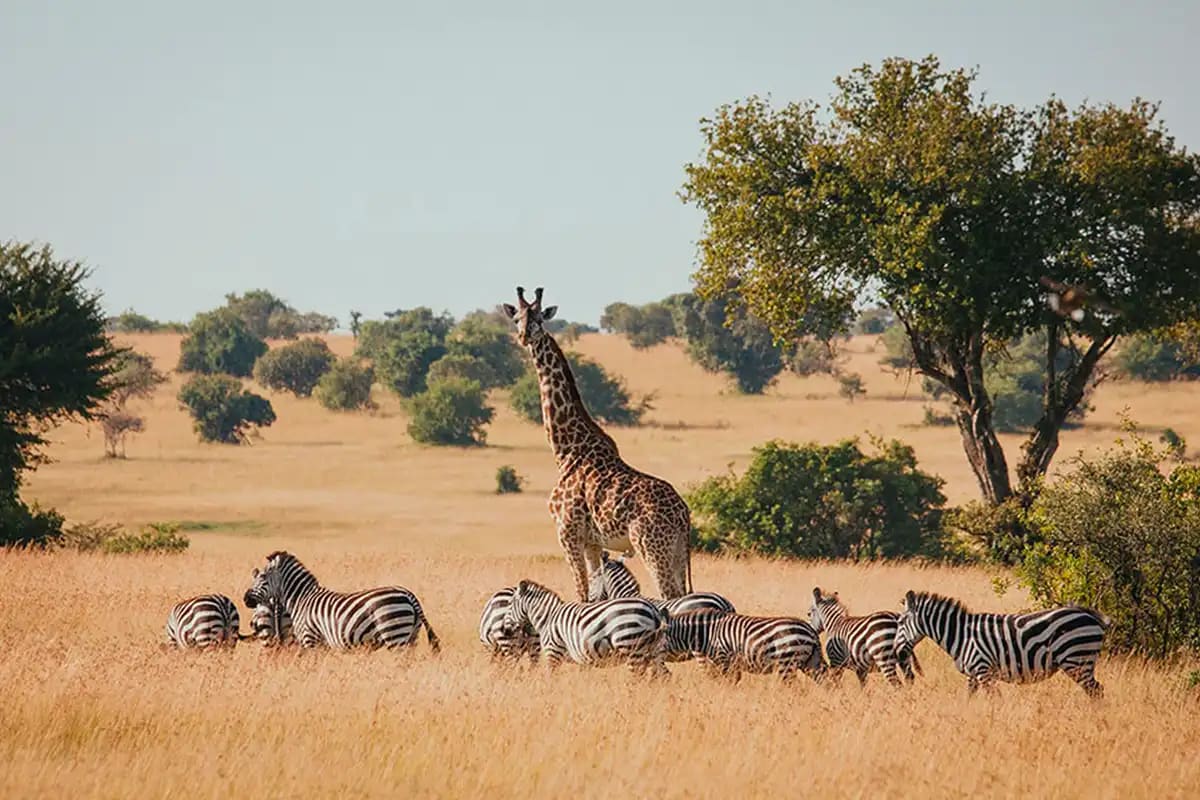
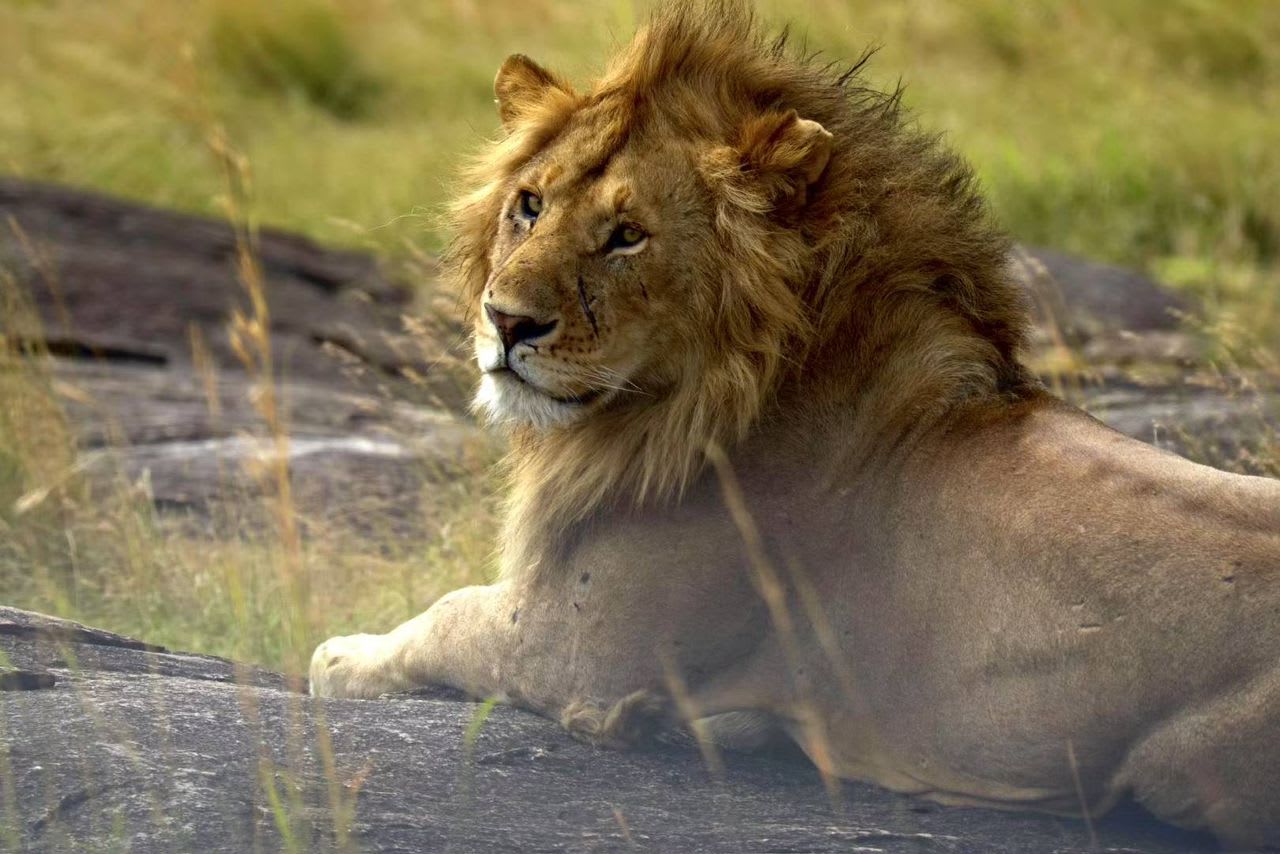
The Serengeti–Ngorongoro ecosystem illustrates the importance of landscape-scale conservation. It includes Serengeti National Park, the Ngorongoro volcanic crater, Mto wa Mbu and surrounding areas, and covers about 25,000 square kilometres in the programme area described by SIT Study Abroad. The ecosystem supports the great wildebeest migration and species including lions, leopards, elephants, black rhinoceros and African buffalo. The migration depends on access to seasonal grazing and water, so conservation must consider land beyond the boundaries of the national park.
In northern Tanzania, the Tarangire–Manyara landscape includes Tarangire and Lake Manyara national parks, Mto wa Mbu, Randilen Wildlife Management Area, Manyara Ranch and the Kwakuchinja and Kibaoni corridors. Tarangire is known for elephants and baobab trees, while the wider landscape supports species such as African wild dogs, gerenuk and elephants. Manyara Ranch is also described by the African Wildlife Foundation as a critical wildlife corridor and giraffe breeding ground.
Corridors provide several ecological functions. They allow animals to reach seasonal food and water, maintain access to wider ranges, and reduce the risks associated with isolated populations. Connected habitats may also help species respond to changing rainfall and temperatures. African Wildlife Foundation identifies corridors as important for seasonal wildlife movement and for adapting to climate change.
Tanzania's main wildlife-corridor landscapes
| Landscape or corridor | Why it matters | Key conservation context |
|---|---|---|
| Serengeti–Ngorongoro | Supports the great wildebeest migration and a diverse large-mammal community. | Includes national-park, crater, village and archaeological landscapes; conservation has significant implications for Maasai communities. |
| Tarangire–Manyara | Connects protected areas and community lands used by elephants and other wildlife. | Includes Kwakuchinja, Kibaoni, Manyara Ranch and Randilen Wildlife Management Area. |
| Manyara Ranch | Provides connected habitat and is identified as a giraffe breeding ground. | Livestock extension services are used to integrate the corridor into community life. |
| Randilen Wildlife Management Area | Community-owned habitat that supports wildlife and local livelihoods. | Governed by the local Maasai and described as an area supporting coexistence, including between elephants and people. |
| Kilimanjaro, Maasai Steppe, Kilombero and Tsavo–Mkomazi landscapes | Priority landscapes for habitat protection and connectivity. | AWF lists these among its Tanzania priority landscapes alongside Serengeti and Manyara. |
The threats to Tanzania's habitats and wildlife corridors
Habitat loss and fragmentation
Protected areas alone cannot conserve Tanzania's wildlife because scientists report that most wildlife occurs outside protected areas, despite as much as 44% of the country's territory being protected. This creates a practical challenge: farmland, settlements, roads, grazing areas and conservation land may overlap within the same wider ecosystem.
When a corridor is converted or blocked, animals may lose access to seasonal resources or come into closer contact with farms and livestock. Fragmentation also makes conservation more dependent on agreements between protected-area authorities, village governments, community organisations, infrastructure agencies and landowners. The national action plan explicitly identifies community-based mechanisms as fundamental to corridor-conservation success.
Human–wildlife conflict
Conflict is especially significant where elephants and other large mammals move through agricultural or livestock areas. African People & Wildlife reports that, in the Ngorongoro landscape, elephant habitat is threatened by settlements, farming, competition for grazing and water, tourism infrastructure and poaching. Crop damage, livestock losses and safety concerns can undermine local support for corridors if communities do not receive meaningful benefits or practical protection.
Effective responses include crop-protection measures, fortified livestock enclosures, early-warning systems, trained community officers and land-use planning. AWF describes its Tanzania work as including interventions intended to protect crops, prevent retaliatory attacks and save lives. Conservation Nation also describes training human–wildlife-conflict officers, known as Warriors for Wildlife, to track corridors and promote human–elephant coexistence in agricultural areas.
Poaching and wildlife trafficking
Poaching remains a threat to Tanzania's elephants, rhinoceroses and other wildlife. The country profile published by the Congressional Research Service identifies wildlife trafficking as one of Tanzania's conservation and biodiversity challenges, while noting that elephants, black rhinoceros and lions are among the species receiving conservation attention. The African Wildlife Foundation supports counter-wildlife-trafficking work, including cross-border collaboration, and has deployed canine detection units at major Tanzanian trafficking transit sites.
Corridor protection and anti-trafficking work are connected. A corridor that is poorly monitored may become vulnerable to illegal killing, timber extraction or other land-use pressures. Conversely, well-governed community areas can provide additional oversight and create incentives to keep habitat intact.
Climate and water stress
Climate change can alter the availability and timing of rainfall, water and forage. This makes connectivity more important because animals may need to move farther or use different habitats as conditions change. However, corridors are not automatically resilient: drought, invasive species, intensive grazing and development can reduce the quality of the route even when the land remains nominally open.
What is being done to protect corridors?
National assessment and prioritisation
Tanzania's corridor assessment provides a national framework for identifying, comparing and prioritising wildlife corridors. The assessment considered conservation value and vulnerability, and found that assessed corridors varied considerably in vulnerability even though all had conservation value. This distinction matters: a biologically important corridor is not necessarily facing the same risks, governance conditions or development pressures as another.
The action plan includes coordination among government bodies, NGOs, academic institutions and corridor working groups. It also proposes public education, including a documentary and use of National Natural Heritage Curriculum materials, with the aim of showing communities how corridor conservation can provide benefits. These measures recognise that maps and legal designations are only the beginning; implementation requires local participation and long-term management.
Community-owned conservation areas
Wildlife Management Areas and community conservancies can connect protected habitats while giving residents a role in decisions about land and natural resources. Randilen Wildlife Management Area is described as community-owned and governed by local Maasai, with conservation intended to support both wildlife and children's futures.
AWF's approach combines participatory land-use planning, local governance, community forests, sustainable livelihoods and protected-area management. Its work in Tanzania includes support for community conservancies, habitat restoration, sustainable agriculture, environmental monitoring and livestock services. The strongest corridor models are therefore not wildlife-only projects: they must address income, grazing, water, safety and local authority.
Protected-area management and ranger support
Protected-area authorities remain central to corridor conservation. AWF works with protected-area authorities by providing equipment, tools and training in management practices, while also supporting monitoring and counter-trafficking efforts. Tanzania Wildlife Authority rangers protect large landscapes including the Selous Game Reserve, according to the Wildlife Conservation Network's Lion Recovery Fund account.
Ranger support can include salaries, training, equipment and field rations. The Lion Recovery Fund reported that 53% of its funding invested so far had supported management of underfunded protected areas and that it contributed to the salaries of at least 600 rangers; those figures relate to that fund's reported investment, not to all ranger capacity in Tanzania. Funding continuity remains a challenge, particularly when tourism revenue falls or donor support declines.
Technology and field data
Technology is increasingly used alongside local knowledge. Conservation Nation describes the use of Survey123 for mobile data collection by human–wildlife-conflict officers, helping them document conflict and track important corridors. AWF also reports support for environmental monitoring through training and technology.
Digital tools can improve the speed and consistency of reporting, but they do not replace community consent, local ecological knowledge or transparent decision-making. Corridor boundaries and priorities need to reflect how people and wildlife actually use the landscape.
Community and tourism's role
Tourism can help finance conservation through park fees, employment, accommodation, guiding, transport, local procurement and direct support for community initiatives. Its benefits are not automatic: the distribution of revenue, the quality of consultation and the scale of tourism infrastructure all influence whether residents experience conservation as an opportunity or a constraint.
The Ngorongoro landscape demonstrates this complexity. SIT Study Abroad notes that tourism has profoundly affected Maasai communities around Ngorongoro. A responsible approach therefore requires more than promoting visitor numbers. Operators should explain how communities participate in governance, how conflicts are addressed and whether local people receive tangible economic benefits.
Travellers comparing the Tanzania safari and Zanzibar packages should ask whether their itinerary uses locally owned services, supports conservation levies transparently and avoids activities that disturb wildlife. The role of safari tourism in funding conservation in Tanzania is important, but visitors should distinguish documented contributions from general marketing claims.
Seasonality also affects the visitor experience and the pressure placed on particular sites. Travellers researching the best time to visit the Serengeti should remember that migration timing varies with rainfall and local conditions; responsible guides should prioritise animal welfare and avoid crowding or off-road driving that damages habitat.
Results and setbacks: what the evidence shows
The clearest national result is improved prioritisation. Tanzania has a framework that recognises corridor conservation as a national landscape issue rather than a series of isolated park projects. The assessment found conservation value across all corridors it evaluated, while distinguishing among their levels of vulnerability.
There are also practical examples of community and conservation integration. Randilen is presented as a community-owned area supporting wildlife and local people, and Manyara Ranch is treated as a corridor and giraffe breeding ground within a wider livestock landscape. Human–wildlife-conflict training and mobile data collection provide additional tools for coexistence.
However, the evidence does not justify declaring Tanzania's corridors secure. Most wildlife remains outside protected areas, conflict pressures persist, and the national action plan identifies community empowerment as fundamental because conservation benefits have not always been distributed fairly. Allegations concerning abuses by wildlife rangers have also been reported in relation to conservation activities; Tanzania's government called the allegations unfounded, and the World Bank announced in 2024 that it was suspending outstanding undisbursed funding for a project while investigating them. Strong conservation must include accountability, safeguards and respect for community rights as well as effective wildlife protection.
How travellers can help responsibly
- Choose transparent operators. When comparing the best safari operators in Tanzania, ask for specific information about community partnerships, conservation contributions, staff employment and wildlife-viewing standards.
- Support locally rooted businesses. Prefer guides, camps, community tourism enterprises and suppliers that can explain how visitor spending reaches residents and conservation activities.
- Respect wildlife space. Stay on permitted roads, follow guide instructions, avoid loud behaviour and never pressure a driver to approach animals too closely.
- Do not buy wildlife products. Avoid ivory, rhino horn, wild-animal souvenirs and any product with an unclear legal or ethical origin.
- Ask about human–wildlife conflict. Responsible operators should be able to explain how their activities avoid increasing pressure on farms, grazing areas and water sources.
- Travel with realistic expectations. A corridor is a working landscape, not a guaranteed wildlife-viewing zone. Seasonal movements, rainfall and land use mean sightings cannot be promised.
- Share accurate conservation information. Avoid repeating unsupported population figures or claims that one safari directly 'saves' a species. Ask for published evidence and current reporting.
Conclusion
Tanzania's wildlife future depends on connected habitats that work for both animals and people. The Serengeti–Ngorongoro and Tarangire–Manyara ecosystems show why conservation cannot stop at a national-park boundary, while the national corridor assessment provides a basis for prioritising action. Community ownership, responsible tourism, conflict prevention, ranger support, scientific monitoring and accountable governance must operate together.
The opportunity is substantial, but so are the risks. Tanzania has important wildlife landscapes and established conservation institutions, yet corridors remain vulnerable to fragmentation, conflict, trafficking and climate pressure. The most responsible safari is one that treats local communities as rights-holders and partners, supports credible conservation work, and leaves the landscape under less pressure than it found it.
 Ask Tembo about this guide
Frequently Asked Questions
What are wildlife corridors in Tanzania?
Wildlife corridors are connected areas of habitat that allow animals to move between protected areas, seasonal resources and community lands. Tanzania's national corridor assessment found conservation value in every corridor it assessed.
Why are wildlife corridors important in Tanzania?
They allow animals to reach seasonal food and water, maintain wider ranges and adapt to changing environmental conditions. Corridors are especially important because most of Tanzania's wildlife occurs outside protected areas.
Which Tanzanian parks and landscapes are connected by wildlife corridors?
Important examples include the Serengeti–Ngorongoro ecosystem and the Tarangire–Manyara landscape, which includes Tarangire and Lake Manyara national parks, Randilen Wildlife Management Area, Manyara Ranch, and the Kwakuchinja and Kibaoni corridors.
What threatens habitats and wildlife corridors in Tanzania?
The main pressures are habitat fragmentation, farming, settlements, grazing, infrastructure, human–wildlife conflict, poaching, trafficking and climate-related changes in rainfall, water and forage.
How do communities help protect Tanzania's wildlife corridors?
Communities help through Wildlife Management Areas, conservancies, local governance, land-use planning, conflict-prevention measures, monitoring and sustainable livelihood programmes. Randilen is described as a community-owned area governed by local Maasai.
How does safari tourism support conservation in Tanzania?
Safari tourism can support conservation through park fees, employment, local procurement, guiding, accommodation and direct contributions to community or protected-area programmes. Benefits vary, so travellers should ask operators for transparent evidence of local partnerships and conservation funding.
What is the Serengeti migration best time for wildlife viewing?
There is no single guaranteed migration date because movements respond to rainfall and local conditions. Travellers should use current seasonal guidance and choose operators that prioritise animal welfare, legal roads and low-impact viewing.
How much does a 7 day trip to Tanzania cost?
The research does not provide a reliable current price for a seven-day Tanzania safari. Cost varies with park fees, accommodation level, transport, season, group size and whether Zanzibar or international flights are included, so a published itinerary quote is more useful than an invented average.
How can travellers help Tanzania's wildlife corridors?
Choose transparent, locally connected operators; respect wildlife-viewing rules; avoid wildlife products; support community enterprises; and ask how tourism revenue and conflict-prevention work benefit residents and habitats.
Are Tanzania's wildlife corridors protected by national parks?
Not always. Corridors can include community lands, Wildlife Management Areas, conservancies, ranches and other landscapes outside national parks. This is important because most wildlife in Tanzania is reported to occur outside protected areas.
Sources
- Tanzania Wildlife Corridors Assessment, Prioritization, and Action Plan(official)
- Tanzania: Wildlife Conservation and Political Ecology — SIT Study Abroad
- Tanzania — African Wildlife Foundation
- Biodiversity and Conservation in Tanzania — Congressional Research Service(official)
- Connectivity in National Policies: Tanzania — Conservation Corridor
- Empowering Community-Driven Conservation in Tanzania — Conservation Nation
- Africa's Rangers: Guardians of the Wilderness — Wildlife Conservation Network
- Tanzania Country Profile — BBC News
Related to
Ready to start your safari adventure?
Explore curated safari packages and find your perfect African adventure with verified operators.