1 / 4
1 / 4🇹🇿 TanzaniaUNESCO site
Rongai Gate
Size
14,763 km²
Elevation
2,100 m
Entry fee
Loading SafariFind...
1 / 4Size
14,763 km²
Elevation
2,100 m
Entry fee
SafariFind app
Keep up with your inquiries and bookings, and message operators wherever you are.

$82
Ideal stay
7 days
Established
1977
Nearest airport
Kilimanjaro International Airport (JRO), 85 km south; 2-3 hour drive via Moshi. Arusha Airport (ARK), 120 km; 3-hour drive via Arusha.
Nearest town: Moshi, 70 km south (2-hour drive); gateway town with hotels, restaurants, and safari booking offices. Naro Moru (Kenya side), 68 km northeast from Marangu Gate via bad roads.
Park entry fees total approximately $70-82 USD per day, plus route-specific permits (typically $50-100 USD). A complete 6-8 day Rongai Route trek costs $1,900-2,500 USD per person with a licensed operator, including guide, porter, cook, meals, camping, and park fees. Budget accommodation in Moshi (pre/post-trek) adds $30-60 USD per night. International flights to Kilimanjaro International Airport (JRO) typically cost $800-1,500 USD from North America or Europe.
The best months are January-March (dry season, clear summit views, fewer climbers) and June-October (long dry season, reliable weather, peak visibility). July-August sees the most climbers but offers stable conditions. Avoid November-December and April-May (rainy seasons cause muddy trails and cloud cover). December offers a quieter option with acceptable weather. Night temperatures drop to -10°C (14°F) above 4,000m year-round regardless of season.
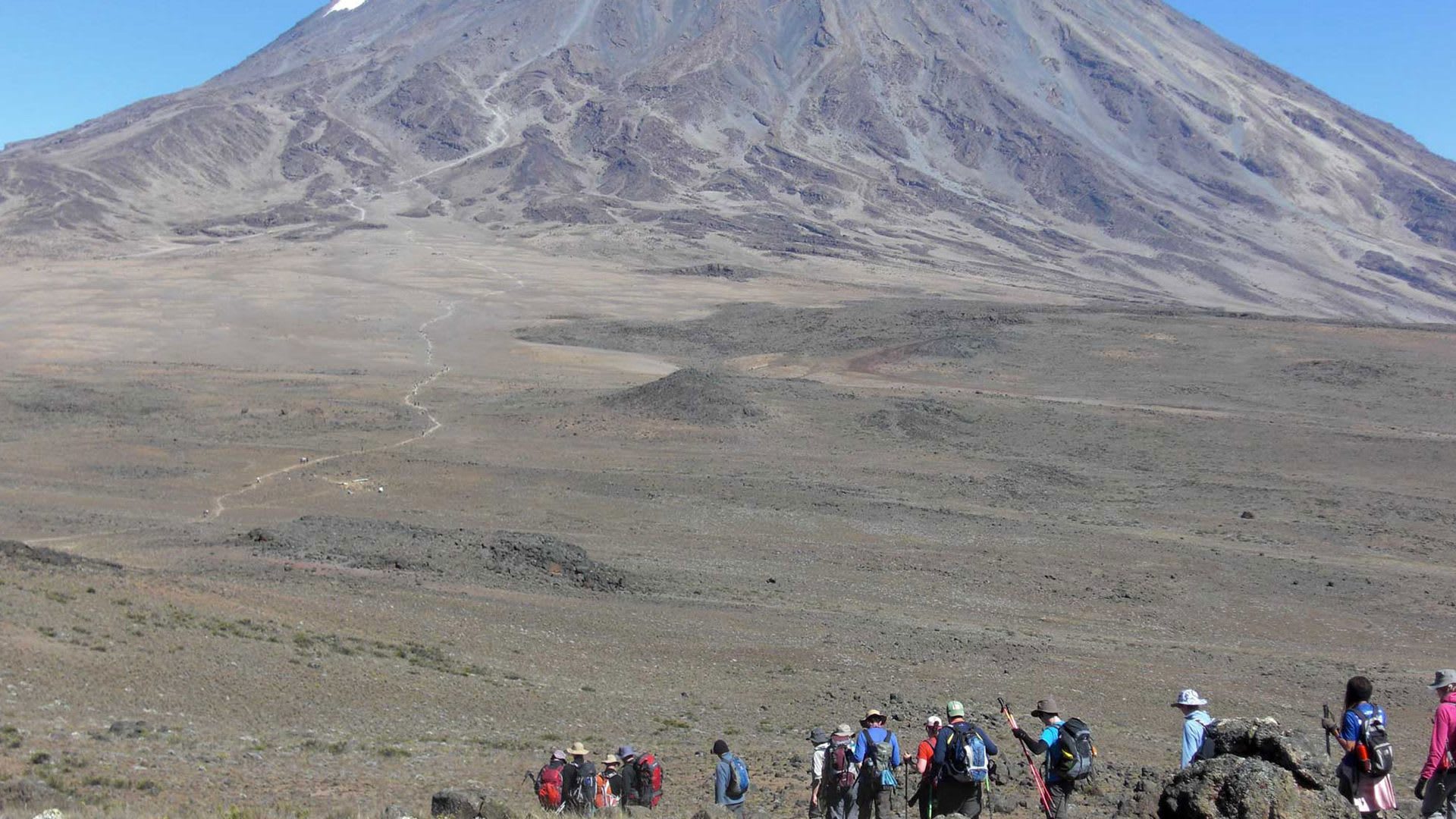
The Rongai Route passes through forest and moorland zones where you can spot Kilimanjaro colobus monkeys (endemic subspecies, commonly seen in forest canopy), African buffalo in lower regions, blue monkeys, and over 130 bird species including the scarlet-tufted sunbird, lammergeier, and malachite sunbird. Larger mammals like elephants are rare above 2,500m. The route's northern approach through less-trafficked forests increases wildlife encounter chances compared to southern routes.
Fly into Kilimanjaro International Airport (JRO), 85 km south of the gate (2-3 hour drive via Moshi). Most operators arrange airport transfers. From Moshi, drive on paved road to Marangu Gate (1.5 hours), then transfer via rough dirt road to Rongai Gate (2-3 hours, 4WD required, deteriorates in rainy season). Alternatively, fly into Arusha Airport (ARK), 120 km away (3-hour drive). All climbers must register at the gate before ascending; registration takes 1-2 hours.
Rongai Route is challenging for young children due to high altitude (summit 5,895m), thin oxygen, and cold nights (-10°C). Children under 10 are not recommended. Teenagers (14+) with prior trekking experience and good fitness can attempt it with proper acclimatization, guides, and medical supervision. Family-friendly alternatives include shorter day hikes in lower forest zones (2,000-3,000m) or combining a 3-4 day partial trek with safari add-ons. Consult your doctor before booking for children with any respiratory or cardiovascular conditions.
The standard Rongai Route trek takes 6-8 days (5-7 nights on mountain). A 6-day itinerary allows minimal acclimatization and higher altitude sickness risk; 7-8 days is recommended for better acclimatization and summit success (66% success rate on standard itinerary). Add 1-2 days pre-trek in Moshi for rest and preparation. Many operators offer 10-14 day packages combining Rongai Trek (7 days) with 3-7 day safaris to Lake Manyara, Tarangire, and Ngorongoro, maximizing your Tanzania experience.
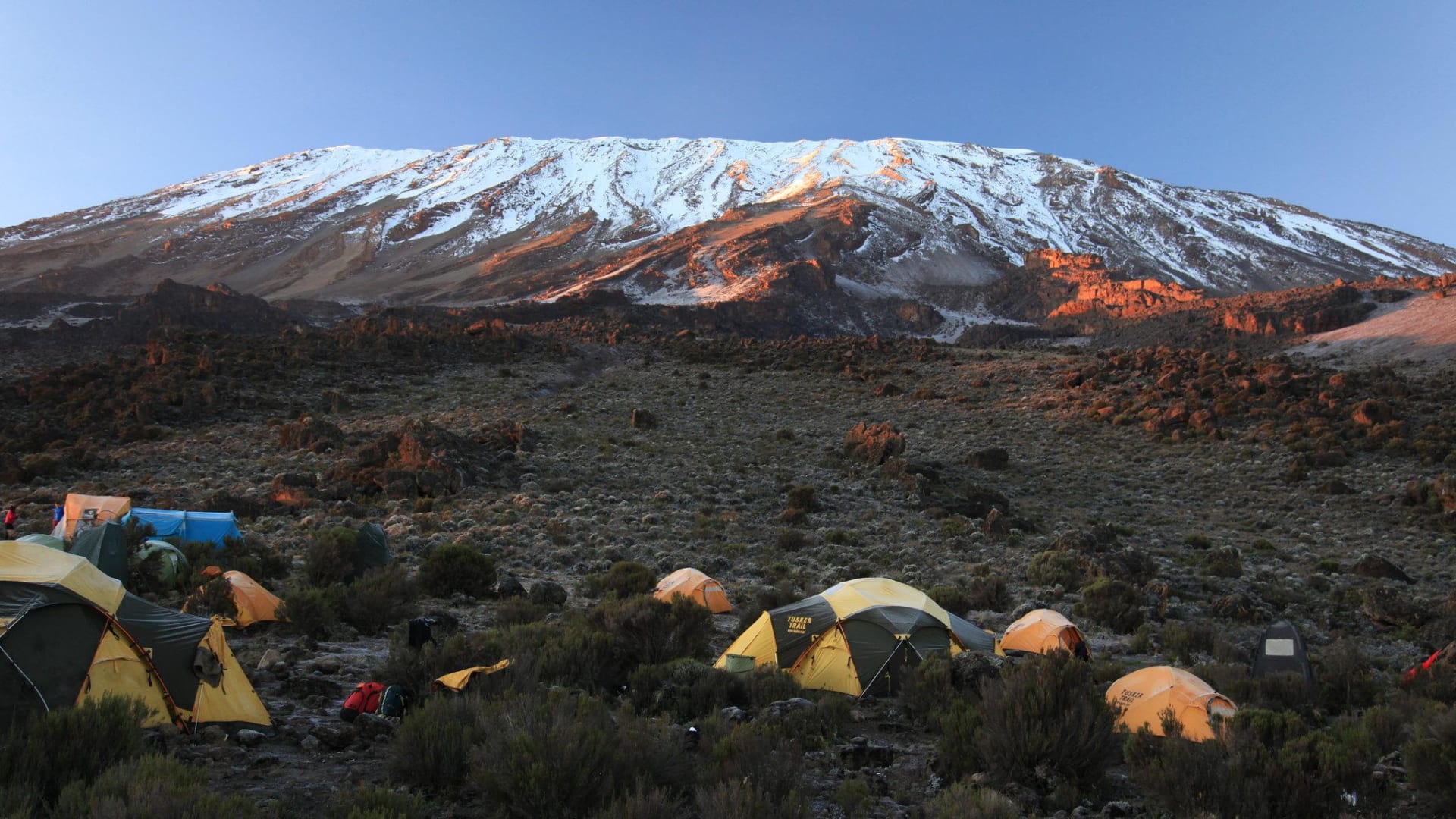
On the Rongai Route itself, all climbers camp at designated sites: Rongai Cave (Day 2, 2,600m), Kikelewa Camp (Day 3, 3,600m), Mawenzi Tarn (Day 4, 4,330m), and Kibo Hut (Day 5, 4,700m) before the summit push. All camps have toilet facilities and water sources; porters set up tents. Pre-trek, stay in Moshi (70 km south, 2-hour drive): budget options ($30-60 USD/night), mid-range lodges ($80-150 USD/night), or luxury hotels ($200+ USD/night). Post-trek recovery stays recommended due to altitude fatigue.
Yes, if you seek a less crowded Kilimanjaro experience with higher summit success (66% vs 50% on other routes). Rongai's northern approach offers gradual acclimatization, lush forest scenery, and views of the Kenyan plains—unique among Kilimanjaro routes. It suits climbers prioritizing comfort and acclimatization over speed. However, if you prefer established hut accommodation (beds instead of camping), the Marangu Route is better. Combine Rongai with a 3-7 day safari to Serengeti, Ngorongoro, or Lake Manyara for a complete Tanzania adventure.
Yes, Tanzania law requires all Kilimanjaro climbers to hire a licensed guide. Self-guided climbing is not permitted. Guides provide route navigation, safety management, altitude sickness monitoring, and emergency response. Porters (separate from guides) carry 15-20kg of equipment per climber, typically 2-3 porters per climber. A cook prepares meals at camps. This system supports local communities and ensures climber safety at high altitude. Licensed operators include guide, porter, and cook in their package pricing ($1,900-2,500 USD for 6-8 days).
You can compare safari packages and Kilimanjaro trek operators on SafariFind.com, which connects you with verified, reviewed outfitters across Tanzania. SafariFind lets you filter by budget, trek duration (6-8 days), route type (Rongai), and add-on safaris (Lake Manyara, Tarangire, Ngorongoro). Read traveler reviews and compare pricing transparently before booking. Most operators require 50% deposit (non-refundable) and final payment 30 days before departure. Book 2-3 months in advance for peak season (July-August) or 4-6 weeks for shoulder months (January-March, June).
© 2026 SafariFind. All rights reserved.

 Ask about this