African Wild Dog Conservation in Ethiopia (2026): Status
African wild dogs are Endangered and exceptionally rare in Ethiopia, where historical records span several regions but reliable current population data remain limited. Conservation priorities include landscape protection, disease prevention, prey recovery, conflict reduction and improved field monitoring.

Quick answer: The African wild dog (Lycaon pictus) is listed as Endangered and fewer than 7,000 individuals are thought to remain in the wild globally. In Ethiopia, African wild dogs have been reported from areas including Gambela, Mago, Omo, Nechisar and the Fincha’a–Dindessa Valley, but the available evidence does not support a reliable 2026 national population estimate. The country’s conservation response therefore depends on confirming where viable groups remain and protecting the connected habitats, prey and communities on which they depend.
Last reviewed August 2026. Conservation data changes — see the cited sources for the latest figures.
Why African wild dog conservation matters in Ethiopia
African wild dogs are among Africa’s most endangered large carnivores. They are highly social canids that live, hunt and raise pups cooperatively in packs. Their low population density and wide-ranging behaviour make them difficult to survey, while their dependence on extensive, connected landscapes makes them particularly vulnerable to habitat fragmentation.
Ethiopia is important because it contains a broad variety of habitats in which African wild dogs have been recorded, from savanna and shrubland to montane environments. A historical review by James R. Malcolm and Claudio Sillero-Zubiri documented reports from six Ethiopian geographic regions, including Gambela National Park, Mago National Park, Omo National Park, Nechisar National Park, Ilubabor Province and the Fincha’a–Dindessa Valley. The same review also identified records associated with the wider Ethiopian landscape, while cautioning that reports and historical observations should not automatically be treated as evidence of a current, viable population.
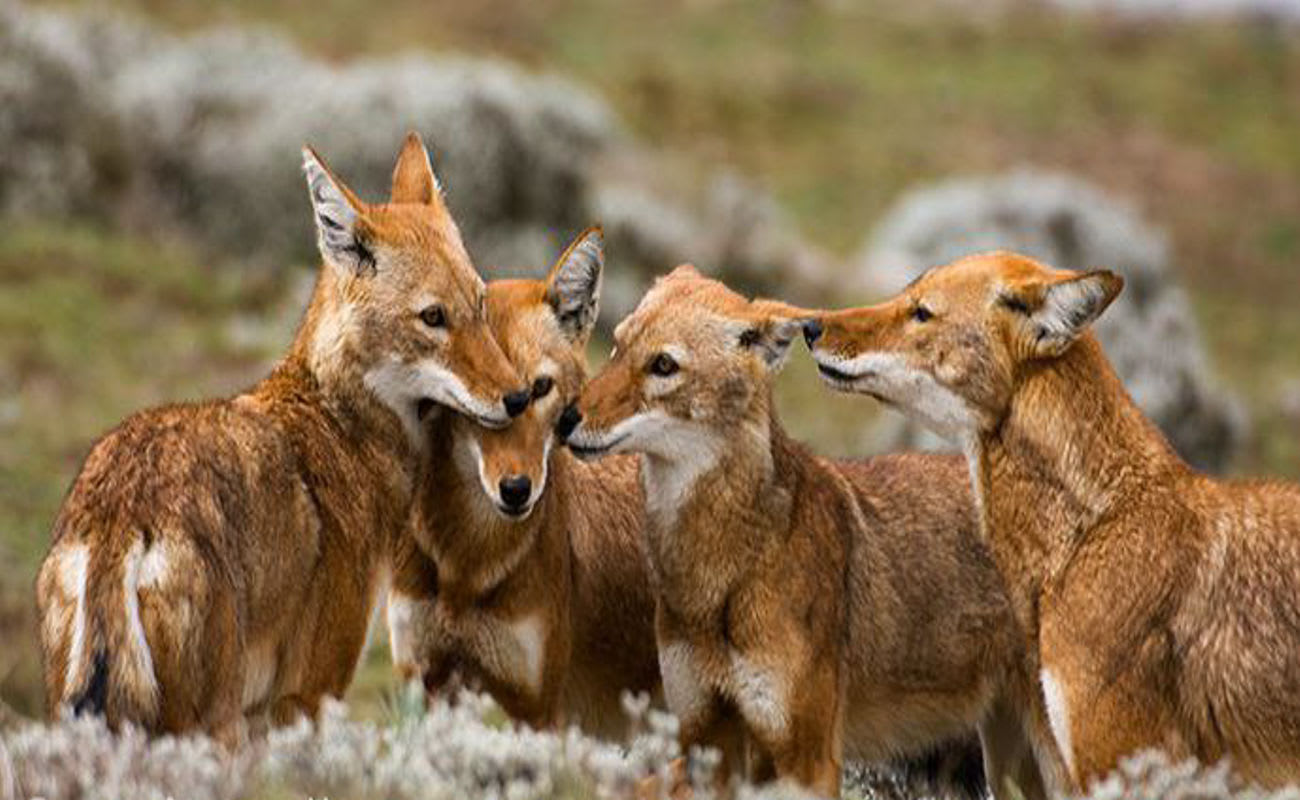
The species’ possible presence in Ethiopia is also notable because the country is better known internationally for its endemic Ethiopian wolf, another threatened canid. African wild dogs and Ethiopian wolves are different species with different ecological requirements; confusing them can lead to inaccurate wildlife reporting and poor conservation priorities. Sillero-Zubiri’s long involvement with the Ethiopian Wolf Conservation Programme, alongside Malcolm’s field experience with African wild dogs, helped provide specialist context for interpreting Ethiopian records.
Current knowledge remains incomplete. The Large Carnivore Survey of Ethiopia is a collaboration between the Ethiopian Wildlife Conservation Authority (EWCA) and the University of Oxford’s Wildlife Conservation Research Unit (WildCRU). It assesses lions, leopards, cheetahs and African wild dogs, while also collecting information on hyaenas and larger prey where they overlap with the focal species. This type of baseline work is essential: before managers can measure recovery, they need defensible information on distribution, pack presence, threats and habitat suitability.
The main threats to African wild dogs in Ethiopia
Habitat loss and fragmentation
Habitat fragmentation is the principal long-term threat identified for African wild dogs. Fragmented landscapes reduce the space available for packs, interrupt movement between suitable areas and increase the likelihood of contact with roads, livestock and domestic dogs. Because wild dogs naturally occur at low densities and travel across large areas, a park boundary alone may not protect the full habitat used by a pack.
In Ethiopia, this means conservation planning must look beyond isolated protected areas. The historical Ethiopian records cover widely separated landscapes, but the research supplied here does not establish that these areas currently contain connected or viable wild dog populations. A responsible 2026 assessment should distinguish between a confirmed resident pack, an occasional record and an unverified report.
Human–wildlife conflict and livestock losses
Wild dogs can come into conflict with pastoralists and other livestock owners when packs move through human-dominated landscapes. Retaliatory killing following livestock attacks is a recognised threat elsewhere in the species’ range, and human conflict is also identified as a major threat by WildCRU. The Ethiopian evidence supplied for this article does not quantify national livestock losses or retaliatory killings, so no national incident figure can be given.
Conflict prevention is more durable than relying only on enforcement. Measures may include improving livestock protection, identifying movement routes, communicating sightings quickly and ensuring that local people have a meaningful role in decisions affecting wildlife. These approaches are consistent with wider conservation work on large carnivores, but their effectiveness in Ethiopia must be demonstrated through local monitoring rather than assumed.
Disease from domestic dogs
Rabies and canine distemper virus can threaten African wild dogs, particularly where wild packs overlap with unvaccinated domestic dogs. Disease outbreaks are especially dangerous for small or isolated populations because one event can remove a large proportion of a pack and leave too few animals for recovery.
Disease prevention therefore needs to connect wildlife conservation with public and veterinary health. Domestic-dog vaccination, responsible dog ownership, disease surveillance and rapid reporting around protected areas can reduce the risk of transmission. The available research identifies the disease threat clearly, but it does not provide a 2026 Ethiopian vaccination total or a national count of wild-dog disease outbreaks.
Prey depletion, snares and poaching pressure
African wild dogs depend on healthy prey populations. WildCRU identifies prey depletion caused by wildlife poaching as an emerging threat to the species. Reduced prey can force packs to travel farther, increasing exposure to people, livestock, roads and competing predators.
Snares and deliberate persecution are also recognised threats in African wild-dog conservation programmes elsewhere in Africa. However, the supplied Ethiopian sources do not provide a national snare count, poaching rate or confirmed total of wild dogs killed in Ethiopia. It would therefore be misleading to attach a numerical poaching statistic to the country. The evidence supports treating illegal hunting, prey depletion and poorly controlled access as conservation risks requiring site-specific investigation.
Climate change and environmental pressure
WildCRU lists climate change among the emerging threats to African wild dogs. In practical terms, changing rainfall, water availability, vegetation and prey distribution could alter the landscapes through which packs move. The research supplied does not quantify climate-related wild-dog losses in Ethiopia, nor does it establish a direct national trend. Conservation managers should therefore combine climate monitoring with pack tracking, prey surveys and community observations rather than presenting projections as measured population decline.
What is being done to protect African wild dogs?
Country-wide surveys and evidence-based planning
The Large Carnivore Survey of Ethiopia provides the clearest research-led framework identified in the supplied sources. EWCA and WildCRU are assessing African wild dogs alongside other large carnivores and prey species. This is important because wild-dog conservation cannot be planned from sightings alone. Surveys need to establish whether animals are resident, identify denning or pack areas where possible, assess habitat suitability and record threats across both protected and community-used land.
WildCRU’s broader approach to African wild dogs includes population monitoring, updated range information and regional conservation strategies for eastern, western, central and northern Africa. For Ethiopia, improved data could clarify whether the country holds a surviving population, occasional dispersers, or several small and disconnected groups. Until that work produces published national results, the most accurate description is that Ethiopia has historical and reported records but an uncertain current status.
Protected areas and landscape conservation
Reported localities include Gambela, Mago, Omo and Nechisar national parks. These areas should not automatically be marketed as guaranteed African wild-dog viewing destinations: the supplied sources do not confirm current, habituated packs or reliable sightings in any of them.
Nevertheless, protecting national parks can help maintain the prey, cover and open habitat required by large carnivores. Park protection also needs effective boundaries, ranger capacity, ecological monitoring and cooperation with neighbouring communities. SafariFind’s guide to protecting Ethiopia’s national parks provides useful wider context for how protected-area management fits into national conservation.
Regional conservation strategies and specialist organisations
African wild dogs move across administrative boundaries, so Ethiopia’s conservation planning benefits from regional coordination. WildCRU contributed to regional conservation strategies for African wild dogs in eastern Africa and to updated species range mapping for IUCN Red List work. The IUCN Save Our Species African Wildlife Initiative, co-funded by the European Union and running from 2017 to 2027, includes African wild dogs among the threatened large carnivores it seeks to support across Africa.
These organisations do not, by themselves, prove a specific Ethiopian population increase. Their importance is in supporting coordinated science, conservation finance and approaches that address wildlife protection alongside the needs of people living with carnivores.
Reintroduction and translocation: a tool, not a shortcut
Reintroductions and translocations have been used in African wild-dog conservation elsewhere. The Endangered Wildlife Trust’s African Wild Dog Range Expansion Project, working with the Wild Dog Advisory Group since 1998, has implemented reintroductions across southern Africa. African Parks has also described wild-dog translocations as part of ecological restoration in other African protected areas.
Those examples do not mean that Ethiopia is currently conducting an African wild-dog reintroduction. No such Ethiopian programme, release total or outcome is documented in the supplied research. Any future translocation would require confirmed habitat suitability, prey security, disease risk assessment, genetic planning, long-term monitoring and agreement with affected communities. SafariFind’s article on rewilding and wildlife translocations in Ethiopia explains why moving animals is a complex ecological intervention rather than a substitute for protecting existing populations.
Community conservation and tourism’s role
Community participation is central to African wild-dog conservation because packs can range beyond formal park boundaries. Human–wildlife conflict programmes aim to reduce livestock losses and retaliatory killing, while domestic-dog health measures can benefit both people and wildlife. In Kenya, conservation research has combined GPS collars on wild dogs, domestic dogs and cattle with investigation of disease, livestock depredation and pastoralist responses. Ethiopia needs locally designed evidence of the same kind rather than copying another country’s model without adaptation.
Community conservancies can help connect wildlife protection with local priorities when governance, benefits and responsibilities are clear. SafariFind’s overview of the community conservancy model in Ethiopia offers broader background on this approach. For African wild dogs specifically, the research supplied does not report Ethiopian tourism revenue, employment totals or confirmed population gains from conservancies, so these outcomes should not be claimed.
Tourism can contribute when money reaches conservation and communities transparently, and when visits do not disturb dens, breeding packs or sensitive habitats. In Ethiopia, travellers should not expect an African wild dog sighting simply because a park has historical records. A responsible wildlife safari should prioritise accurate interpretation, low-impact viewing and support for operators that can explain where fees go. Travellers can book conservation-supporting safaris on SafariFind, while checking the operator’s conservation claims and local partnerships before paying.
Results and setbacks: what the evidence really shows
| Evidence area | What the research supports | What remains unknown |
|---|---|---|
| Global status | Fewer than 7,000 African wild dogs are thought to remain in the wild, and the species is Endangered. | The supplied sources use different global estimates, so figures should be treated as estimates rather than a precise census. |
| Ethiopian distribution | Historical and reported records include Gambela, Mago, Omo, Nechisar, Ilubabor and Fincha’a–Dindessa. | There is no reliable 2026 national population estimate in the supplied research. |
| Survey capacity | EWCA and WildCRU are assessing African wild dogs within a national large-carnivore survey. | Published Ethiopian results, pack counts and trend data are not provided here. |
| Principal threats | Habitat fragmentation, human conflict, disease, prey depletion, poaching pressure and climate change are recognised risks. | The supplied research does not quantify Ethiopia-specific mortality for these threats. |
| Conservation tools | Monitoring, disease prevention, protected-area management, community engagement and carefully planned translocations are established approaches. | No Ethiopian wild-dog release result or verified national recovery outcome is documented here. |
The central conservation setback is not necessarily proven national decline in a measured Ethiopian population; it is the lack of current, systematic information. WildCRU’s pre-project context suggested that African wild dogs in Ethiopia may number fewer than 200, but that statement was based on limited opportunistic data and is not a 2026 census. It should be used as a warning about possible rarity, not as a current official total.
The clearest progress is institutional: EWCA and WildCRU have established a dedicated large-carnivore survey framework, while international conservation strategies recognise the need to protect African wild dogs across landscapes rather than in isolated fragments. The next test is whether monitoring converts records into repeatable evidence of pack presence, threats and population trend.
How travellers can help responsibly
- Choose accurate operators. Ask whether a safari provider has recent, verifiable evidence of African wild dogs in the destination. Do not treat an old record as a guaranteed sighting.
- Support local conservation. Prefer trips that explain park fees, community benefits, ranger support or wildlife monitoring transparently. Avoid claims that cannot be linked to a named organisation or programme.
- Respect wildlife space. Never request a vehicle approach to a den, block a pack’s route or encourage guides to chase animals for photographs.
- Protect disease barriers. Follow guidance on contact with domestic animals and wildlife, and do not feed or handle wild animals.
- Report responsibly. Share unusual sightings with park authorities or recognised research teams rather than publishing den locations publicly.
- Broaden your conservation interest. African wild-dog protection is connected to prey conservation, habitat corridors, community livelihoods and disease control. Supporting work on other Ethiopian carnivores, including the Ethiopian wolf and cheetah, can strengthen the wider conservation system.
African wild dog conservation in Ethiopia in 2026 is best described as an evidence-building and landscape-protection challenge. The species has a documented history in several Ethiopian regions, but current abundance and distribution remain uncertain. Protecting connected habitat, reducing contact with domestic dogs and livestock, maintaining prey populations and supporting EWCA–WildCRU monitoring offer the most credible route toward understanding—and potentially improving—the species’ future in Ethiopia.
Frequently Asked Questions
Are African wild dogs found in Ethiopia?
African wild dogs have been reported in several Ethiopian regions, including Gambela, Mago, Omo, Nechisar, Ilubabor and the Fincha’a–Dindessa Valley. However, the supplied research does not confirm a reliable 2026 national population estimate or guaranteed viewing site.
What is the conservation status of the African wild dog?
The African wild dog is listed as Endangered, with fewer than 7,000 individuals thought to remain in the wild globally.
How many African wild dogs are left in Ethiopia?
There is no reliable 2026 Ethiopian population estimate in the supplied research. WildCRU previously reported that limited opportunistic data suggested fewer than 200, but that is not a current census.
What are the main threats to African wild dogs in Ethiopia?
The main recognised threats are habitat fragmentation, human–wildlife conflict, rabies and canine distemper, prey depletion linked to poaching, snares and climate change.
Can I see African wild dogs on an Ethiopia wildlife safari?
Sightings should not be assumed. Although historical records exist from several Ethiopian parks and regions, the supplied research does not identify a destination with reliable, habituated African wild-dog viewing.
Why is disease dangerous for African wild dogs?
Rabies and canine distemper can spread from domestic dogs to wild packs. Outbreaks are particularly serious for small or isolated populations because they can remove many animals at once.
How does habitat fragmentation affect African wild dogs?
Fragmentation reduces connected space, interrupts movement and increases contact with roads, livestock, domestic dogs and people. Wild dogs are especially vulnerable because they range widely and occur at low densities.
Is Ethiopia reintroducing African wild dogs in 2026?
The supplied research does not document an Ethiopian African wild-dog reintroduction or release programme in 2026. Translocations are used elsewhere, but any Ethiopian release would require habitat, prey, disease, genetic and community assessments.
How can tourists help African wild dog conservation in Ethiopia?
Choose operators that provide transparent conservation and community information, follow low-impact wildlife-viewing rules, avoid sharing den locations and support legitimate park or research programmes.
What organisation is surveying African wild dogs in Ethiopia?
The Large Carnivore Survey of Ethiopia is a collaboration between the Ethiopian Wildlife Conservation Authority and the University of Oxford’s Wildlife Conservation Research Unit, or WildCRU.
V2Ui.sources
- African Wild Dogs Return to Matusadona National Park After Decades of Local Extinction(official)
- Recent records of African wild dogs (Lycaon pictus) from Ethiopia
- African wild dogs - WildCRU
- Large carnivore survey of Ethiopia - WildCRU
- The effect of protected areas on pathogen exposure in endangered African wild dog (Lycaon pictus) populations(official)
- African Wild Dogs return to Malawi(official)
- SOS African Wildlife Initiative
- African Wild Dogs Return to Matusadona National Park After Decades of Local Extinction(official)
- Protecting the pack: African wild dog conservation in Kenya
Related to
Ready to start your safari adventure?
Explore curated safari packages and find your perfect African adventure with verified operators.