Black Rhino Conservation in Botswana 2026
Botswana's black rhino population has recovered from local extinction in 1992 to approximately 25 animals today, thanks to reintroduction and intensive protection efforts. Yet poaching and habitat fragmentation remain critical threats to this critically endangered species.

Quick Answer: Black Rhino Status in Botswana 2026
Botswana is home to an estimated 25 black rhinos as of late 2024, all reintroduced since the early 2000s after the species was locally extinct. The population remains critically endangered across Africa, with only 6,788 individuals surviving in 12 range countries. Intensive anti-poaching patrols, translocation programmes, and partnership-based management have stabilised Botswana's small population, but ongoing threats from poaching and habitat loss demand sustained commitment.
Why Black Rhinos Matter in Botswana
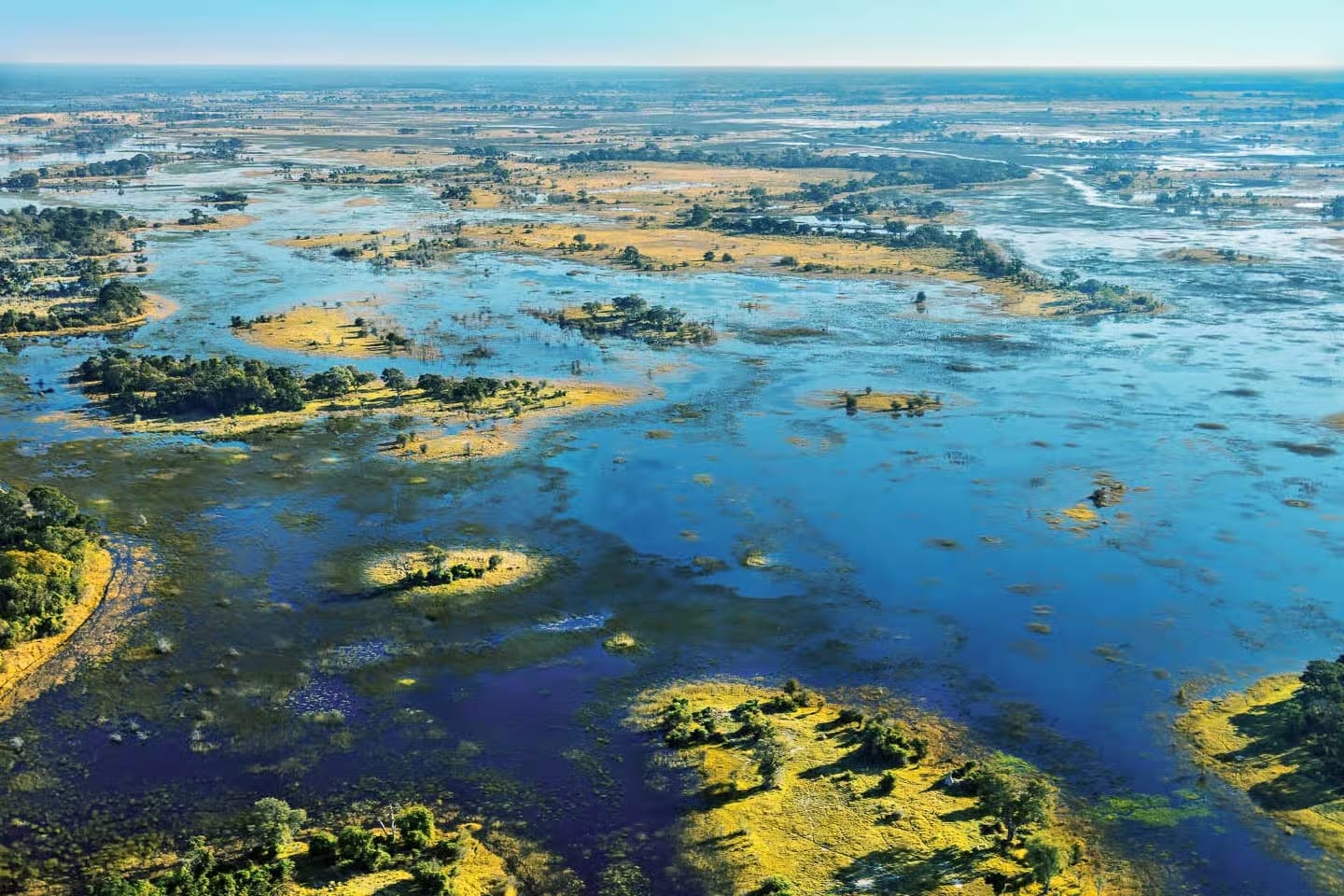
The black rhino (Diceros bicornis) is a browser—a solitary, territorial animal that uses its distinctive hooked upper lip to grasp leaves and branches in woodland and shrubland habitats. Historically, black rhinos roamed across most of sub-Saharan Africa; by 1970, an estimated 65,000 remained in the wild. The Okavango Delta, Botswana's iconic wetland and safari destination, once supported a thriving black rhino population until poaching eliminated the species entirely by 1992.
Today, the Okavango Delta's black rhino reintroduction represents one of Africa's most significant conservation reversals. These animals are not merely symbols of wilderness; they are keystone browsers whose feeding ecology shapes savanna structure and biodiversity. For Botswana's tourism sector and global conservation credibility, black rhino recovery is a flagship achievement.
The Collapse: From Thousands to Extinction (1960–1992)
Between 1960 and 1995, black rhino populations across Africa declined by an estimated 98%, driven primarily by industrial-scale poaching for international horn trade. In Botswana, the last native black rhino was shot in 1992 after a century of unregulated hunting. By the mid-1990s, fewer than 2,500 black rhinos survived globally—a catastrophic bottleneck.
The primary driver was demand for rhino horn in Asian markets, where it was valued as traditional medicine despite having no proven medicinal efficacy (horn is composed of keratin, the same protein in human fingernails). More recently, horn has been marketed as a status symbol and false cure for ailments ranging from hangovers to cancer, fuelling continued illegal trade.
Current Threats to Black Rhinos in Botswana
Poaching for Illegal Horn Trade
Poaching remains the primary threat to black rhinos across Africa and in Botswana. While global black rhino poaching peaked in 2015 and has declined since, the threat persists. In Botswana specifically, reported poaching increased sharply during the 2018–2020 period: 18 rhinos in 2018, 31 in 2019, and 55 in 2020. The Government of Botswana has not released official poaching figures for 2021–2022, though anecdotal reports of continued poaching have emerged. By the end of 2024, Botswana recorded 15 rhino poaching incidents across both white and black rhinos combined.
The small population size in Botswana—fewer than 20 black rhinos in the Okavango Delta—means that even a single poaching incident represents a proportionally severe loss.
Habitat Fragmentation and Loss
Beyond poaching, habitat loss and fragmentation pose mounting challenges. Black rhinos require large home ranges with adequate woody vegetation and water access. Human population growth, agricultural expansion, and settlement in and around protected areas have reduced available habitat and isolated remaining populations into high-density clusters. These fragmented populations face slower growth rates, increased disease transmission risk, and reduced genetic diversity.
By 2122, projected environmental and demographic changes suggest that suitable habitat for black rhinos in Africa may accommodate only 21,000 animals—less than 20% of the estimated 113,000 that roamed the continent in 1880.
Pandemic-Related Funding and Enforcement Gaps
The COVID-19 pandemic created secondary threats to conservation. Lockdowns and travel restrictions disrupted ecotourism revenue, which funds ranger patrols, anti-poaching operations, and community engagement programmes. Some wildlife-dependent communities resorted to illegal hunting for subsistence during pandemic lockdowns. Although conservation funding has largely recovered, the episode exposed the fragility of tourism-dependent protection models.
Botswana's Black Rhino Reintroduction: A Conservation Pathway
The Botswana Rhino Reintroduction Project (2000–Present)
In 2000, tourism company Wilderness Safaris and the Botswana Department of Wildlife and National Parks established the Botswana Rhino Reintroduction Project to restore both black and white rhinos to the Okavango Delta. This landmark initiative reversed a local extinction—a conservation success story demonstrating that species recovery is possible if habitat and protection remain available.
The project began by translocating black rhinos from South Africa and Zimbabwe, where larger, more stable populations existed. Over more than two decades, "well over 100 animals" have been translocated into Botswana, with exponential population growth driven by breeding success. These reintroduced rhinos are monitored intensively through GPS tracking, ranger patrols, and environmental intelligence gathering (water and feeding locations, seasonal movements, threat assessment).
Multi-Stakeholder Coordination
Rhino translocation and management in Botswana involves up to 15 different stakeholders, including government agencies (Botswana Department of Wildlife and National Parks, Botswana Defence Force), international NGOs, private conservancies, and research institutions. The African Rhino Specialist Group (AfRSG) of the IUCN Species Survival Commission provides regional coordination and evidence-based guidance. This multi-partner model ensures that reintroduced populations are monitored, protected, and managed adaptively as new threats emerge.
Rhino Conservation Botswana (RCB)
In recent years, the newly established organisation Rhino Conservation Botswana has intensified focus on population monitoring and expansion in the Okavango Delta. RCB partners with the governments of Botswana, South Africa, and Zimbabwe, as well as Wilderness Safaris, to ensure that breeding populations grow safely and expand into suitable habitat.
Security and Anti-Poaching Operations
Protection of Botswana's black rhinos relies on armed anti-poaching patrols and military-level security. The Botswana Defence Force provides security for both white and black rhino populations. Ranger teams conduct daily patrols, gather intelligence on poaching threats (footprints, horse tracks, suspicious activity), and coordinate with security services to intercept threats before they reach rhinos.
For a detailed breakdown of Botswana's anti-poaching strategy, technology, and recent outcomes, see our guide to anti-poaching in Botswana 2026.
Continental Context: African Black Rhino Recovery
Botswana's efforts must be understood within the broader African black rhino narrative. Across the continent, black rhino numbers have rebounded from a low of approximately 2,500 in the mid-1990s to over 6,500 today—a recovery of roughly 28% over the past decade. This recovery is "very much down to the intense protection and management of black rhino populations across state parks and privately run conservancies."
By subspecies and region, the recovery shows variation:
- South-western black rhinos (D. b. bicornis): 2,597 individuals; conservation efforts have added 2,412 animals since baseline assessments.
- Eastern black rhinos (D. b. michaeli): 1,471 individuals; conservation gains of 1,316 animals.
- South-central black rhinos (D. b. minor): 2,720 individuals; conservation gains of 2,463 animals.
However, these gains are fragile. If conservation efforts were stopped, populations would collapse: south-western numbers would fall to 2,217 by 2032, south-central to 942, and eastern to just 193. Botswana's small population is heavily dependent on sustained protection and management.
Population Projections and Conservation Gain
The IUCN's most recent assessment offers cautious optimism. If current conservation management efforts are maintained, black rhino populations across Africa could grow to approximately 8,943 by 2032—a conservation gain of 2,456 animals over the current baseline. This projection assumes sustained funding, anti-poaching operations, habitat management, and transnational coordination.
For Botswana specifically, achieving these gains depends on expanding suitable habitat, managing translocation corridors, and preventing poaching incidents in the Okavango Delta and adjacent protected areas.
Habitat Management and Population Expansion
To ensure long-term recovery, conservation programmes are working to establish new black rhino populations in low-density areas with suitable habitat. This approach addresses the problem of isolated, high-density populations, which show slow growth rates and elevated disease transmission risk. Strategic translocations from well-managed populations in South Africa and Zimbabwe to Botswana and other range countries support genetic diversity and demographic resilience.
The Okavango Delta and adjacent private conservancies in Botswana offer suitable habitat—woodland and wetland mosaics with adequate browse and water—but only if human settlements and agricultural expansion are managed to maintain wildlife corridors.
The Role of Tourism and Safari Conservation
Botswana's black rhino recovery is intrinsically linked to the country's safari and ecotourism sector. Tourism revenue funds ranger salaries, anti-poaching patrols, veterinary care, and community engagement programmes that reduce human-wildlife conflict and poaching pressure. High-value, low-impact tourism in the Okavango Delta incentivises local communities and government to prioritise rhino protection over alternative land uses.
Visitors who book conservation-focused safaris through responsible operators directly support these efforts. On SafariFind, you can browse Botswana safari lodges 2026 that partner with conservation programmes and contribute a portion of proceeds to anti-poaching and habitat management.
Tourism also generates demand reduction awareness. Many safari operators and lodges run education programmes for international visitors, raising awareness of rhino conservation challenges and building political will for continued protection in range countries.
Successes and Ongoing Challenges
Successes
- Local extinction reversed: From zero black rhinos in 1992 to an estimated 25 by 2024—a tangible recovery achieved through coordinated reintroduction.
- Breeding population established: Reintroduced rhinos are breeding successfully, with population growth driven by reproduction rather than translocation alone.
- Multi-stakeholder coordination: The Botswana Rhino Reintroduction Project demonstrates that complex, transnational conservation can work when governments, NGOs, private sector, and research institutions align.
- Continental recovery momentum: African black rhino numbers have doubled from their historic low, showing that intensive protection delivers measurable results.
Ongoing Challenges
- Small population size and genetic bottleneck: With only 25 black rhinos in Botswana, the population remains vulnerable to stochastic events (disease, drought, poaching surges). All descend from a limited founder pool, reducing genetic diversity.
- Continued poaching pressure: Although global poaching peaked in 2015, incidents continue. Botswana's small population means even isolated poaching events represent significant proportional losses.
- Habitat fragmentation: Human settlement and agricultural expansion continue to reduce available habitat and isolate populations.
- Funding volatility: Conservation depends heavily on tourism revenue and donor funding, both vulnerable to economic downturns and global shocks (as COVID-19 demonstrated).
- Data transparency gaps: Botswana has not released official poaching figures for 2021–2022, making current threat assessment difficult.
What Travellers Can Do to Support Black Rhino Conservation
Book Responsible Safaris
Choose safari operators and lodges that actively support conservation. Many Botswana lodges, particularly in the Okavango Delta, partner directly with anti-poaching programmes and habitat management initiatives. Ask operators about their conservation commitments before booking.
Support Conservation Organisations
Donate to or volunteer with organisations working on black rhino conservation in Botswana and Africa, such as Save the Rhino International, the African Rhino Specialist Group, Wilderness Safaris' conservation initiatives, and Rhino Conservation Botswana.
Reduce Demand for Rhino Horn
Avoid purchasing rhino horn products or derivatives. Educate others about the ineffectiveness of rhino horn in traditional medicine and its role in fuelling poaching. Support demand-reduction campaigns in Asian markets.
Advocate for Policy and Enforcement
Support policies that strengthen anti-poaching enforcement, protect habitat, and fund conservation programmes in Botswana and across Africa. Engage with international bodies (CITES, IUCN) to ensure that rhino conservation remains a priority.
Plan Your Botswana Visit Responsibly
If you're planning a safari to see black rhinos or other wildlife in Botswana, review our guides on the best time to visit Botswana for wildlife viewing, safari costs and budgeting, and visa requirements for your nationality (e.g., Botswana visa for New Zealand citizens). Responsible travel planning ensures that your visit supports conservation and minimises environmental impact.
Looking Ahead: 2026 and Beyond
The IUCN's 2025–2035 strategic framework for African rhino conservation emphasises that future success depends on moving beyond purely national management to regional and continental coordination. Botswana's black rhino programme exemplifies this: reintroductions depend on source populations in South Africa and Zimbabwe, and long-term viability requires transnational habitat corridors and shared anti-poaching intelligence.
By 2032, if current efforts continue, Africa's black rhino population could exceed 8,900. Botswana's role in this recovery is modest in absolute terms (25 animals) but symbolically significant—proof that even locally extinct species can be restored. Sustaining this recovery requires sustained funding, political will, and global commitment to reducing demand for rhino horn.
Last reviewed July 2026. Conservation data changes — see the cited sources for the latest figures.
 Ask Tembo about this guide
Frequently Asked Questions
How many black rhinos are in Botswana?
As of late 2024, Botswana is home to approximately 25 black rhinos, all of which were reintroduced since the early 2000s. The species was locally extinct in 1992 after the last native black rhino was killed by poachers. These reintroduced animals are concentrated in the Okavango Delta and are managed through the Botswana Rhino Reintroduction Project.
Why were black rhinos extinct in Botswana?
Black rhinos were hunted to extinction in Botswana by 1992 due to unregulated poaching for their horns, which were sold on illegal international markets. This reflected a continent-wide collapse: between 1960 and 1995, African black rhino populations declined by 98%, from an estimated 65,000 to fewer than 2,500 individuals.
Are black rhinos still being poached in Botswana?
Yes. Reported poaching incidents in Botswana increased from 18 rhinos in 2018 to 31 in 2019 and 55 in 2020 (across both black and white rhinos combined). By late 2024, Botswana recorded 15 rhino poaching incidents. Although global poaching peaked in 2015 and has declined, the small Botswana population means even isolated incidents represent significant losses.
What organisations are protecting black rhinos in Botswana?
Multiple organisations coordinate black rhino protection in Botswana, including the Botswana Department of Wildlife and National Parks, the Botswana Defence Force (which provides armed security), Wilderness Safaris, the African Rhino Specialist Group (IUCN), Save the Rhino International, and the recently established Rhino Conservation Botswana. Up to 15 stakeholders may be involved in management and translocation operations.
How did black rhinos return to Botswana?
The Botswana Rhino Reintroduction Project, established in 2000 by Wilderness Safaris and the Botswana Department of Wildlife and National Parks, translocated black rhinos from South Africa and Zimbabwe into the Okavango Delta. Over 100 animals have been moved, and the population has grown through breeding success. This reintroduction has restored a species that was locally extinct for a decade.
What threatens black rhino survival in Botswana beyond poaching?
Habitat fragmentation and loss are critical secondary threats. Black rhinos require large home ranges with adequate woody vegetation and water. Human population growth, agricultural expansion, and settlement reduce available habitat and isolate populations into small clusters with slow growth rates and elevated disease transmission risk. By 2122, projected habitat loss may reduce suitable range for African black rhinos to only 21,000 animals continent-wide.
Could Botswana's black rhino population go extinct again?
Yes, the population remains vulnerable. With only 25 individuals, Botswana's black rhinos face extinction risk from poaching surges, disease, or environmental shocks. Genetic bottlenecking (all animals descend from a limited founder pool) also reduces adaptability. However, the IUCN projects that if conservation efforts continue, African black rhino numbers could exceed 8,900 by 2032, providing a pathway for Botswana's population to grow if protection is sustained.
How does tourism support black rhino conservation in Botswana?
Safari tourism generates revenue that funds ranger patrols, anti-poaching operations, veterinary care, and community engagement programmes. Many Botswana lodges, particularly in the Okavango Delta, partner with conservation initiatives and contribute a portion of proceeds to rhino protection. Responsible safari tourism creates economic incentives for communities and government to prioritise rhino protection over alternative land uses.
What is rhino horn used for, and why is poaching still a problem?
Rhino horn is composed of keratin (the same protein in human fingernails) and has no proven medicinal value. However, it has long been used in traditional Asian medicine and is increasingly marketed as a false cure for hangovers, cancer, and other ailments, as well as a status symbol. Demand in Asian markets, particularly Vietnam and China, continues to fuel poaching despite global awareness campaigns.
What is the African Rhino Specialist Group?
The African Rhino Specialist Group (AfRSG) is a committee of the IUCN Species Survival Commission that coordinates rhino conservation policy, research, and management across Africa. Led by PhD-level experts (including Chair Dave Balfour), the AfRSG develops regional and continental conservation strategies, monitors populations, and provides evidence-based guidance to range states like Botswana.
Could black rhinos be reintroduced to other parts of Botswana?
Yes. Conservation strategies focus on expanding black rhino range beyond the Okavango Delta into low-density areas with suitable habitat. This approach reduces the risk of isolated, high-density populations and supports genetic diversity. However, habitat fragmentation and human settlement limit available space. Future reintroductions depend on securing wildlife corridors and managing human-wildlife coexistence.
How can I support black rhino conservation when visiting Botswana?
Book safaris with operators that actively support conservation and ask about their anti-poaching and habitat management partnerships. Donate to conservation organisations like Save the Rhino International or Rhino Conservation Botswana. Avoid purchasing rhino horn products and educate others about its ineffectiveness. Support policies that strengthen anti-poaching enforcement and protect habitat in Botswana and across Africa.
Sources
- Botswana is evacuating black rhinos amid poaching threat | National Geographic
- 2025 State of the Rhino
- About Black Rhinos | Black Rhino Conservation
- The Black Rhino: The Past, the Present and the Future - Helping Rhinos
- Rhino Conservation | BBC StoryWorks
- Rhino Conservation in Africa
- Black Rhino | WWF
- African rhino conservation 2025–2035
- About Black Rhinos | Black Rhino Conservation
- Black Rhino - Tusk
- Black Rhino - Tusk
- RHINOCEROS POACHING IN BOTSWANA
- The Black Rhino: The Past, the Present and the Future - Helping Rhinos
- Black Rhino | WWF
- Measuring success and potential recovery | Save the Rhino International
- An analysis of threats, strategies, and opportunities for African rhinoceros conservation(official)
- Rhino Conservation | BBC StoryWorks
- African rhino conservation 2025–2035
- Rhino Conservation Botswana | Fondation Segré
- The Black Rhino: The Past, the Present and the Future - Helping Rhinos
- The Black Rhino: The Past, the Present and the Future - Helping Rhinos
- Measuring success and potential recovery | Save the Rhino International
- 2025 State of the Rhino
- Our Impact | Impact Report | Save the Rhino International
Related to
Ready to start your safari adventure?
Explore curated safari packages and find your perfect African adventure with verified operators.