Human–Wildlife Conflict in Tanzania: Conservation in 2026
Human–wildlife conflict in Tanzania affects farmers, pastoralists, wildlife and conservation programmes, especially where people and animals compete for land, crops, livestock and water. Tanzania is expanding community-based mitigation, corridor planning and legal responses, but coexistence remains tied to fair land governance and effective compensation.
Quick answer: Human–wildlife conflict in Tanzania is driven mainly by competition for land, crops, livestock, water and wildlife habitat. Elephants and buffalo can damage crops; lions and hyenas may kill livestock; crocodiles can threaten people using rivers and lakes; and conflict can result in deaths of both people and animals. Tanzania's response includes community-based conservation, wildlife corridors, trained conflict officers, non-lethal deterrents, rapid-response teams and compensation provisions under the amended Wildlife Conservation Act.
Last reviewed July 2026. Conservation data changes — see the cited sources for the latest figures.
Why human–wildlife conflict matters in Tanzania
Tanzania contains internationally important wildlife landscapes, including the Serengeti, Ngorongoro, Mkomazi, Tarangire, Ruaha–Rungwa and the Selous–Nyerere ecosystem. Communities live alongside protected areas, wildlife corridors and other natural-resource landscapes, while agriculture, livestock keeping, settlement and infrastructure continue to shape land use.
The conflict is not limited to one species or one type of community. African elephants may raid crops; African buffalo can damage fields and injure people; lions, leopards and spotted hyenas may prey on livestock; hippopotamuses and crocodiles can create serious risks near water; and wildlife movement through farms or grazing areas can produce repeated losses.
For households, a single incident can mean lost food, damaged crops, injured family members or the death of valuable livestock. For wildlife, retaliation, habitat fragmentation and blocked movement routes can increase mortality and reduce the space available for seasonal movement. The result is a conservation challenge and a livelihood, safety and governance challenge at the same time.
The main threats driving conflict
Habitat loss and blocked wildlife corridors
Wildlife corridors connect habitats that would otherwise become separated by agriculture, settlement, roads and other infrastructure. Tanzania's national corridor assessment identifies conversion to agriculture and settlement, human influence in buffer areas and infrastructure density as important vulnerability criteria. The assessment also records human–wildlife-conflict incidents for individual corridors during 2017–2020.
The Kilombero–Uzungwa Scarp Corridor illustrates the pressure that land conversion can create: the assessment records 14,705 hectares for the corridor and reports that 80% was converted, including 11,045 hectares of agriculture and 679 hectares of settlement. It also records 33 human–wildlife-conflict incidents between 2017 and 2020. These figures describe that assessed corridor, not Tanzania as a whole, and should not be presented as a national conflict total.
When movement routes narrow, animals may encounter farms, livestock and villages more frequently. Corridor conservation therefore matters not only for wildlife connectivity but also for reducing the likelihood that animals will use human-dominated areas to reach food, water or seasonal habitat.
Crop damage and resource competition
Research around the Ngorongoro Conservation Area found that resource competition was the main factor associated with human–African buffalo conflict in the surveyed villages of Kambi ya Simba, Oldeani and Tloma. The study surveyed 131 households and found that crop damage, particularly during wet seasons, and human casualties were among the most frequently reported impacts.
In practical terms, conflict can intensify where farming, livestock grazing and wildlife depend on overlapping land or water resources. African People & Wildlife reports that, in the Ngorongoro landscape, settlements, farming, competition for grazing and water, tourism infrastructure and poaching all threaten elephant habitat.
Livestock depredation and retaliation
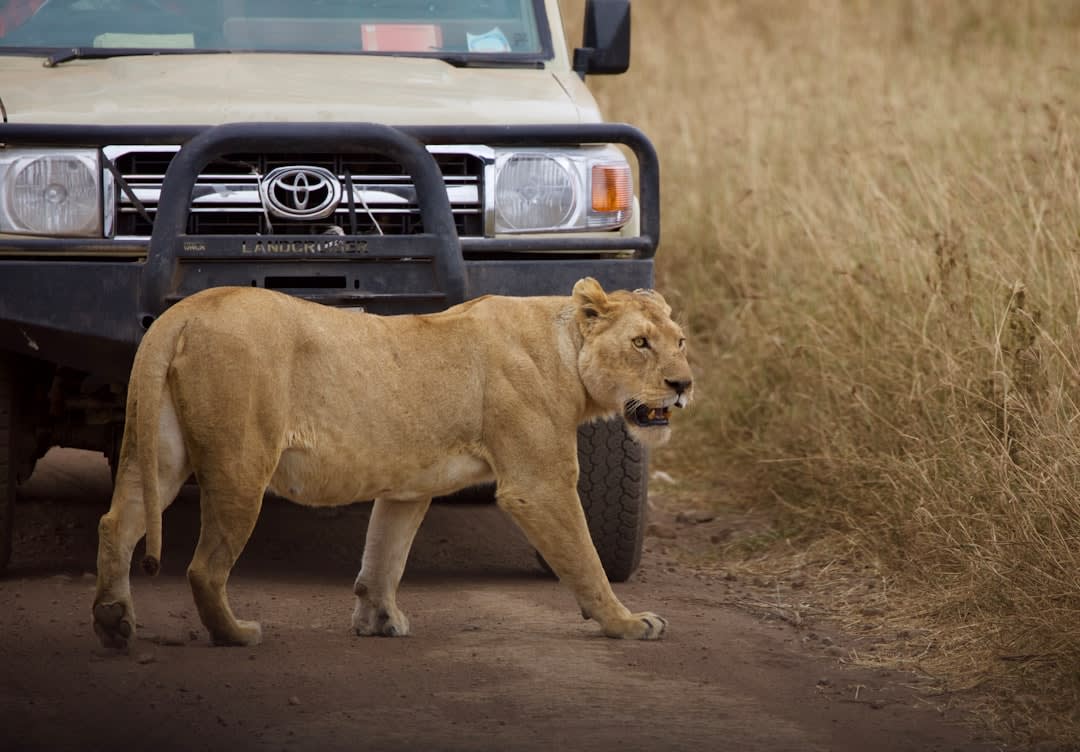
Predators create a different form of conflict from crop-raiding herbivores. Lions and hyenas can kill livestock, while leopard predation can also affect rural livelihoods. The Conservation Law Center identifies livestock losses to lions and hyenas as a serious concern for Tanzanian communities.
Where livestock losses are not addressed fairly or quickly, households may lose confidence in conservation and may retaliate against predators. This is why predator coexistence programmes, livestock protection, reliable reporting and workable compensation systems must operate together rather than as isolated interventions. The Wildlife Conservation Act was amended in 2022 to authorise financial compensation for landowners affected by human–wildlife conflict, including livestock losses from lion predation.
Climate and changing access to resources
Climate change can alter the distribution and availability of water, grazing and food, increasing competition between people and wildlife in already crowded landscapes. The research supplied for this article identifies climate change, habitat fragmentation and competition for resources as important conservation and coexistence concerns, although it does not provide a single national climate-related conflict statistic for Tanzania.
How Tanzania is responding in 2026
Community-based conservation and wildlife management areas
Tanzania uses community-based resource-management programmes to conserve and, in some cases, sustainably use natural resources. Wildlife management areas are established by local communities, creating a framework in which local governance and wildlife protection can be connected.
The corridor action plan describes community-based mechanisms as fundamental to safeguarding wildlife corridors. Its proposed actions include community improvements and empowerment, local participation, education materials and communication about how communities can benefit from corridor conservation.
This approach recognises that protected-area boundaries alone cannot manage animals that move across village lands, grazing areas and migration routes. It also makes conservation outcomes dependent on participation, transparent land-use planning, credible local institutions and benefits that communities can see and trust.
Conflict officers, rapid response and field data
African People & Wildlife has trained nine new human–wildlife-conflict officers to work around Mkomazi National Park, where incidents involving big cats and elephants require responses on communal lands. The officers use mobile forms to collect data, helping identify hotspots and guide deployment of personnel and mitigation measures.
In Ngorongoro, APW has also trained nine human–elephant-conflict officers known as Warriors for Wildlife. Their training includes conservation awareness, field data collection and use of the Survey123 application. The programme's stated purpose is to help officers track conflict, identify wildlife corridors and support coexistence in agricultural areas.
Global Conservation supports a project implemented by APW that combines rapid-response anti-poaching teams with human–wildlife-conflict mitigation officers in the Ngorongoro Conservation Area. The project is described as working with the Ngorongoro Conservation Area Authority and local communities.
Non-lethal deterrents
Mitigation tools must be matched to the species, landscape and local livelihood. African Wildlife Foundation describes community demonstrations involving pressure horns, flashlights, chili bombs and beehive fences to help farming families prevent crop raids.
Living Walls are another APW approach referenced in its Mkomazi work. The organisation describes using conflict data to guide decisions about where these livestock-protection structures are needed. Such tools are not a universal solution: their effectiveness depends on maintenance, correct placement, local participation and a response system for incidents that deterrents cannot prevent.
Law, compensation and institutional policy
Compensation is one part of the legal response. The 2022 amendment to Tanzania's Wildlife Conservation Act authorises financial compensation for affected landowners, including some losses caused by wildlife predation. In practice, compensation systems must be accessible, timely and trusted if they are to reduce pressure for retaliation.
The Conservation Law Center is contributing legal and policy analysis to interdisciplinary research led by the Tanzania Wildlife Research Institute, or TAWIRI. Its work examines how wildlife laws and conflict-response policies influence outcomes, including questions about compensation, agency authority and the balance between conservation and land use.
Conservation policy also requires human-rights safeguards. The Congressional Research Service reports allegations of human-rights abuses linked to some Tanzanian conservation efforts, including the planned or ongoing relocation of Maasai communities in and around the Ngorongoro area and other conservation landscapes. These disputes show why coexistence cannot be measured only by wildlife numbers: legitimate participation, secure livelihoods and due process are also essential to durable conservation.
Community and tourism's role
Communities are not simply recipients of conservation projects. Farmers, pastoralists, village leaders, community scouts, researchers and local organisations often provide the knowledge needed to identify conflict hotspots and design workable interventions. The corridor action plan specifically places community improvements and empowerment at the centre of corridor protection.
Tourism can support conservation when it is linked to responsible park management, local employment, community enterprises and transparent benefit-sharing. The Frankfurt Zoological Society describes its Tanzania work as combining support for park authorities and rangers with partnerships with communities to develop sustainable livelihood opportunities and reduce pressure on natural resources.
Travellers comparing the Tanzania vs Kenya safari experience should look beyond wildlife sightings and ask how an operator supports local communities, treats wildlife encounters and responds to conservation concerns. A safari is not automatically conservation-positive; the quality of the operator's partnerships and practices matters.
Visitors searching for the best time to visit Serengeti or the Serengeti migration best time should also consider the management context of the areas they visit. Seasonal wildlife movement is precisely why landscape-scale planning and connected habitats matter, although the research cited here does not establish a single "best" travel month.
Results and setbacks: an honest assessment
| Area | Evidence from the research | What remains unresolved |
|---|---|---|
| Community response | APW has trained HWC officers around Mkomazi and Warriors for Wildlife in Ngorongoro, with mobile data collection and hotspot identification. | The supplied research does not provide a national reduction in incidents or a cost-effectiveness result. |
| Deterrence | AWF reports training and demonstrations involving beehive fences, chili bombs, flashlights and pressure horns. | Tools require local maintenance and cannot replace land-use planning, compensation or rapid response. |
| Corridors | Tanzania's corridor assessment identifies conversion, infrastructure, human influence and HWC severity as planning criteria. | Some assessed corridors face substantial conversion and recorded conflict incidents. |
| Policy | The 2022 Wildlife Conservation Act amendment authorises compensation for certain conflict losses. | Fair implementation, access and trust remain central policy questions. |
| Governance | Community-based conservation and partnerships are part of Tanzania's conservation approach. | Reported human-rights concerns around some relocations demonstrate the need for participation and safeguards. |
There are encouraging signs: organisations are investing in community officers, real-time data, corridor planning, humane deterrents and partnerships with authorities. However, the available research does not justify claiming that human–wildlife conflict has been solved or reduced nationally. Conflict remains closely connected to land conversion, resource competition, livelihood insecurity, poaching, wildlife movement and contested conservation governance.
How travellers can help responsibly
- Choose operators that explain their local partnerships. Ask whether the company works with recognised conservation organisations, community institutions or protected-area authorities, and how benefits reach communities.
- Respect wildlife space. Follow guide instructions, avoid pressuring animals for photographs and never encourage a driver to leave established routes or approach wildlife irresponsibly.
- Support locally owned services where possible. Community guides, accommodation providers, cultural initiatives and locally hired staff can help keep tourism value in the destination when relationships and employment conditions are transparent.
- Do not buy wildlife products. Poaching and illegal wildlife trade are identified threats in Tanzania, including pressure on elephants and rhinos in the Ngorongoro landscape.
- Ask about human rights and resettlement. A responsible conservation story should address community consent, land rights and grievance mechanisms, not only wildlife protection.
- Plan health and logistics carefully. Travellers researching vaccinations and health rules for Tanzania should use current official travel-health guidance for their nationality; the conservation research does not provide medical advice.
SafariFind travellers can book conservation-supporting safaris on SafariFind by comparing operators and asking direct questions about community partnerships, wildlife conduct and destination-level conservation contributions. For broader planning, our guide to protecting Tanzania's national parks provides related context on park management and conservation efforts.
Conclusion
Human–wildlife conflict in Tanzania is best understood as a shared-landscape problem. Effective solutions combine safe communities, protected livelihoods, connected habitats, evidence-led response, humane deterrence, credible compensation and rights-respecting governance. Tanzania's 2026 conservation work includes promising community and institutional initiatives, but long-term coexistence will depend on whether those programmes are adequately supported, locally trusted and applied fairly across the landscapes where people and wildlife meet.
 Ask Tembo about this guide
Frequently Asked Questions
What is the main cause of human–wildlife conflict in Tanzania?
The main causes are competition for land, crops, livestock, water and wildlife habitat. Research around Ngorongoro identified resource competition as the main factor associated with surveyed African buffalo conflict.
Which animals are involved in human–wildlife conflict in Tanzania?
Reported conflict species include elephants, African buffalo, lions, leopards, spotted hyenas, hippopotamuses and crocodiles. The risks include crop damage, livestock losses, injuries and threats to people using rivers and lakes.
How does Tanzania reduce human–elephant conflict?
Approaches include trained human–elephant-conflict officers, mobile data collection, hotspot mapping, rapid response and non-lethal deterrents. APW has trained officers around Mkomazi and Warriors for Wildlife in Ngorongoro.
Does Tanzania compensate people for wildlife damage?
The Wildlife Conservation Act was amended in 2022 to authorise financial compensation for landowners affected by human–wildlife conflict, including some livestock losses caused by lion predation.
What are wildlife corridors, and why do they matter in Tanzania?
Wildlife corridors connect habitats separated by agriculture, settlement, roads or infrastructure. They help maintain wildlife movement and can reduce encounters created when animals are forced into human-dominated areas.
How does tourism support conservation in Tanzania?
Responsible tourism can support protected-area management, local employment, community partnerships and sustainable livelihood opportunities. The Frankfurt Zoological Society describes this combined approach in its Tanzania programmes.
What are the best safari tours in Tanzania for first-time visitors?
The research does not rank safari tours or operators. First-time visitors should compare itineraries, guide quality, wildlife conduct, community partnerships and how the operator explains its conservation practices.
How much does a safari in Tanzania typically cost?
The supplied conservation research does not provide reliable Tanzania safari price data. Cost varies by itinerary, accommodation, season, transport, park fees and operator, so travellers should compare current quotations rather than rely on an unsupported average.
What is the best time of year for wildlife viewing in Serengeti?
The cited research does not establish one best month for Serengeti wildlife viewing. Travellers should choose timing according to the species, landscape and movement pattern they want to see, while recognising that conservation planning must account for seasonal wildlife movement.
How can travellers help reduce human–wildlife conflict in Tanzania?
Choose responsible operators, follow guide instructions, avoid disturbing wildlife, support transparent community partnerships and do not buy wildlife products. Conservation should also include respect for community rights and participation.
Sources
- Biodiversity and Conservation in Tanzania | Congress.gov | Library of Congress(official)
- Tanzania Wildlife Corridors Assessment, Prioritization, and Action Plan(official)
- Human–African buffalo conflict: perceptions of damage, and mitigation strategies, in villages bordering Ngorongoro Conservation Area, Tanzania
- Empowering Community-Driven Conservation in Tanzania
- Supporting Rapid Response Anti-Poaching Teams and Human-Wildlife Conflict Officers in the Ngorongoro Conservation Area
- Supporting Research to Reduce Human–Wildlife Conflict in Tanzania
- Tanzania | African Wildlife Foundation
- GC's Investments in Ngorongoro, Tanzania, Showcase Passion for Coexistence with Wildlife Amid Nightly Raids
- Human-wildlife conflict: terms & definitions
- Campaign Victory: World Bank Suspends Funding for REGROW, a Conservation Project Responsible for Evictions & Human Rights Abuses in Tanzania
- Ngorongoro Conservation Area
- Conservation in Tanzania | Work in Serengeti, Mahale & Nyerere
Related to
Ready to start your safari adventure?
Explore curated safari packages and find your perfect African adventure with verified operators.