Rothschild Giraffe Conservation in Zimbabwe (2026)
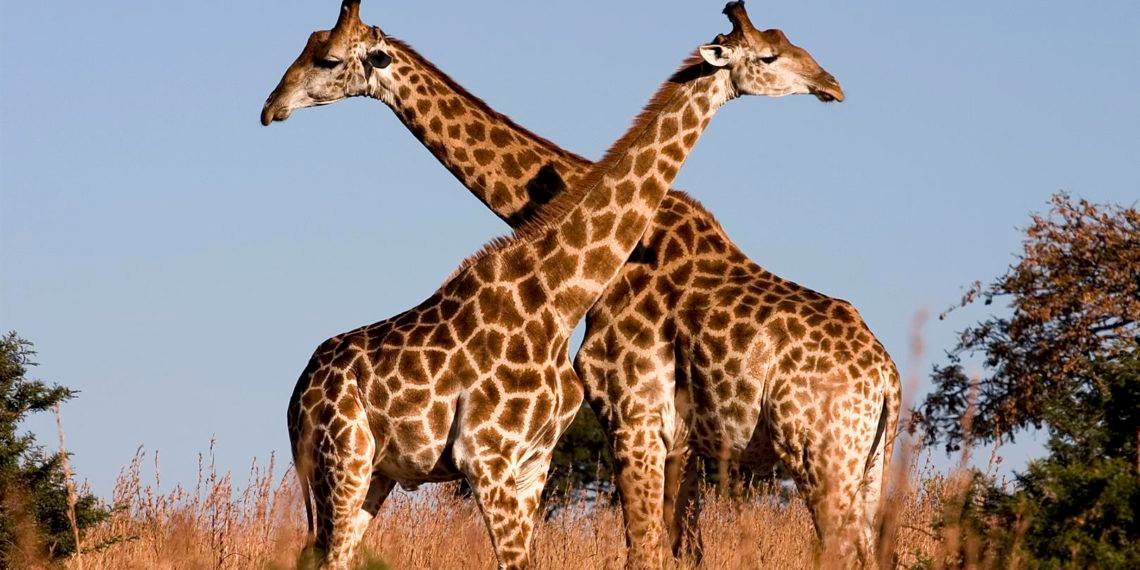
Rothschild giraffes are not recognised as a resident giraffe population in Zimbabwe: genetic assessment shows that Zimbabwe’s giraffes are South African giraffes. Conservation in the country therefore focuses on protecting those populations while clarifying giraffe taxonomy and strengthening national management.

Quick answer: Rothschild’s giraffe is not a recognised giraffe population in Zimbabwe. A countrywide genetic assessment found that all giraffes sampled in Zimbabwe are South African giraffes (Giraffa giraffa giraffa), a subspecies of southern giraffe—not Rothschild’s giraffe. Conservation priorities in Zimbabwe are therefore the protection of South African giraffe habitat, improved population monitoring, responsible management of lion predation, and stronger cooperation between the Zimbabwe Parks and Wildlife Management Authority (ZimParks), the Giraffe Conservation Foundation (GCF), and local conservation partners.
Last reviewed August 2026. Conservation data changes — see the cited sources for the latest figures.
Why Rothschild giraffe conservation matters in Zimbabwe
The name “Rothschild’s giraffe” refers to a giraffe historically treated as the Rothschild subspecies, Giraffa camelopardalis rothschildi. Older conservation materials listed it as Near Threatened, while later taxonomic work has placed Rothschild’s giraffe within the northern giraffe and Nubian giraffe group. The terminology is still encountered in travel writing, zoo information and older conservation literature, so it is important not to assume that every reference to a giraffe subspecies describes animals found in Zimbabwe.
Zimbabwe lies within the southern giraffe region. The GCF–ZimParks genetic assessment specifically concluded that the country’s giraffes are South African giraffes, one of the two subspecies of southern giraffe. This distinction matters because conservation status, distribution, genetic management and recovery plans differ between giraffe lineages. A programme designed for the restricted East African range of Rothschild’s or Nubian giraffes cannot simply be transferred to Zimbabwe.
Zimbabwe remains important for giraffe conservation because it contains extensive public and private wildlife areas where giraffes can move, browse and reproduce. The country’s giraffe conservation work also provides a practical example of why modern wildlife management depends on reliable surveys and genetics, rather than on historical labels alone.
Giraffes are browsers that depend on functioning savanna and woodland systems. Their available habitat can be reduced or fragmented by human settlement, agriculture, pastoralism, timber and fuelwood collection, roads, railways and fences. These pressures can also affect other large mammals, making giraffe protection part of a wider landscape approach. SafariFind’s overview of Zimbabwe’s national-park conservation priorities provides broader context on the management challenges facing protected areas.
The conservation threats facing giraffes in Zimbabwe
Predation and management decisions
Lions are natural predators of giraffes, but the scale of predation can become a conservation concern when management decisions allow pressure to remain unusually high in a particular population. GCF reports that the largest giraffe population in Zimbabwe declined by more than one-third during the last decade and identifies lion predation and its management as a major factor in that decline. The finding does not mean that lions are a threat everywhere in Zimbabwe, nor that predator removal is automatically the correct solution. It does mean that managers need site-specific data on giraffe numbers, calf survival, adult mortality and predator density before deciding how to respond.
This issue connects giraffe conservation with wider predator-management questions. Zimbabwe’s lion conservation challenges and solutions illustrate why predator conservation and prey-population monitoring must be considered together rather than treated as separate subjects.
Habitat loss and fragmentation
Habitat loss is a major threat across the giraffe’s African range. The documented drivers include settlement expansion, agriculture, pastoralism, uncontrolled harvesting of timber and fuelwood, and infrastructure that interrupts movement or dispersal. In Zimbabwe, the practical conservation task is to maintain connected browsing habitat and reduce the effects of fences and other barriers where giraffe movement is important.
Fragmentation can create smaller, isolated groups that are more vulnerable to local drought, disease, poor recruitment or sudden mortality. It can also restrict access to seasonal resources. The supplied Zimbabwe research does not provide a single national figure for habitat lost to these pressures, so the scale should not be expressed as a made-up percentage. The evidence supports describing habitat change as an ongoing management risk rather than assigning an unsupported national total.
Poaching and accidental capture
Giraffes face illegal killing for meat, hide, tail and other body parts in parts of Africa, while snares set for other wildlife can also injure or kill giraffes. The research supplied for Zimbabwe does not provide a verified 2026 national poaching total or a Zimbabwe-specific annual number of giraffes lost to snares. A responsible account should therefore avoid presenting a countrywide poaching statistic that cannot be checked.
Anti-poaching patrols remain relevant because giraffe conservation takes place within multi-species landscapes. Ranger teams protecting wildlife habitat may also be responding to illegal hunting, trafficking and incursions affecting other species. Community-based approaches are important where local people bear the costs of living alongside wildlife, as explained in SafariFind’s article on human–wildlife conflict in Zimbabwe.
Drought, climate variability and ecological change
Drought and broader ecological change are recognised threats to giraffes, alongside habitat loss, poaching, civil unrest and human–wildlife conflict. Giraffes may be able to browse above the reach of some competing herbivores, but that does not make them independent of rainfall, woodland condition or access to suitable forage. The supplied research does not quantify the effect of drought on Zimbabwe’s giraffes in 2026, so the appropriate conclusion is that climate variability can compound existing pressures, especially where habitat is already fragmented.
What is being done to conserve giraffes in Zimbabwe?
ZimParks and the Giraffe Conservation Foundation partnership
ZimParks and GCF are working under a Memorandum of Understanding on giraffe conservation and management initiatives across Zimbabwe. The partnership includes the development of Zimbabwe’s first National Giraffe Conservation Strategy and Action Plan, GPS satellite tagging, a countrywide genetic assessment and giraffe population surveys.
These activities address a basic conservation problem: managers cannot protect what they cannot reliably locate, count or identify. Genetic assessment establishes which giraffe lineage is present; surveys indicate distribution and abundance; and satellite tags can reveal movement routes, home ranges and responses to translocation or landscape change. Together, these tools can help ZimParks and its partners set priorities by population rather than relying on assumptions drawn from another country.
Monitoring movements and improving veterinary skills
GCF reports that it has tagged numerous giraffes in collaboration with ZimParks and other local partners, reserves and properties. Some of this work is designed to understand movements in natural range, while some follows animals after translocation. The partnership has also provided opportunities to strengthen the skills of veterinarians, park rangers and conservation officials in giraffe capture techniques.
Capture and translocation are high-risk interventions that require careful planning, experienced veterinary teams, suitable release habitat and post-release monitoring. Tracking animals after release is particularly valuable because it can show whether a translocation has achieved its ecological and welfare objectives. Zimbabwe’s wider experience with rewilding and wildlife translocations demonstrates why moving animals is only one stage of a longer conservation process.
National planning and landscape partnerships
A National Giraffe Conservation Strategy and Action Plan can help coordinate government agencies, private reserves, conservation organisations, researchers and communities around shared objectives. It can also provide a framework for deciding where surveys are most urgent, how giraffe movements should be protected and how mortality should be investigated.
Zimbabwe’s giraffe conservation model is not based on one park or one organisation. It depends on ZimParks, GCF, veterinary personnel, field researchers, rangers, private landholders and local partners sharing information and applying consistent standards. That collaborative structure is particularly important because giraffes use landscapes that may extend beyond a single protected-area boundary.
Community and tourism’s role
Well-managed tourism can help make wildlife habitat economically valuable while supporting conservation operations. The Federal Register’s review of giraffe conservation describes how ecotourism revenues, and in some contexts regulated hunting revenues, may be directed by countries and communities towards anti-poaching, reintroduction, habitat preservation and restoration. The existence of tourism revenue does not by itself prove that a particular safari benefits giraffes; the financial pathway must be transparent and locally accountable.
Travellers can ask operators which protected area or conservancy receives their fees, whether local communities benefit, and whether the operator supports recognised conservation partners. They can also choose guides and lodges that explain wildlife management honestly, including difficult issues such as predator impacts, fencing, drought and human–wildlife conflict.
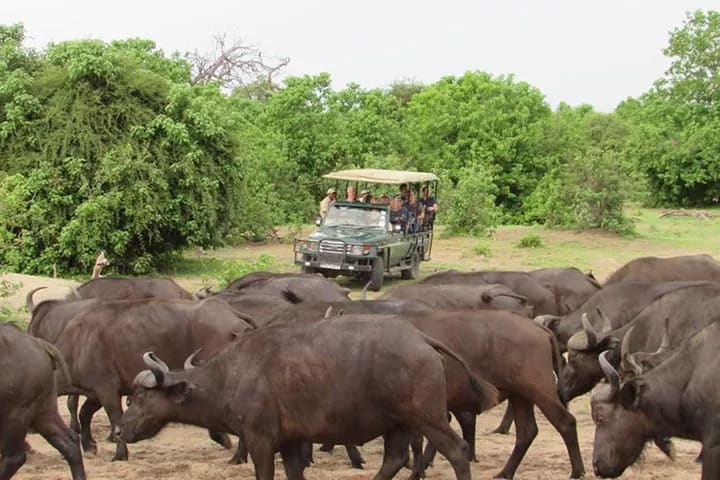
Visitors should not pressure guides to drive off-road, approach giraffes too closely or interfere with animals for photographs. Quiet, well-regulated wildlife viewing reduces disturbance and supports the credibility of tourism as a conservation tool. Travellers can book conservation-supporting safaris on SafariFind, while checking the individual operator’s conservation claims and policies before committing.
Results and setbacks: what the evidence shows
| Area | Evidence available in 2026 | What remains unresolved |
|---|---|---|
| Taxonomy | Genetic assessment found Zimbabwe’s giraffes are South African giraffes. | Older Rothschild terminology continues to circulate, so conservation communication must be precise. |
| National planning | ZimParks and GCF are developing the first National Giraffe Conservation Strategy and Action Plan. | The supplied research does not report implementation milestones or a final completion date. |
| Monitoring | Population surveys, genetic assessment and GPS satellite tagging are part of the partnership. | The research does not provide a verified 2026 national population total for Zimbabwe. |
| Population trends | The largest Zimbabwean population reportedly fell by more than one-third in the last decade, while other public and private populations show opposite trends. | Local populations are not following one uniform national trend. |
| Capacity | Veterinarians, rangers and conservation officials have gained opportunities to improve giraffe capture skills. | Long-term outcomes depend on funding, monitoring and habitat protection after intervention. |
The clearest success is improved knowledge: Zimbabwe now has a genetically informed understanding of its giraffe identity and a coordinated programme for surveys, tagging and planning. The principal setback is that at least one major population has declined substantially, with lion predation and its management identified as important factors. Other populations are showing different trends, which is why a single national headline would conceal more than it reveals.
There is also a wider conservation lesson. Giraffe numbers have declined by nearly 30% over the past 35 years according to GCF, and the species has lost much of its historical range over the last three centuries. Recent conservation work has produced population increases in some regions, but continued threats mean that positive trends are not a reason to reduce monitoring or protection.
How travellers can help responsibly
- Choose transparent operators: ask how tourism income supports the park, conservancy, community or conservation organisation, and request specific rather than vague claims.
- Respect wildlife space: never feed giraffes, block their movement, encourage close approaches or request unsafe driving for photographs.
- Support evidence-based conservation: favour organisations and operators that work with ZimParks, qualified wildlife veterinarians, recognised research programmes or established conservation groups.
- Value monitoring: understand that a giraffe seen on safari is an individual observation, not a population estimate. Surveys, genetics and tracking provide the information managers need.
- Consider the wider landscape: support community initiatives that address the costs of living with wildlife, because habitat protection is unlikely to endure without local participation.
- Share accurate terminology: in Zimbabwe, refer to the documented South African giraffe population rather than describing it as Rothschild’s giraffe.
Conclusion
Rothschild giraffe conservation is not a Zimbabwe conservation category in the current evidence: Zimbabwe’s giraffes have been identified genetically as South African giraffes. The country nevertheless has an important giraffe conservation agenda. ZimParks and GCF are building the scientific and institutional foundations for it through genetic work, surveys, satellite tagging, national planning and professional training.
The outlook is mixed. Some Zimbabwean populations are declining, including the country’s largest population, while others on public and private land are moving in the opposite direction. Protecting connected habitat, managing threats with site-specific evidence and ensuring that tourism and communities benefit from conservation will determine whether Zimbabwe’s giraffes remain secure in the long term.
Frequently Asked Questions
Are there Rothschild giraffes in Zimbabwe?
No recognised Rothschild giraffe population is reported in Zimbabwe. A countrywide genetic assessment found that Zimbabwe’s giraffes are South African giraffes, a subspecies of southern giraffe.
What giraffe subspecies lives in Zimbabwe?
Zimbabwe’s giraffes have been identified as South African giraffes, scientifically named Giraffa giraffa giraffa.
What is the conservation status of Rothschild’s giraffe in 2026?
Rothschild’s giraffe is treated in current taxonomic discussions as part of the Nubian or northern giraffe grouping, rather than as a Zimbabwean population. The supplied research does not provide a separate Zimbabwe status for Rothschild’s giraffe.
How many giraffes are in Zimbabwe in 2026?
The supplied research does not provide a verified 2026 national population total for Zimbabwe. GCF reports that the country’s largest population declined by more than one-third in the last decade, while other populations show different trends.
What is the biggest threat to giraffes in Zimbabwe?
The most clearly documented site-specific concern in the supplied Zimbabwe research is lion predation and its management in the country’s largest giraffe population. Habitat loss and fragmentation, poaching, drought and human–wildlife conflict are wider threats affecting giraffes across Africa.
What organisations protect giraffes in Zimbabwe?
The Zimbabwe Parks and Wildlife Management Authority, or ZimParks, and the Giraffe Conservation Foundation are key organisations working together on surveys, genetics, GPS tagging, national planning and technical capacity.
Why are giraffes important to Zimbabwe’s ecosystems?
Giraffes are an important part of Zimbabwe’s savanna and woodland wildlife, and protecting their habitat also helps maintain broader landscapes used by other species. The supplied research does not quantify a separate ecosystem service value for Zimbabwean giraffes.
How can a safari support giraffe conservation in Zimbabwe?
Choose a transparent operator, ask how tourism income reaches conservation and communities, and follow wildlife-viewing rules. Ecotourism revenues can support anti-poaching, habitat protection and restoration when they are properly directed and accounted for.
Why are there no giraffes in the Ngorongoro Crater?
The supplied Zimbabwe research does not establish why giraffes may be absent from the Ngorongoro Crater. That question concerns Tanzania and should be answered using a source specific to the crater rather than inferred from Zimbabwe’s giraffe data.
Why is there no giraffe in the Ngorongoro Crater?
The supplied research does not provide a verified explanation for giraffe absence from the Ngorongoro Crater. It is a Tanzania-specific question and is outside the evidence base for this Zimbabwe conservation article.
V2Ui.sources
- Southern Giraffe Conservation in Zimbabwe - Giraffe Conservation Foundation
- The Conservation Status of Giraffe Subspecies: Which Are Most at Risk? - Save Giraffes Now
- Are giraffes endangered? - IFAW
- 17th Meeting of the Conference of the Parties - Giraffe listing proposal
- Giraffe Conservation Foundation
- Human–giraffe conflict in eastern Kenya: local interactions, attitudes, perceived risks, and pathways to coexistence
- Endangered and Threatened Wildlife and Plants; Listing the Giraffe - Federal Register(official)
Related to
Ready to start your safari adventure?
Explore curated safari packages and find your perfect African adventure with verified operators.