 1 / 4
🇹🇿 Tanzania
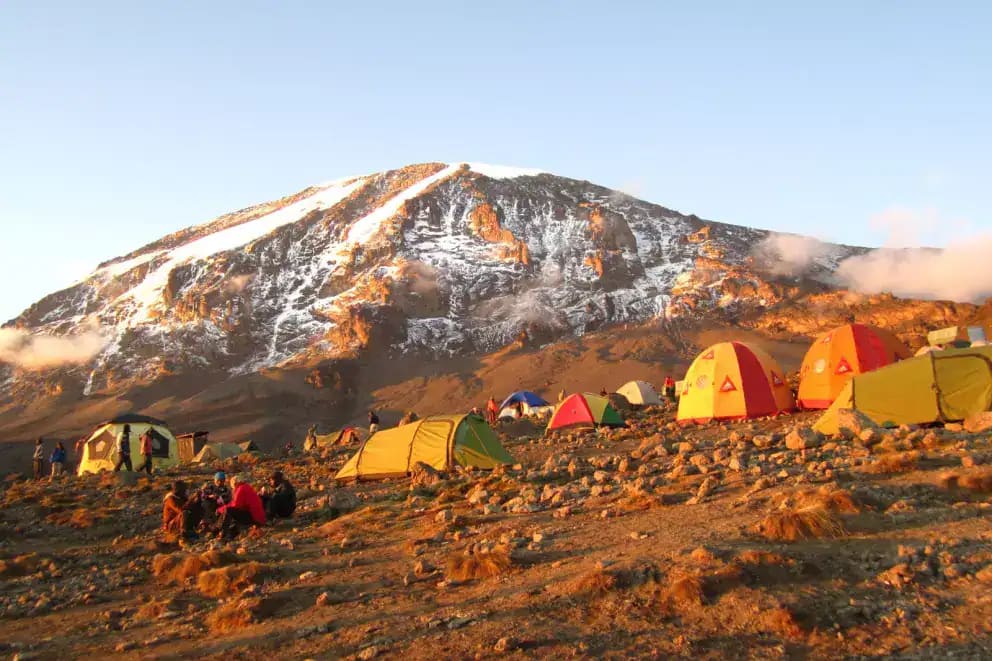
Barafu Hut Camp
Elevation
4,673 m
Ideal stay
3 days
Loading SafariFind...
1 / 4Elevation
4,673 m
Ideal stay
3 days
SafariFind app
Keep up with your inquiries and bookings, and message operators wherever you are.

Barafu Hut Camp does not operate as a standalone attraction with a separate daily ticket. The cost forms part of an organized Kilimanjaro climb and depends on the route, number of climbing days, permits, guide and porter team, group size, equipment and accommodation before and after the trek. Compare full itinerary prices on SafariFind rather than treating Barafu as a wildlife park with a daily entrance fee.
June to October and January to February are generally the best months for Barafu Hut Camp because drier weather often improves trail conditions and summit visibility. July to October and January to February are busier, while April, May and November are wetter and quieter.
Barafu Hut Camp is not a wildlife-viewing site. At 4,673 metres, its alpine desert environment supports almost no plant or animal life, so travelers should plan a separate Tanzania safari in places such as Serengeti or Ngorongoro for wildlife.
You reach Barafu Hut Camp on foot as part of a guided Kilimanjaro trek. The camp is used on the Machame, Lemosho and Umbwe routes, while the Northern Circuit joins the southern approach near the final stage. Climbers arrive after a mountain approach, rest in tents and usually leave around midnight for Uhuru Peak.
Barafu Hut Camp is suitable only for families whose children meet the operator's age, fitness and altitude requirements. The camp has cold, thin air, rocky ground, basic pit latrines and a demanding six-to-seven-hour summit push, so it is not a conventional family holiday stop. Families should ask a verified operator to assess age, acclimatization and medical readiness before booking.
Most climbers spend one short rest period at Barafu Hut Camp before leaving around midnight for Uhuru Peak. A three-day planning window covers the Barafu approach, summit attempt and descent segment, although a complete Kilimanjaro itinerary takes several more days for acclimatization and the wider route.
Climbers stay in tents on uneven rocky ground at Barafu Hut Camp rather than in a lodge or permanent accommodation. The camp has basic pit latrines and scarce water, which porters carry for drinking and cooking. Hotel accommodation is more appropriate in Moshi before and after the climb.
Barafu Hut Camp is worth visiting for climbers who want the standard southern-route launch point for Uhuru Peak. Its value comes from direct summit access, the high-altitude challenge and sunrise approach, not wildlife, showers or comfortable lodge facilities.
Yes, Barafu Hut Camp should be reached as part of an organized guided Kilimanjaro trek. A qualified guide manages route decisions, altitude symptoms, weather changes, porters, water logistics and the midnight summit attempt.
Barafu Hut Camp is part of a guided Kilimanjaro climbing itinerary rather than a conventional wildlife safari. Compare safari and climbing packages, read verified traveler reviews, and book through trusted operators on SafariFind.com. This lets you compare prices and find an itinerary that fits your route, budget and interests.
Yes, Barafu Hut Camp is in Tanzania on the southeastern slope of Mount Kilimanjaro, near the base of the Kibo summit cone.
Barafu means "ice" in Swahili, a reference to the cold conditions at this high, exposed Kilimanjaro camp.
© 2026 SafariFind. All rights reserved.
SafariFind, Inc. · 34 Brier Avenue, Unit 610, Wilmington, DE 19805, United States · Company No. 10818632