How Safari Tourism Funds Conservation in Ethiopia (2026)
Safari tourism can support protected-area income, local livelihoods and conservation in Ethiopia, but it is not yet a complete funding solution. A new Payment for Ecosystem Services law, effective from January 2026, creates an additional domestic route for rewarding ecosystem protection [1].

Quick answer: Safari tourism funds conservation in Ethiopia mainly through protected-area entrance fees, guided activities, accommodation, transport and locally retained tourism income. Research identifies nature-based tourism as a potential source of revenue for protected areas, while also warning that tourism infrastructure and conservation finance remain underdeveloped in many parks . In 2026, tourism is only one part of a wider financing mix that includes government budgets, donors, multilateral conservation grants and Ethiopia’s new Payment for Ecosystem Services framework, which took effect in January 2026 .
Last reviewed August 2026. Conservation data changes — see the cited sources for the latest figures.
Why conservation finance matters in Ethiopia
Ethiopia contains a wide range of landscapes important to wildlife, livelihoods and climate resilience, including forests, wetlands, rangelands, mountains and agricultural areas. UNESCO identifies five Ethiopian Biosphere Reserves—Lake Tana, Majang Forest, Yayu Coffee Forest, Kafa and Sheka Forest—as ecosystems of global significance . These landscapes support biodiversity while also providing services on which communities depend, including water, soil protection, pasture and forest products.
The funding challenge is structural. Ethiopia’s existing conservation strategies and policies provide a framework for action, but domestic financial and technical resources are insufficient to implement them at the necessary scale, according to the GEF project documentation . A separate assessment of federally managed protected areas reports that budgets, staffing and management needs vary according to geography, climate, species, local communities, adjacent land uses and operational difficulty . Remote parks can therefore require substantial investment before they can generate dependable visitor revenue.
That is why the conservation value of a wildlife safari should not be measured only by the number of visitors. The stronger question is whether tourism creates reliable, transparent income for protected-area management and whether nearby communities gain enough from conservation to support it over time.
How safari tourism can generate conservation funding
Nature-based tourism can produce several kinds of income. The most direct is money paid to enter a national park or reserve. Other revenue can come from camping, accommodation, guiding, vehicle permits, trekking, boat trips, cultural experiences and transport. Tourism also supports indirect employment for guides, drivers, cooks, lodge staff, craftspeople and community enterprises.
The Ethiopian ecotourism literature describes protected-area tourism as a way to generate financial revenue for conservation while maintaining visitor experience and reducing the negative impacts of poorly managed development . In practice, the conservation outcome depends on how revenue is collected, distributed and reported. A visitor payment is not automatically a conservation payment: it must reach the responsible authority or local programme and be spent effectively.
| Tourism-related income | Potential conservation use | Important safeguard |
|---|---|---|
| Park entrance and activity fees | Protected-area operations, habitat management and visitor services | Publish how funds are allocated and avoid pricing out local visitors |
| Guiding and transport | Local employment and incentives to protect wildlife habitat | Use trained local providers and fair payment practices |
| Lodges, camps and restaurants | Local economic benefits that can reduce pressure on natural resources | Manage water, waste, energy and land use responsibly |
| Community tourism enterprises | Livelihood diversification and locally led conservation | Ensure communities participate in decisions and retain a fair share |
Across protected areas in Africa, self-generated revenue such as nature-tourism fees is recognised as one traditional source of conservation finance, alongside government and donor support . However, the same regional assessment stresses that government and donor funding alone are inadequate and that protected areas need stronger financial planning and professional business plans . Tourism should therefore complement, rather than replace, public conservation responsibility.
Ethiopia’s new Payment for Ecosystem Services framework
Ethiopia’s conservation-finance landscape changed in January 2026 when Parliament’s Payment for Ecosystem Services Proclamation officially took effect . The framework was developed through sustained collaboration between IUCN’s Eastern and Southern Africa Regional Office, Ethiopia’s Environmental Protection Authority, the Ethiopian Biodiversity Institute and the Ethiopian Wildlife Authority .
Payment for Ecosystem Services, or PES, is broader than safari tourism. It creates a formal system for rewarding people or organisations that protect important ecosystems and is intended to unlock domestic funding streams for biodiversity . In principle, tourism could become one source of demand or revenue within this wider system, particularly where visitors benefit from functioning forests, wetlands, wildlife habitats and scenic landscapes.
The law is not evidence that Ethiopia’s conservation funding gap has already been solved. It is a legal foundation. Its results will depend on implementation, monitoring, institutional capacity, safeguards for local rights and the creation of credible payment mechanisms. The IUCN account presents the proclamation as an opportunity to integrate ecological protection into national development, not as a completed programme with measured tourism outcomes .
Where tourism and conservation intersect
Ethiopia’s protected areas offer different tourism models. Wildlife viewing is relevant in places such as Omo National Park, where a 2023 conservation grant recipient at Jemma University focused on the spatial ecology of the endangered Beisa oryx . Trekking and landscape tourism can also create conservation value in mountain areas, while birding and wetland visits can support interest in lakes and other habitats.
The country’s five Biosphere Reserves illustrate why tourism must be planned at landscape scale. Lake Tana, Majang Forest, Yayu Coffee Forest, Kafa and Sheka Forest face interconnected pressures involving climate change, habitat degradation, unsustainable resource use and the limited integration of Indigenous knowledge . Tourism income can help only if it reinforces local stewardship rather than encouraging damaging construction or concentrating benefits in outside businesses.
For travellers considering a wildlife safari park, this means looking beyond the headline species. A well-managed visit can pay for local services and strengthen the economic case for protection. A poorly managed surge in visitors can increase waste, road pressure, water demand and disturbance in sensitive habitats. Ethiopia’s ecotourism research specifically notes that transport links have improved access to remote protected areas, while tourism infrastructure remains poor in many of them . Access is therefore both an opportunity and a management challenge.
The threats that conservation funding must address
Habitat loss and land degradation
The GEF’s integrated conservation project identifies species and habitat loss as drivers to be addressed through improved landscape management and human–wildlife coexistence . Its supporting documentation links conservation needs to insufficient domestic funding, climate change and land degradation . These pressures affect forests, farmlands, rangelands and wetlands, so conservation spending must extend beyond patrols and include restoration, planning and livelihood measures.
In 2026, the Climate Investment Funds endorsed a $37 million Ethiopian plan focused on nature, people and climate . The plan covers forests—including wild Arabica coffee forests—farmlands and rangelands in Amhara, Oromia, South Ethiopia and Somali regions, with a stated restoration target of about 322,276 hectares and plans for an online national forest registry . This is climate and landscape finance rather than safari revenue, but it demonstrates why tourism cannot carry the entire conservation burden.
Illegal wildlife trafficking
Illegal wildlife trafficking is one of the explicit problems addressed by the GEF-funded project, which aims to reduce trafficking while improving human–wildlife coexistence and landscape management . The available research does not provide a reliable Ethiopia-wide poaching total for 2026, so it would be misleading to attach a national figure to the threat.
Tourism can help indirectly by creating a visible, legitimate economic value for living wildlife and by supporting park operations. It cannot substitute for effective law enforcement, intelligence, judicial systems or cross-border cooperation. Visitors should also avoid buying wildlife products and should report suspicious activity through their operator or the relevant authorities.
Human–wildlife conflict
Conflict between people and wildlife is another stated focus of the GEF project . Where farms, grazing areas and wildlife habitat overlap, conservation programmes must address the costs borne by local households. The GEF design includes alternative livelihood programmes intended to connect biodiversity conservation with community well-being . Tourism can contribute employment and markets, but it should not be presented as compensation for every loss or as a reason to ignore land and resource rights.
Climate change and ecosystem stress
UNESCO reports that climate change is affecting water, biodiversity and livelihoods in Ethiopia’s Biosphere Reserves, alongside biodiversity loss and disaster risk . The CIF investment plan similarly responds to climate change and land degradation affecting smallholder farmers and pastoralists . A tourism model that depends on healthy landscapes must therefore invest in resilience, not only visitor infrastructure.
What conservation programmes are doing
The GEF project “Promoting Integrated Conservation of Wildlife and Landscapes for Sustainable Development of Ethiopia” is implemented through UNDP, with the Ethiopian Wildlife Conservation Authority and Ethiopian Biodiversity Institute among the executing agencies . Its stated objectives include reducing species and habitat loss, improving human–wildlife coexistence, reducing illegal wildlife trafficking and strengthening landscape management . The project has a GEF grant of $11,932,415 and reported total co-financing of $59,675,417 .
The CIF plan adds a different set of tools: afforestation and reforestation, assisted natural regeneration, soil and water conservation, more sustainable harvesting and farming, and a national forest registry . Its Dedicated Grant Mechanism is designed to channel $4 million directly to vulnerable local communities in four target regions for community-led livelihood and biodiversity actions . The plan also identifies honey production and ecotourism as potential higher-value activities for women farmers .
These programmes show the range of spending required. Conservation finance may support park management, restoration, community institutions, monitoring, alternative livelihoods, research and governance. Tourism can contribute to some of these areas, but external grants and public investment remain essential for work that does not produce immediate visitor income.
Species-focused research also matters. The Zoological Association of America lists a Jemma University project on the endangered Beisa oryx in Omo National Park among its 2023 conservation-grant recipients . Travellers interested in species protection can also read SafariFind’s guides to conservation organisations protecting Ethiopia’s wildlife and human–wildlife conflict in Ethiopia.
Results and setbacks: what the evidence supports
The clearest 2026 policy result is institutional: Ethiopia now has a Payment for Ecosystem Services proclamation in force . The GEF project has also been approved with defined biodiversity, climate and land-degradation objectives, participating institutions and committed finance . The CIF plan provides another substantial investment framework for restoration and community-led action .
These are important foundations, but they are not the same as proof of population recovery, reduced poaching or tourism-funded conservation success. The supplied research does not provide Ethiopia-wide figures showing how much safari revenue reaches protected areas, how many rangers are funded by visitor fees, or how wildlife populations have changed as a direct result of tourism. A responsible account must leave those questions open until transparent monitoring is published.
Setbacks remain significant. Protected areas face underfunding and varying operational needs . Tourism infrastructure is still inadequate in many areas . Biosphere Reserves continue to experience climate, biodiversity and governance pressures . The GEF documentation states that private-sector interest in ecotourism and conservation enterprises is still nascent and constrained by limited investment incentives and regulatory support .
How travellers can help responsibly
- Choose locally accountable operators. Ask which park fees, guide fees or community charges are included and how local residents participate in tourism decisions.
- Prefer smaller-scale, low-impact experiences. Follow park rules, keep distance from wildlife, remain on designated routes and avoid creating pressure for new construction in sensitive habitats.
- Spend locally. Use qualified local guides, community accommodation, local food providers and locally made products where quality and safety allow.
- Do not buy wildlife products. Tourism should increase the value of living wildlife, not create demand for trafficked specimens.
- Respect land, culture and knowledge. Ask permission before photographing people, follow community protocols and avoid treating local communities as scenery.
- Look for evidence rather than promises. Conservation claims should identify the park, implementing organisation, activity, funding pathway and measurable result.
Travellers can book conservation-supporting safaris on SafariFind, while still asking operators for transparent information about fees, community benefit and environmental standards. A safari is most defensible when it supports a broader system in which public authorities, communities, researchers, donors and tourism businesses share responsibility.
Why Trekking in the Simien Mountains of Ethiopia is Bucket List Worthy
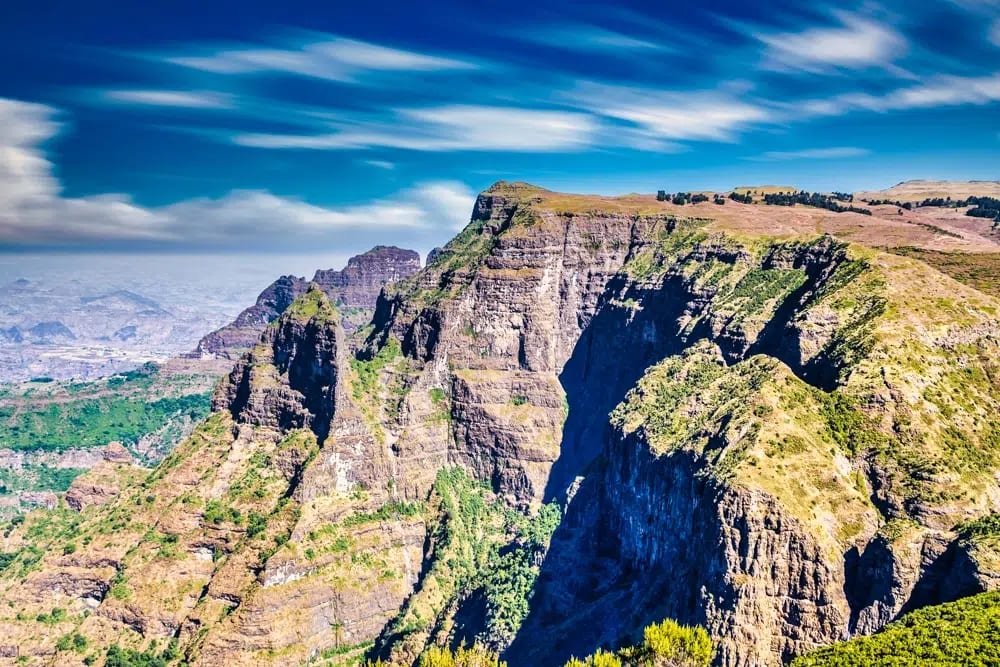
Mountain tourism can contribute to conservation when guiding, accommodation and transport create local income and when visitor management protects fragile landscapes. The same principle applies to treks and cultural journeys as to a wildlife safari: travellers should ask how money is retained locally and how impacts are managed. Ethiopia’s ecotourism research describes strong potential across mountains, lakes, birds, vegetation and geological features, while noting that tourism products and services still need development to reach international standards .
Alternative treks in Ethiopia due to Simien Mountains safety concerns?
Safety decisions should be based on current government and operator advice rather than on a generic conservation claim. Where travellers select an alternative route, the conservation test remains the same: use legitimate local providers, follow protected-area rules and choose experiences that do not undermine habitats or community rights. The available research does not establish a single nationally preferred alternative trek, so operators should provide current, location-specific guidance.
Conclusion
Safari tourism can fund conservation in Ethiopia by generating protected-area revenue, creating local jobs and making intact landscapes economically valuable. Its contribution is real but limited by weak infrastructure, underfunding, climate pressure, habitat loss, conflict and the absence of published nationwide evidence linking visitor spending to wildlife outcomes .
The most promising 2026 development is the combination of tourism with broader conservation finance. Ethiopia’s new PES law provides a domestic legal framework for rewarding ecosystem protection , while GEF and CIF programmes support integrated landscape management, restoration and community-led livelihoods . For tourism to deliver lasting conservation value, the next step is transparent revenue-sharing, accountable institutions and measurable results for both biodiversity and the people living alongside it.
Frequently Asked Questions
How does safari tourism fund conservation in Ethiopia?
It can generate park and activity fees, support local guiding and accommodation jobs, and create revenue for protected-area management and community enterprises. Ethiopia’s research identifies nature-based tourism as a potential protected-area income source, but also notes that infrastructure and the sector remain underdeveloped .
Does Ethiopia have a Payment for Ecosystem Services law?
Yes. Ethiopia’s Payment for Ecosystem Services Proclamation took effect in January 2026 and provides a legal framework for rewarding ecosystem protection and developing domestic biodiversity finance .
Does every safari payment go directly to wildlife conservation?
No. The available research does not show that every tourism payment is allocated directly to conservation. Travellers should ask operators and park authorities how entrance fees, guiding income and community charges are collected and distributed.
Which organisations are involved in Ethiopia’s conservation finance?
Key organisations named in the research include IUCN ESARO, Ethiopia’s Environmental Protection Authority, the Ethiopian Biodiversity Institute, the Ethiopian Wildlife Authority, the Ethiopian Wildlife Conservation Authority, UNDP, the GEF and the Climate Investment Funds .
What are the main threats to wildlife in Ethiopia?
The documented threats include habitat and species loss, illegal wildlife trafficking, human–wildlife conflict, climate change, land degradation and unsustainable resource use .
How much conservation funding is Ethiopia receiving?
The research identifies several major commitments but not one complete national total. The GEF project lists a $11,932,415 GEF grant and $59,675,417 in co-financing, while the CIF endorsed a $37 million nature and climate plan and includes a $4 million community grant mechanism .
Can ecotourism replace government or donor funding in Ethiopia?
No. Regional conservation-finance research says government and donor funding alone are inadequate, but tourism is also only one revenue source and cannot replace public responsibility or large-scale restoration finance .
How can tourists support conservation in Ethiopia?
Use locally accountable operators, pay legitimate park and guide fees, spend with community businesses, follow wildlife and protected-area rules, avoid wildlife products and ask for evidence of conservation and community benefits.
What does the GEF conservation project in Ethiopia aim to do?
It aims to reduce species and habitat loss through improved human–wildlife coexistence, reduced illegal wildlife trafficking and better landscape management for sustainable development .
Why is community participation important in Ethiopian ecotourism?
Community participation can connect biodiversity protection with livelihoods and decision-making. Ethiopia’s conservation plans include alternative livelihoods and community-led actions, while the CIF plan highlights women’s participation and activities such as honey production and ecotourism .
V2Ui.sources
- Policy in action: How IUCN ESARO’s technical leadership catalyzed the institutionalization of Ethiopia’s PES framework
- Ecotourism as a Tool to Substantially Funding Conservation Endeavors in Ethiopia
- CIF Endorses $37M Ethiopian Plan for Nature and Climate
- Promoting Integrated Conservation of Wildlife and Landscapes for Sustainable Development of Ethiopia
- Conservation Grants
- Closing the gap
- Underfunding, the challenge of federally managed protected areas of Ethiopia
- GEF-8 Request for CEO Child Endorsement/Approval
- Seventh Annual Meeting of Ethiopian Biosphere Reserves Calls for Enhanced Collaboration and Action
Related to
Ready to start your safari adventure?
Explore curated safari packages and find your perfect African adventure with verified operators.